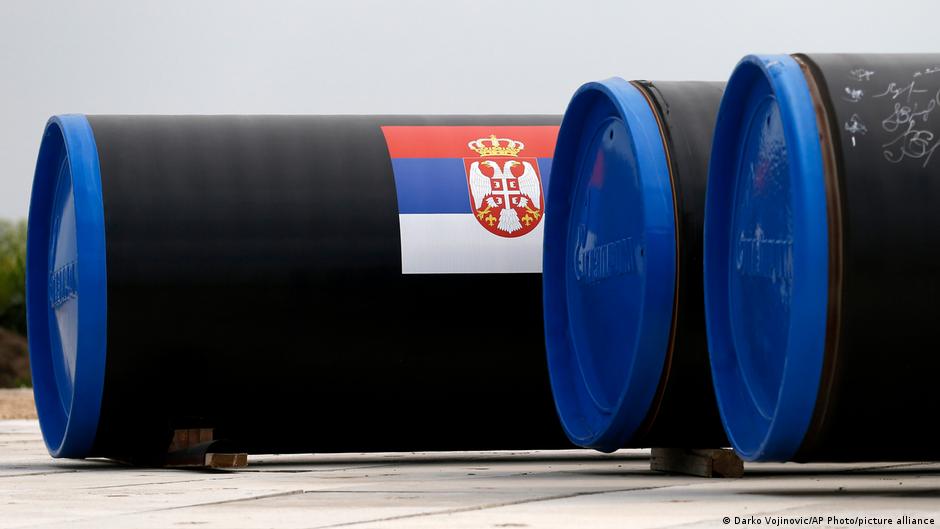
In a troubling development, Serbian President Aleksandar Vucic announced the discovery of explosives near the 'Balkan Stream' pipeline, which carries Russian gas to Hungary. The incident occurred in the 'Kanjiza' area in northern Serbia, where two large explosive devices were found along with detonators, raising questions about the safety of energy infrastructure in the region.
Vucic confirmed in an Instagram post that the discovered explosives are considered to have significant destructive power, raising fears of potential sabotage. Meanwhile, Hungarian Prime Minister Viktor Orban called for an urgent meeting of his country's defense council to discuss the situation, noting that available information suggests a premeditated act of sabotage.
Details of the Incident
The 'Balkan Stream' pipeline is part of a gas transport network connecting Russia to Europe via the Black Sea, passing through Bulgaria and Serbia. This pipeline is vital for securing gas supplies to Hungary, which heavily relies on Russian gas. The incident comes at a sensitive time, as Hungary approaches controversial elections that could impact the future of the current government.
In the aftermath of the incident, neither leader provided further details about the explosives or related images, which adds to the ambiguity surrounding the situation. Orban indicated that Ukraine has been attempting for years to cut off Russian energy supplies to Europe, but he did not directly blame Ukraine for the incident.
Background & Context
Relations between Russia and Europe have seen increasing tensions in recent years, particularly following the conflict in Ukraine. Many Central and Eastern European countries depend on Russian gas, making them vulnerable to political tensions. Serbia and Hungary are among the countries that heavily rely on these supplies, making any threat to energy infrastructure critically important.
In recent weeks, Orban has accused Ukraine of disrupting repairs on another pipeline that passes through its territory, affecting oil flow to Hungary and Slovakia. These accusations come at a time when political pressure is mounting on the Hungarian government, especially with elections approaching.
Impact & Consequences
This incident could have significant repercussions for regional security, potentially leading to increased tensions between the involved countries. It may also impact energy policy in Europe, particularly given the growing reliance on Russian gas. If it is confirmed that sabotage occurred, this could lead to calls for enhanced security around energy infrastructure.
Furthermore, this incident may influence the upcoming elections in Hungary, as it could be used as a means to sway public opinion. The opposition in Hungary has accused the government of trying to create a state of panic ahead of the elections, complicating the political landscape further.
Regional Significance
As Arab nations monitor the situation in Europe, this incident highlights the importance of securing energy supplies. Arab countries, particularly those producing oil and gas, may find this situation an opportunity to enhance their role in the global energy market. Additionally, tensions in Europe could affect oil and gas prices, impacting Arab economies.
In conclusion, the situation in Serbia and Hungary remains under observation, as any new developments could affect regional and global security. It is essential for Arab nations to stay informed about these events, as their impact may extend to their economic and political interests.