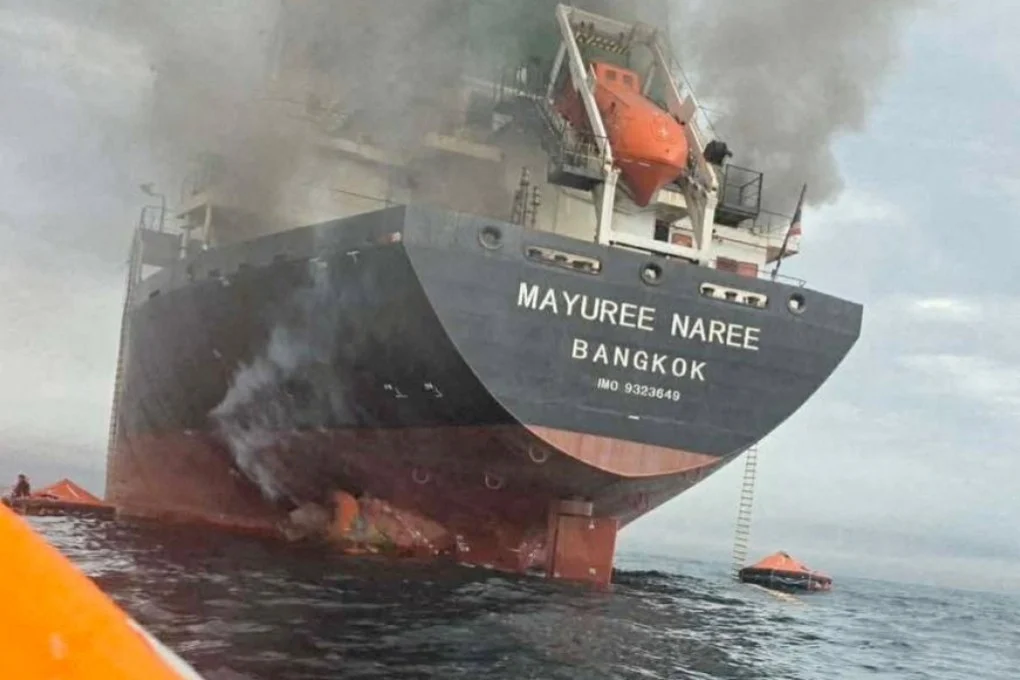
Human remains were discovered aboard the Thai ship 'Maori Nari', which was attacked by Iranian forces while transiting the Strait of Hormuz last month. The ship's owner confirmed this news on Friday, following reports of three crew members missing after the attack.
The attack on the ship, which occurred in March, comes at a sensitive time marked by rising tensions between Iran and the United States and its allies. The vessel was en route from Khalifa Port when it was assaulted, causing panic among the crew members.
Details of the Incident
The Strait of Hormuz is a vital point for oil transportation, with approximately 20% of global oil supplies passing through it. The attack on the Thai ship reflects the escalating tensions in the region, especially following military pressures faced by Iran from the United States and Israel in late February, which led to an Iranian response that effectively closed the strait.
The 'Maori Nari', flying the Thai flag, was carrying commercial cargo, and the attack has raised international concerns regarding the safety of navigation in this strategic area. The reported loss of three crew members complicates the situation further and underscores the risks faced by commercial vessels in those waters.
Background & Context
Historically, the Strait of Hormuz has witnessed numerous similar incidents, serving as a stage for political and military tensions between Iran and the United States. In recent years, these tensions have notably escalated, particularly following the U.S. withdrawal from the Iranian nuclear deal and the imposition of stringent economic sanctions on Tehran.
Iran views the Strait of Hormuz as a vital artery, relying on this passage for its oil exports. Conversely, the United States and its allies seek to secure navigation in the region and prevent Iran from expanding its influence. This growing conflict could exacerbate security conditions in the area and increase the risk of new conflicts erupting.
Impact & Consequences
The attack on the Thai ship may have wide-ranging implications for global oil markets, potentially leading to an increase in oil prices due to fears of supply disruptions. Furthermore, this incident could provoke international reactions, with major countries expected to take steps to protect their interests in the region.
Additionally, this incident may heighten tensions between Iran and Western nations, which could affect diplomatic efforts aimed at calming the situation. The region is likely to witness further provocations and attacks, contributing to a state of instability.
Regional Significance
Arab countries neighboring the Strait of Hormuz, such as the United Arab Emirates and Oman, are among the most affected by the rising tensions in the region. Any military escalation could impact trade and navigation, leading to negative economic repercussions for these nations.
Moreover, regional stability is crucial for Arab countries, as many of them rely on oil supplies from the Gulf. Therefore, any escalation in tensions could affect energy security and increase economic risks.
In conclusion, the situation in the Strait of Hormuz remains under scrutiny, as fears of escalating conflicts in the region grow. The international community must take urgent steps to ensure navigational safety and protect economic interests.