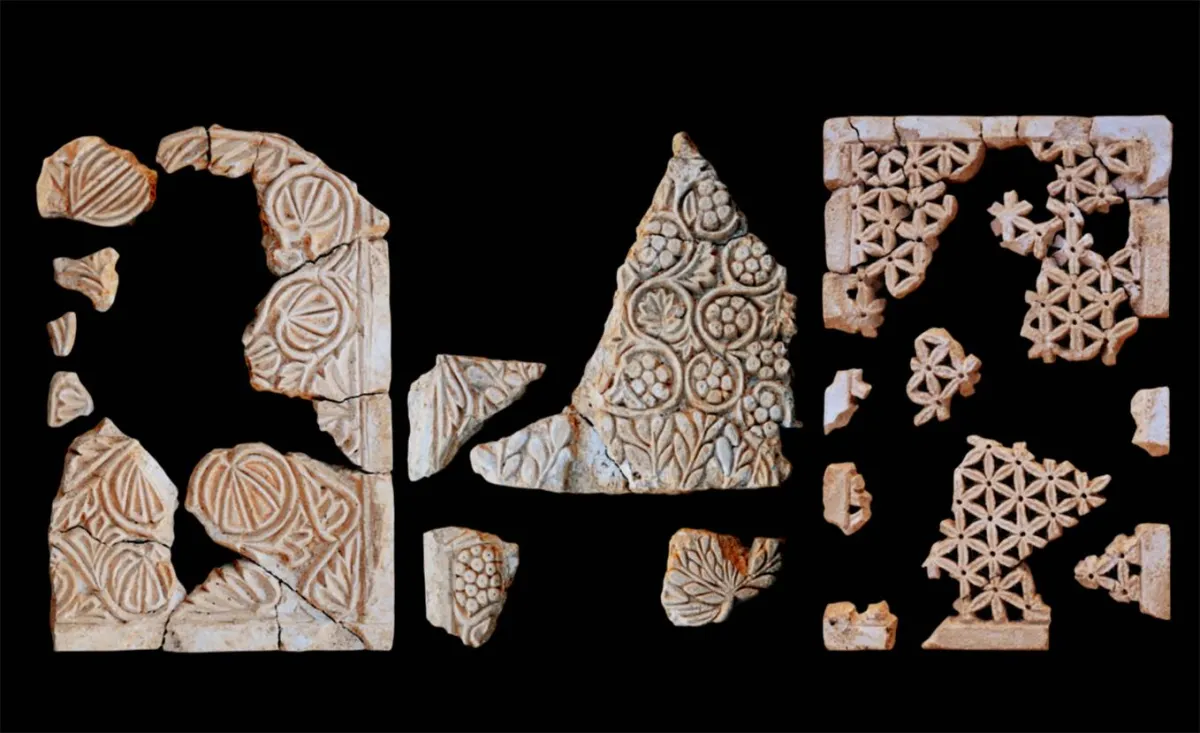
Archaeological discoveries continue at Qasr al-Hayr al-Sharqi, where excavations reveal the aesthetics of Islamic art during the Umayyad era, reflecting the evolution of architectural crafts of that period. Qasr al-Hayr al-Sharqi, built in the 8th century CE, is one of the largest Umayyad structures in the Syrian desert, clearly showcasing the architectural innovation characteristic of that time.
The architectural crafts of the Umayyad period are evident in the use of carved lime plaster techniques, where architectural elements are adorned with various artistic forms. A collection of archaeological artifacts from that era has been discovered, reflecting the extent of development in decorative arts within Islamic architecture.
Event Details
In 1956, American archaeologist George Forsyth toured the Middle East to select worthy sites for surveying, accompanied by his French colleague Oleg Grabar. Their visit to Qasr al-Hayr al-Sharqi prompted Grabar to return to the site in 1962, initiating a series of archaeological campaigns that continued until 1971. These campaigns resulted in a comprehensive documentation of research findings, published in a book titled A City in the Desert in 1978.
Qasr al-Hayr al-Sharqi was established by the caliph Hisham ibn Abd al-Malik between 728 and 729, located northeast of Palmyra. The palace consists of two adjacent complexes, known as the Great Palace and the Small Palace, each distinguished by its unique architectural character. While the Great Palace is notable for its massive size, the Small Palace is characterized by its rich decorative details.
Background & Context
The Umayyad period is considered one of the golden eras in the history of Islamic art, witnessing significant advancements in architectural and decorative arts. Advanced building techniques were employed, contributing to the formation of the Islamic architectural identity that lasted for centuries. Qasr al-Hayr al-Sharqi serves as a living example of this evolution, embodying the architectural arts that prevailed during that time.
Recent discoveries also include a massive residence dating back to the same period, uncovered during joint archaeological campaigns between Swiss and Syrian missions from 2007 to 2010. This residence showcases the influence of Umayyad architecture in its design and reflects the artistic methods that were in use at that time.
Impact & Consequences
The archaeological discoveries at Qasr al-Hayr al-Sharqi enhance the historical understanding of Islamic art and open new horizons for studying architectural arts in the Arab world. These findings underscore the importance of preserving cultural heritage and highlight the role that archaeological sites play in shaping the cultural identity of the nation.
These discoveries also serve as evidence of cultural interaction between different civilizations, showcasing Roman and Sasanian influences in architectural designs. This interaction reflects the cultural diversity that prevailed during that period and emphasizes the importance of studying Islamic arts within various historical contexts.
Regional Significance
The archaeological discoveries at Qasr al-Hayr al-Sharqi are part of ongoing efforts to preserve cultural heritage in the Arab region. These efforts reflect the significance of architectural arts in shaping cultural identity and contribute to enhancing cultural tourism in the area.
Moreover, these discoveries help raise awareness about the importance of preserving cultural heritage and highlight the necessity of supporting archaeological research in the Arab world. A deep understanding of Islamic architectural arts can foster cultural dialogue among peoples and strengthen the historical ties that connect different civilizations.