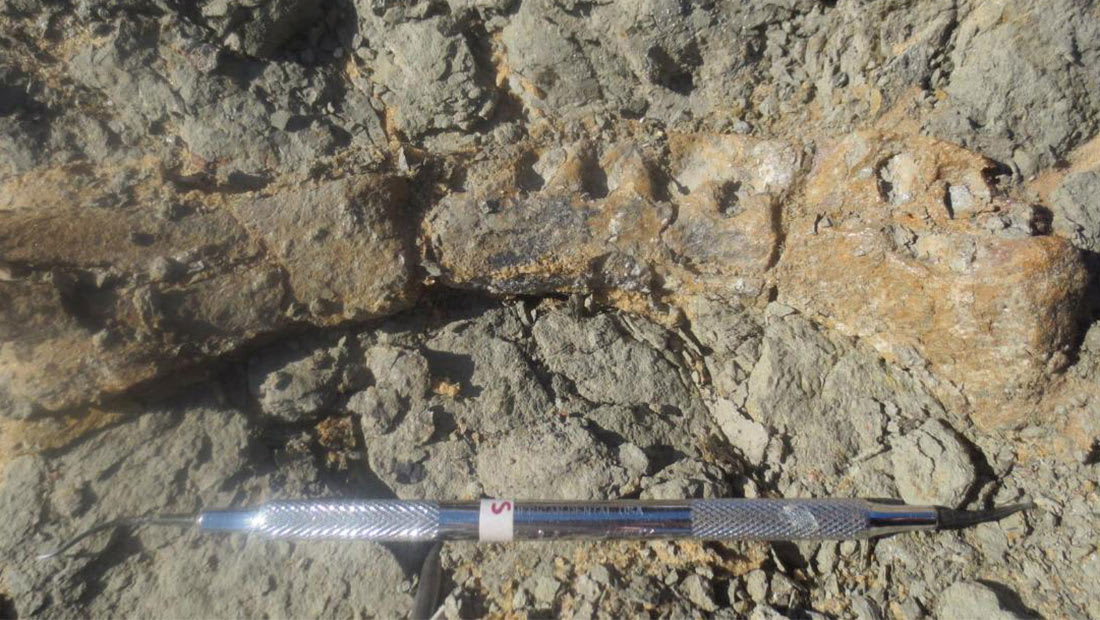
Researchers have discovered an unknown species of herbivorous dinosaur in northern China, characterized by unprecedented hollow spikes. The exceptionally preserved fossil reveals intricate details about this creature that lived 125 million years ago.
This dinosaur, named Haolongdongyi, belongs to a group of dinosaurs known as Iguanodontia, which were first identified in the early 19th century. This new species features fossilized skin that retains extremely fine details, with individual cells still visible, providing scientists with a unique opportunity to study dinosaur biology in an unprecedented way.
Details of the Discovery
The study published in the journal Nature Ecology & Evolution, led by paleontologist Pascal Godfroy, indicates that the dinosaur known as the spiky dragon was covered in spikes of varying sizes, a feature that has not been documented in any other dinosaur. The fossil was discovered in excellent condition, allowing researchers to study the skin structure at the cellular level.
Godfroy stated, "Finding cellular-level preserved skin in a dinosaur is extraordinary, and it gives us a window into the biology of these animals at a level we never imagined possible." This discovery opens new avenues for understanding dinosaur evolution and how they adapted to their environments.
Background & Context
Historically, herbivorous dinosaurs like Iguanodontia were considered key organisms in ecosystems during the Cretaceous period. However, there was no evidence of hollow spikes like those discovered in Haolongdongyi. This discovery alters our understanding of dinosaur diversity and how they evolved over time.
Dinosaur origins date back over 230 million years, and they have undergone significant developments throughout the ages. Herbivorous dinosaurs played a vital role in ecosystems, feeding on plants and helping shape vegetation.
Impact & Consequences
This discovery may change the course of future research on dinosaurs, suggesting that there are more undiscovered species that may possess unique characteristics. The presence of hollow spikes may indicate new defensive adaptations that were previously unknown, prompting a reevaluation of how dinosaurs are classified and distributed over time.
Researchers believe that the hollow spikes may serve multiple functions, including regulating body temperature or acting as a means of defense against predators. This discovery paves the way for further studies to understand how these features evolved.
Regional Significance
Although this discovery was made in China, it highlights the importance of scientific research in understanding the natural history of the planet. The Arab region, which contains rich archaeological sites, could benefit from this research to enhance its understanding of dinosaur history and the diversity of ancient life.
Moreover, such discoveries can encourage further investments in scientific research in the Arab world, enhancing its status as a center for scientific research across multiple fields.
In conclusion, the discovery of Haolongdongyi represents an important step in the study of dinosaurs and reflects the ongoing advancements in paleontology. This discovery opens new horizons for understanding the evolution of life on Earth.