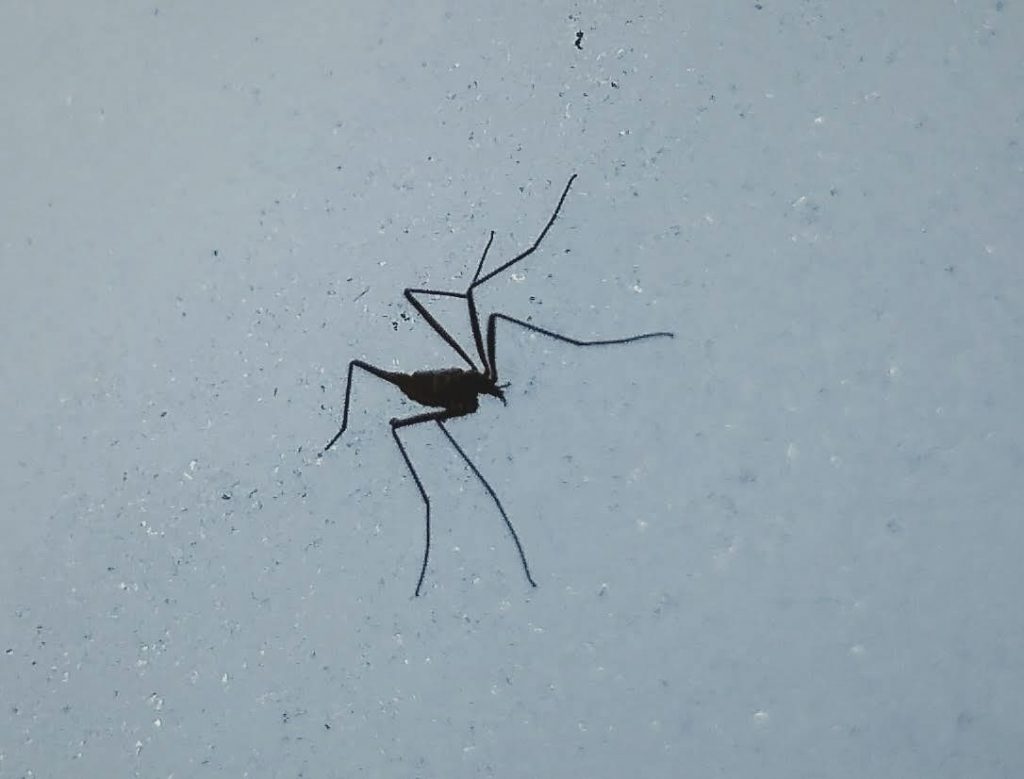
Recent studies have revealed that the snow fly, an insect that inhabits polar environments, has a unique ability to survive in sub-zero temperatures, making it one of the most cold-tolerant organisms in the world. This discovery has sparked widespread debate among scientists regarding the biological mechanisms that enable this insect to endure such extreme conditions.
The snow fly lives in polar regions where temperatures can drop below -40 degrees Celsius. Despite these harsh conditions, it can survive thanks to its unique system for coping with the cold. However, the precise details of how it achieves this remain unclear, raising numerous questions among researchers.
Details of the Discovery
The snow fly exhibits an exceptional ability to survive in extremely low temperatures, relying on a range of physiological adaptations. Some studies suggest that this insect uses special proteins that help it resist freezing, while others believe that different mechanisms also play a role in this phenomenon. This divergence of opinions reflects the challenges scientists face in understanding complex biological processes.
The snow fly serves as an ideal model for studying the effects of climate change on living organisms. As global temperatures rise, its natural habitats may be affected, raising concerns about the future of this species. Therefore, understanding how this insect adapts to harsh conditions could aid in developing strategies to preserve biodiversity in polar regions.
Background & Context
The snow fly has lived in polar environments for thousands of years, evolving to adapt to harsh climatic conditions. This insect is a vital part of the ecosystem in polar regions, playing an important role in the food chain. However, rapid climate changes threaten these ecosystems, making it essential to understand how these changes impact living organisms.
Historically, studies on living organisms in polar regions have been limited, but with the increasing interest in climate change, scientists have begun to focus on these species. The snow fly is not the only one facing challenges; many other organisms may also be significantly affected.
Impact & Consequences
The snow fly's ability to survive in low temperatures raises questions about how climate change may affect other species. If this insect can adapt, could there be other species capable of doing so as well? This question opens the door for further research into how living organisms respond to environmental changes.
Moreover, understanding the survival mechanisms of the snow fly could assist scientists in developing new techniques to conserve endangered species. This research may prove beneficial in agriculture and environmental fields, where the acquired knowledge could be used to develop plant and animal strains that are more resilient to harsh conditions.
Regional Significance
While it may seem that the snow fly has no direct connection to Arab countries, the climate changes affecting polar regions can have indirect effects on the environment in the region. As temperatures rise, weather patterns may change, impacting agriculture and water resources in Arab nations.
Thus, understanding how climate change affects living organisms in polar environments may help Arab countries take proactive steps to adapt to potential climate changes.