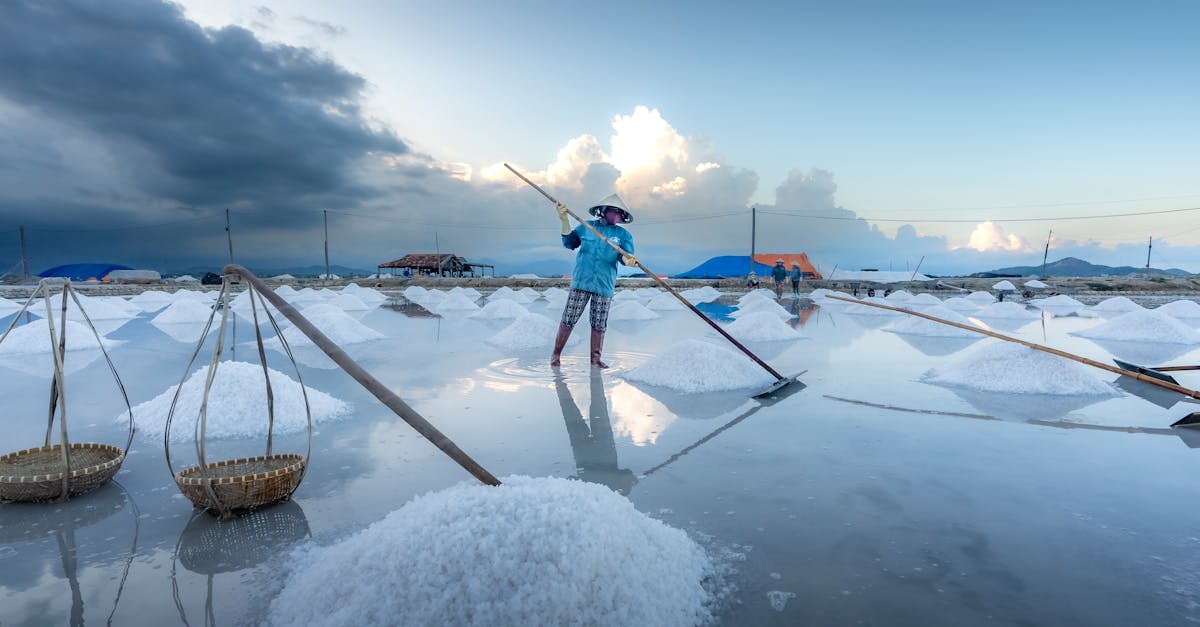
On Thursday morning, May 7th, the sun's heat on the shores of Gentiniwa village in Indramayu, West Java, was extremely intense, making it uncomfortable to stay outdoors. However, there was a different activity in the salt tunnel in the area, where farmers were busy collecting white salt crystals, a product they had long dreamed of.
Under the sunlight, the salt crystals sparkled in the tunnel, with the black color of the geological membrane adding a special beauty to the whiteness of the salt, contrasting with the brown color typical of traditional salt. Farmer Sugetno stood there, pointing to the salt deposits that had begun to harden at the bottom of the production field, while drops of sweat dripped from his forehead.
Event Details
Several months ago, Sugetno spent his time cultivating rice and raising livestock. However, after being encouraged by some friends to explore the possibilities of the coastal area, he decided to start a salt production project. Sugetno says, "The Gentiniwa area is wonderful, as it has agricultural land and sea, and livestock can also be raised here." Sugetno and his friends gradually began building the tunnel, taking about three months to complete one tunnel at a cost of up to 40 million rupiah.
Sugetno views the salt production project as a long-term investment, as the production system can be utilized once construction is completed. Production began about two weeks ago, yielding approximately 500 kilograms of salt, equivalent to ten bags.
Background & Context
Historically, Indramayu has been known for agriculture, but climate and economic changes have led many farmers to seek alternative sources of income. Salt production is a new option that allows farmers to face economic challenges. In recent years, the region has seen increased interest in high-quality salt products, reflecting a shift in traditional agricultural strategies.
With the rising demand for pure salt, farmers in Indramayu are focusing on improving production quality, enhancing their market opportunities. The salt produced in Gentiniwa is characterized by its pure white color, making it particularly sought after by fish processing factories in the area.
Impact & Consequences
The salt production project in Indramayu is a positive step towards diversifying income sources for farmers. Amid climate changes and rising agricultural costs, salt offers a new option that can help improve living standards. The increasing demand for pure salt reflects the importance of quality in the market, driving farmers to enhance production techniques.
This initiative serves as a model for other regions facing similar challenges. Through innovation and collaboration, farmers in various areas can find new solutions to their economic problems.
Regional Significance
Although this news pertains to Indramayu, the lessons learned can apply to many Arab countries facing similar economic challenges. Arab farmers can benefit from Indramayu's experience in diversifying their income sources by exploring new products like salt or other agricultural goods.
Ultimately, the success of Sugetno and his friends in salt production reflects the importance of innovation and adaptability to changing conditions. Such projects can serve as a model for many Arab regions seeking to improve their economic situations.