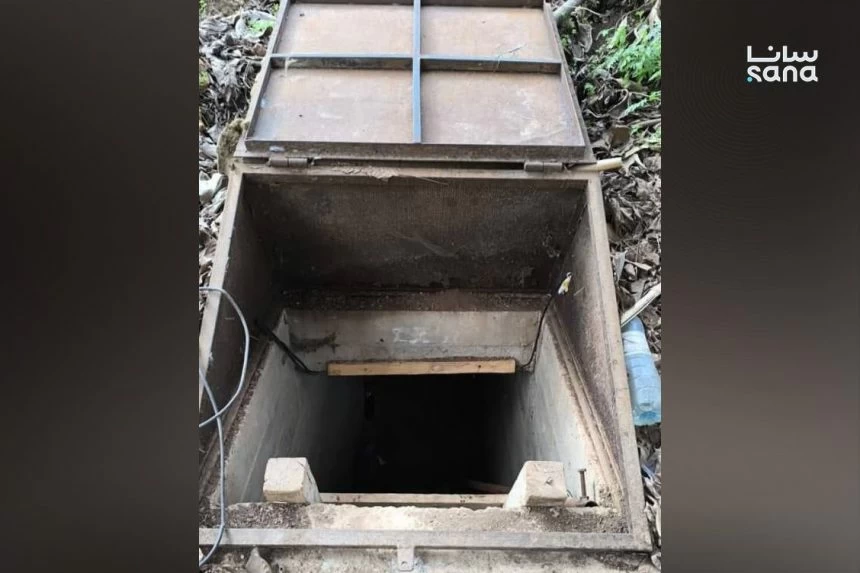
The Syrian Ministry of Defense has uncovered a new smuggling tunnel at the border with Lebanon, making this the second tunnel discovered within 24 hours. This discovery is part of the efforts to secure border areas conducted by the Syrian Arab Army, where the tunnel was used by Lebanese militias for smuggling operations.
On Sunday, the Syrian Ministry of Defense's Media and Communication Department announced that the tunnel was closed by the relevant authorities. This discovery follows the ministry's report on Saturday that army units had found another tunnel linking Syrian territory with Lebanese territory near the village of Hosh Sayid Ali, west of Homs.
Details of the Discovery
The recently discovered tunnel was primarily used for smuggling goods and materials between Lebanon and Syria, reflecting the activities of Lebanese militias in the area. The Syrian Ministry of Defense confirmed that the relevant authorities buried the tunnel after its discovery, in a step aimed at undermining the smuggling operations carried out by these groups.
The Syrian authorities continue to pursue and cut off smuggling routes with neighboring countries, particularly concerning drug trafficking and prohibited goods. Reports have indicated that these tunnels pose a threat to national security, prompting the Syrian army to intensify its efforts to secure the borders.
Background & Context
Historically, the Syrian-Lebanese border has been a theater for various illegal activities, including drug and arms smuggling. The security and political conditions in Syria have contributed to the proliferation of these activities, as many armed groups have exploited the prevailing chaos to carry out smuggling operations.
Lebanese militias, such as Hezbollah, are among the key players in this field, using these tunnels to facilitate the movement of materials and weapons. These activities have led to increased tensions between the Syrian and Lebanese governments, necessitating further cooperation between authorities to combat these phenomena.
Impact & Consequences
Smuggling operations across the border can exacerbate security conditions in the region, as they contribute to enhancing the influence of militias and expanding their activities. Additionally, these activities negatively impact the local economy, leading to increased corruption and smuggling, which affects the lives of ordinary citizens.
Moreover, the continued discovery and use of tunnels by militias may raise concerns within the international community, potentially leading to calls for more interventions or pressures on the concerned governments. These activities could also affect relations between countries in the region, especially with growing fears of drug and arms trafficking.
Regional Significance
This event represents a part of a larger picture concerning regional security in the Middle East. With the increase in illegal activities across borders, it becomes essential for Arab countries to collaborate in addressing these challenges. Such activities can destabilize neighboring countries, necessitating a coordinated response from governments.
In conclusion, the discovery of new tunnels reflects the ongoing challenges faced by the region and indicates an urgent need to enhance security and cooperation among Arab countries to combat smuggling and organized crime.