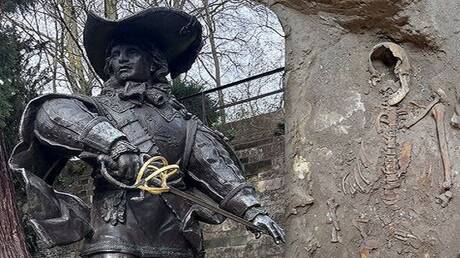
A skeleton believed to belong to the famous French musketeer D'Artagnan has been discovered in a church located in Maastricht, in the Limburg province of southern Netherlands. This discovery highlights the history of this legendary character associated with a period of military conflicts in the 17th century.
D'Artagnan, considered a symbol of bravery and chivalry, was part of a group of knights serving under King Louis XIII. He was killed in the battle of La Rotière in 1673, making him a pivotal figure in French literature, especially after his story was immortalized in the novel The Three Musketeers by author Alexandre Dumas.
Details of the Discovery
The discovery was made during restoration work in the church, where the skeleton was found in an ancient grave dating back to the 17th century. Preliminary examinations have shown that the skeleton matches the historical description of D'Artagnan, sparking interest among historians and archaeologists.
This church is considered one of the oldest historical landmarks in the region and has witnessed many historical events. It is believed that the skeleton was buried there after his death, adding a new dimension to the understanding of the region's history.
Background & Context
The history of D'Artagnan reflects a period of political and military conflicts in Europe, where France was seeking to expand its influence on the continent. This era was filled with alliances and disputes, making D'Artagnan a central figure of that time.
The character of D'Artagnan embodies chivalry and courage, and his story has influenced French literature and culture, being depicted in numerous artistic and literary works. This discovery may open the door for a reevaluation of this character's role in European history.
Impact & Consequences
This discovery is considered a significant step in the study of European history, as it could provide new information about D'Artagnan's life and his impact on historical events. It may also enhance cultural tourism in the area, allowing visitors to explore the history of this legendary figure.
Moreover, this discovery could foster collaboration between archaeologists and historians across various European countries, contributing to a deeper understanding of shared history.
Regional Significance
Although this discovery pertains to European history, it highlights the importance of history in shaping cultural identity. This finding could inspire new generations in the Arab world to explore their own history and culture, fostering pride in their heritage.
It also underscores the importance of preserving historical sites and cultural heritage, reflecting the need to raise awareness about the significance of history in shaping the present and future.