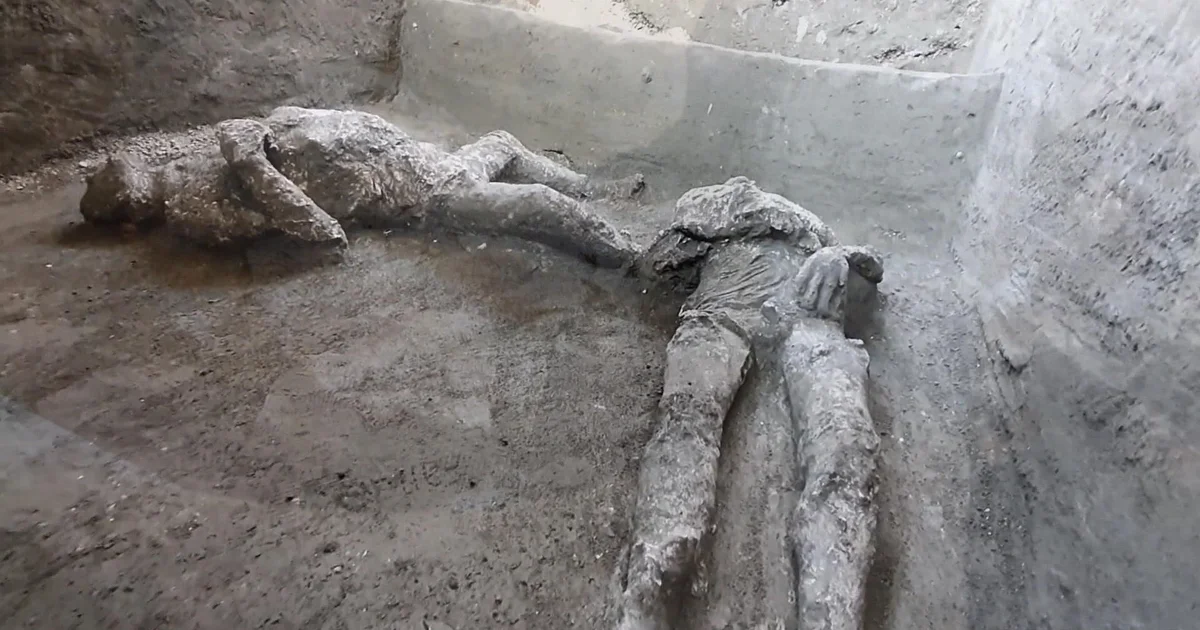
Archaeologists have uncovered unusual remains in the ancient city of Pompeii, raising new questions about the eruption of Mount Vesuvius that devastated the city in AD 79. These discoveries offer new insights into the historical catastrophe that claimed thousands of lives and destroyed one of the most prosperous cities in the Roman Empire.
The remains found include skeletons of people who were attempting to escape the disaster, as well as traces of unusual organic materials. These discoveries provide valuable information about the conditions experienced by the residents of Pompeii in the final moments before the catastrophic eruption.
Details of the Discovery
These remains were discovered during ongoing excavations at the archaeological site, where scientists aim to understand more about daily life in Pompeii before the disaster. Reports indicate that some skeletons were found in positions suggesting attempts to flee, reflecting the panic and chaos that engulfed the city during those critical moments.
Additionally, traces of food items and household tools were found, indicating that life was proceeding normally before the catastrophe struck. These discoveries enhance scientific understanding of how the volcanic eruption impacted the daily lives of the inhabitants.
Background & Context
The eruption of Mount Vesuvius in AD 79 is one of the most famous natural disasters in history, as clouds of ash completely covered the city, preserving it under layers of debris. Pompeii was discovered in the 18th century, and since then, it has become one of the most important archaeological sites in the world.
Historically, the eruption of Vesuvius has had a significant impact on our understanding of natural disasters and their effects on communities. This event serves as an example of how humans interact with nature and how disasters can lead to radical changes in societies.
Impact & Consequences
The new discoveries in Pompeii may lead to a reevaluation of how we understand the eruption of Vesuvius and its effects on the population. This information could contribute to the development of better strategies for dealing with natural disasters in the future, providing valuable lessons on how to prepare for and adapt to such events.
Moreover, these discoveries may spark greater interest in archaeological tourism, boosting the local economy and increasing cultural awareness about the importance of preserving historical sites.
Regional Significance
Although Pompeii is located in Italy, the lessons learned from this historical event can be relevant to the Arab region, which also faces challenges from natural disasters. These discoveries could help raise awareness about the importance of disaster preparedness in Arab communities.
Ultimately, Pompeii remains a symbol of human history, and the new discoveries there continue to open doors for a deeper understanding of humanity's past.