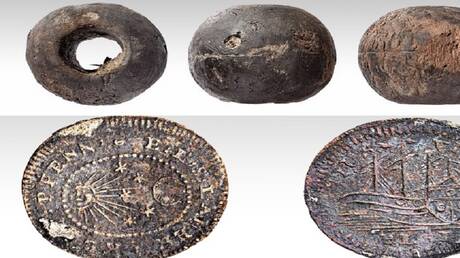
The Greek Ministry of Culture announced the discovery of a small marble fragment off the coast of Kythira, linked to the sunken sailing ship 'Mentor', which was transporting the famous Parthenon sculptures. This discovery highlights the importance of the ship in transporting ancient Greek artifacts and enhances the historical understanding of its role during that period.
The ship 'Mentor', which sank in 1802, was carrying a collection of sculptures from the Parthenon temple, one of the most prominent archaeological landmarks in the world. These sculptures represent a part of Greek cultural heritage and were transported to Britain in the 19th century, sparking significant debate over their ownership.
Details of the Discovery
The new discovery came during marine excavation operations conducted by the Greek Ministry of Culture, where the marble fragment was found at a site believed to have been part of the cargo of the ship 'Mentor'. The fragment, representing a piece of ancient Greek sculpture, bears intricate carvings that reflect the skill of artists from that era.
This discovery is not the first of its kind, as other artifacts related to the ship have been found, reflecting the historical significance of the site. The Ministry of Culture confirmed that it will continue its efforts in excavation and preservation of Greek cultural heritage, providing regular reports on new discoveries.
Background & Context
Historically, the ship 'Mentor' was transporting a collection of sculptures from Athens to London, considered one of the most important cultural shipments of that time. After its sinking, it became a subject of research and study, with many scholars and historians attempting to understand the details of the incident and its impact on cultural heritage.
The Parthenon temple, built in the 5th century BC, is regarded as a symbol of ancient Greek civilization. The sculptures that adorned the temple hold significant historical and artistic value and have sparked discussions regarding their ownership between Greece and Britain, especially after many were transferred to the British Museum.
Impact & Consequences
The recent discovery may contribute to strengthening Greek claims for the return of the sculptures that were transported abroad. The Greek government hopes that this discovery will support its legal and moral position in reclaiming stolen cultural heritage.
Furthermore, this discovery could open new avenues for scientific research in the field of marine archaeology, enhancing the importance of preserving cultural heritage in the Mediterranean. Scientists and explorers may find in this discovery an opportunity to study the impact of environmental factors on marine artifacts and how to preserve them.
Regional Significance
This discovery reflects the importance of cultural heritage in the Mediterranean region, which encompasses many ancient civilizations. For Arabs, the shared cultural heritage with ancient civilizations can enhance their understanding of their history and cultural identity.
Moreover, discussions about the restitution of stolen artifacts may open the door for Arab countries to demand the return of artifacts that were illegally transported, thereby enhancing the importance of cultural dialogue between nations.
In conclusion, this discovery represents a significant step towards a deeper understanding of the history of ancient Greek civilization and reflects the challenges faced by countries in preserving their cultural heritage.