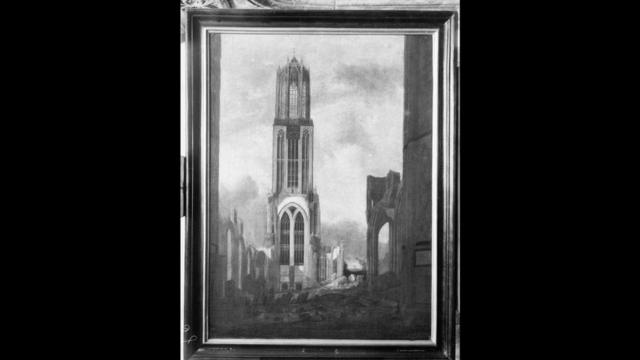
In an intriguing discovery, remains believed to belong to the famous French musketeer D'Artagnan were found beneath the floor of St. Peter and Paul Church in the city of Maastricht, Netherlands. This discovery comes more than 350 years after D'Artagnan's death, who was killed during the siege of the city in 1673, becoming an immortal character in adventure literature thanks to the novels of Alexandre Dumas.
Jos Valken, a church deacon, assisted in extracting the skeleton and is 99% sure that these remains belong to Charles de Batz de Castelmore, known by the name D'Artagnan, who was one of the close associates of French King Louis XIV. The remains were discovered in a location believed to have been used as his grave, where a bullet from the time of his death and a coin from 1660 were also found.
Details of the Discovery
The story began when church officials decided to examine the floor after some tiles were broken. Upon digging, they discovered a wall, prompting them to call in an archaeologist. When they started digging beneath where the altar stood 200 years ago, they found the skeleton. Valken stated, "We felt silence when we found the first bone," adding that there are several indications suggesting that the skeleton belongs to the character D'Artagnan.
While Valken believes these remains belong to D'Artagnan, archaeologist Wim Dikman takes a more cautious approach, indicating that he prefers to wait for DNA confirmation to identify the remains. A sample from the remains has been taken and analyzed in Germany, while some bones were sent to the city of Deventer in the Netherlands to determine the age and origin of the skeleton.
Historical Context
Historically, D'Artagnan is considered a real figure, but he became a symbol of French literature thanks to Dumas' novels that presented his adventures with the Three Musketeers. D'Artagnan was killed in the battle of Maastricht, where he was shot in the throat during King Louis XIV's attempt to capture the city. The French forces decided to bury him locally, as their camp was near the church.
Although D'Artagnan was a historical figure, other characters in Dumas's novels were fictional and may have been inspired by real individuals from the royal guard who provided protection for the king and participated in battles.
Impact and Consequences
This discovery may open new avenues for understanding French military history in the seventeenth century and enhance the significance of Maastricht as a historical site. It could also lead to further research on D'Artagnan's life and his role during that period, potentially shedding light on unknown aspects of French history.
Moreover, this discovery could attract tourists and history enthusiasts to Maastricht, contributing to the local economy and increasing cultural awareness of French and Dutch heritage.
Significance for the Arab Region
Although this discovery relates to a French historical figure, it highlights the importance of history in shaping cultural identity. In the Arab world, there is a growing interest in history and heritage, making such discoveries significant for understanding cultural ties between peoples.
Additionally, studying military history can provide valuable lessons for Arab countries on how to manage international relations and conflicts, underscoring the importance of historical research.
In conclusion, the discovery of D'Artagnan's remains represents a historical event that may change our understanding of a character pivotal to French history and reflects the importance of cultural heritage in shaping national identities.