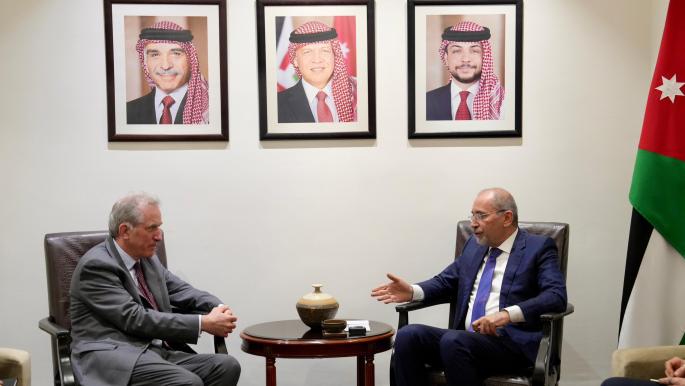
Jordanian Foreign Minister Ayman Safadi emphasized the importance of activating diplomacy as a means to end the dangerous escalation in the region during his meeting with his Spanish counterpart José Manuel Albares and Portuguese Foreign Minister João Gomes Cravinho. These discussions come at a time when international concern is growing over the ramifications of ongoing conflicts in the Middle East.
The meeting, held in the Jordanian capital Amman, addressed ways to enhance cooperation among the three countries to confront the security and political challenges plaguing the region. Safadi pointed out that the current situation requires coordinated efforts from all concerned parties to ensure regional stability and halt hostilities.
Details of the Meeting
During the meeting, the latest developments in the regional arena were reviewed, with Safadi stressing the necessity of collective action to end ongoing conflicts, noting that military solutions would only exacerbate the situation. He also called for support for diplomatic initiatives aimed at achieving lasting peace.
For their part, Albares and Cravinho expressed their support for Jordanian efforts in this context, emphasizing the importance of dialogue as a means to resolve disputes. The meeting comes at a sensitive time, as tensions are rising among several countries in the region, necessitating urgent action from the international community.
Background & Context
Historically, the Middle East has witnessed numerous armed conflicts that have led to humanitarian and political crises. Since the beginning of the new millennium, conditions have worsened due to civil wars, occupations, and sectarian conflicts. Jordan, as a neighboring country to many of these conflicts, has played a pivotal role in mediation and diplomatic efforts.
Safadi, who has served as Foreign Minister since 2016, is considered one of the prominent diplomats in the region and has worked to strengthen Jordan's relations with European and Arab countries. These meetings are part of Jordan's efforts to maintain its internal stability and enhance its role as a mediator in regional disputes.
Impact & Consequences
The continuation of escalation in the region could lead to serious repercussions for regional and international security. Military escalation may open the door to increased foreign interventions, complicating peace efforts. Additionally, the humanitarian crises resulting from conflicts directly affect the lives of millions of civilians, necessitating an urgent response from the international community.
Activating diplomacy as a means to end conflicts could contribute to rebuilding trust among the various parties and enhance the chances of reaching peaceful solutions. It is crucial for international efforts to converge to achieve lasting stability in the region, especially in light of the difficult economic and social conditions faced by many countries.
Regional Significance
The situation in the Middle East significantly impacts other Arab countries, as any escalation could lead to negative repercussions on security and stability across the region as a whole. Ongoing crises affect trade, investments, and the flow of refugees, increasing pressures on neighboring countries.
Jordan, which hosts large numbers of refugees, faces significant challenges under the current circumstances. Therefore, Safadi's efforts and his meetings with European counterparts may be an important step towards achieving stability in the region and alleviating the burdens on host countries.
In conclusion, hope remains pinned on diplomacy as a means to end conflicts and achieve peace in the region, as international cooperation is the only way to ensure a secure and stable future for all.