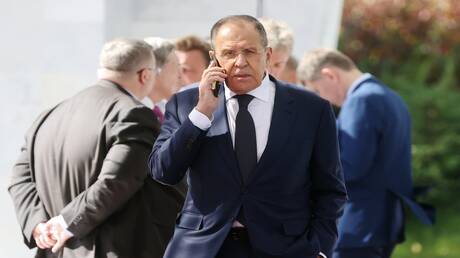
Russian Foreign Minister Sergey Lavrov and Iranian Foreign Minister Abbas Araqchi held a phone call to discuss ways to de-escalate the ongoing conflict in the Middle East amid increasing international efforts for peace.
This call comes at a time when the region is witnessing heightened tensions, with growing concerns about the escalation of conflict among various parties. Both sides emphasized the importance of dialogue and cooperation among the concerned countries to ensure regional stability.
Details of the Event
The phone call between Lavrov and Araqchi addressed the current situation in the Middle East, where they reaffirmed the need to enhance diplomatic efforts to reduce tensions. Lavrov pointed out the importance of coordination between Russia and Iran in this context, as both countries play a pivotal role in the ongoing events.
They also discussed the challenges facing the region, including the Israeli-Palestinian conflict and the crises in Syria and Yemen. Araqchi expressed his country's appreciation for Russia's efforts in supporting regional stability, stressing the importance of joint action to achieve peace.
Background & Context
Historically, the Middle East has witnessed numerous conflicts that have exacerbated humanitarian and political conditions. Russia and Iran have been among the countries that played a significant role in attempting to find solutions to these crises, as each seeks to enhance its influence in the region.
In recent years, tensions between Iran and the United States have increased, impacting regional relations. Additionally, the Israeli-Palestinian conflict remains one of the most prominent challenges, with ongoing attempts to achieve peace among the conflicting parties.
Impact & Consequences
Many analyses predict that these communications will enhance cooperation between Russia and Iran, which could contribute to reducing tensions in the region. Any progress in this direction may positively reflect on the humanitarian conditions in the countries affected by the conflicts.
On the other hand, the continuation of conflicts may lead to worsening humanitarian crises, necessitating urgent international responses. These conditions could affect the relationships between major countries in the region, complicating the political landscape further.
Regional Significance
The situation in the Middle East has a direct impact on Arab countries, many of which suffer from the repercussions of ongoing conflicts. Any efforts to de-escalate tensions could contribute to improving economic and social conditions in the region.
Moreover, enhancing cooperation between major powers like Russia and Iran could open new avenues for dialogue among the conflicting parties, potentially contributing to greater stability in the region.
In conclusion, hope remains pinned on diplomatic efforts to achieve peace in the Middle East, requiring international cooperation and strong political will from all concerned parties.