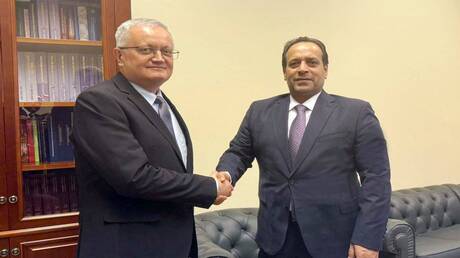
Russian Deputy Foreign Minister Georgy Borisенко received the special advisor to the Libyan Presidential Council, Sami Al-Manfi, on Tuesday, in a meeting aimed at discussing the current political developments in Libya. This meeting takes place during a time of significant political transformations in the country, as the international community seeks to support stability in the region.
The visit of Al-Manfi to Moscow is part of efforts to strengthen bilateral relations between Libya and Russia, representing an opportunity to exchange views on the current situation in Libya, which is characterized by internal conflicts and economic challenges.
Details of the Meeting
During the meeting, a range of important issues were addressed, including efforts for national reconciliation, upcoming elections, and the role of the international community in supporting the political process. Borisенко also received a letter from Al-Manfi addressed to Russian President Vladimir Putin, reflecting Libya's desire to enhance bilateral cooperation.
This visit is considered part of Libya's efforts to strengthen its relations with major powers, as the Libyan government seeks to attract international support to face the challenges it encounters. Al-Manfi emphasized the importance of Russian support in achieving stability in Libya.
Background & Context
Historically, Libyan-Russian relations have experienced numerous fluctuations, with Libya under the rule of Muammar Gaddafi enjoying strong ties with Moscow. Following the fall of the regime in 2011, the country plunged into chaos and conflict. However, the current government is striving to rebuild those relations within a new framework.
This visit coincides with multiple international efforts to support stability in Libya, as the United Nations seeks to organize national elections and implement reconciliation agreements. Additionally, Russia is playing an increasingly significant role in the region, making these discussions particularly important.
Impact & Consequences
Strengthening relations between Russia and Libya could significantly influence the political landscape in the region. Moscow is regarded as a key player in international politics, and its support for the Libyan government may enhance its position against other powers seeking to influence Libya.
Moreover, these discussions could open the door to new economic opportunities between the two countries, particularly in the fields of energy and infrastructure, which may contribute to rebuilding Libya's struggling economy.
Regional Significance
The political developments in Libya have a direct impact on security and stability in North Africa. Stability in Libya could help reduce tensions in neighboring countries such as Tunisia and Algeria, which are suffering from the repercussions of the Libyan chaos.
Furthermore, strengthening Russian relations with Arab countries could alter the balance of power in the region, as Russia seeks to expand its influence in the Arab world by supporting legitimate governments.
In conclusion, the visit of the special advisor to the Libyan Presidential Council to Moscow represents an important step towards enhancing bilateral relations and comes at a critical time for Libya, where current conditions require the concerted efforts of the international community to support stability and development.