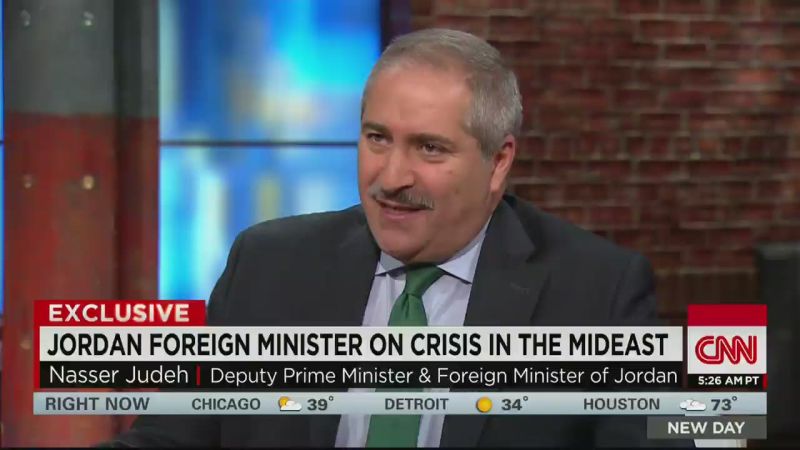
Jordanian Foreign Minister Ayman Safadi engaged in discussions with his counterparts from several countries regarding the implications of the ongoing regional and international escalation. This meeting occurs at a critical juncture, where increasing tensions in multiple regions call for immediate diplomatic efforts to prevent further deterioration.
The video conference brought together foreign ministers from countries such as Egypt, Saudi Arabia, and the United Arab Emirates, where they exchanged views on how to address the current crises. Safadi emphasized the importance of coordination among Arab nations to confront shared challenges.
Details of the Meeting
During the meeting, the situation in Palestine and Syria was reviewed, along with tensions in Lebanon and Iraq. Safadi pointed out that the escalation in these areas threatens regional security and requires a swift response from the international community.
There was also a strong emphasis on supporting diplomatic efforts to resolve existing conflicts, with Safadi advocating for dialogue as a means to achieve peace and stability in the region. The participating ministers expressed their concerns about the implications of the escalation on regional security.
Background & Context
The Arab region has witnessed escalating conditions for several months, with rising tensions due to ongoing conflicts and humanitarian crises. The situation in Palestine, for instance, has seen a notable escalation with continued Israeli assaults on civilians.
In Syria, the civil war persists, exacerbating humanitarian crises. Additionally, Lebanon is grappling with economic and political crises that impact the country's stability. These crises necessitate coordinated Arab and international responses.
Impact & Consequences
The current escalation has significant implications for regional security, potentially leading to worsening humanitarian crises and an increase in the number of displaced persons. Furthermore, ongoing tensions may adversely affect the economies of neighboring countries.
The ministers underscored the importance of enhancing security and intelligence cooperation among Arab nations to tackle common threats. They also discussed the necessity of supporting countries affected by conflicts through humanitarian and developmental aid.
Regional Significance
The tense situations in the region directly impact the security and stability of Arab countries. Escalation in conflicts could result in a flow of refugees into neighboring countries, increasing pressure on these nations.
In conclusion, the meeting between Safadi and the foreign ministers reflects the urgent need for Arab cooperation in addressing current challenges. It is essential for Arab nations to adopt effective strategies to manage crises and achieve stability in the region.