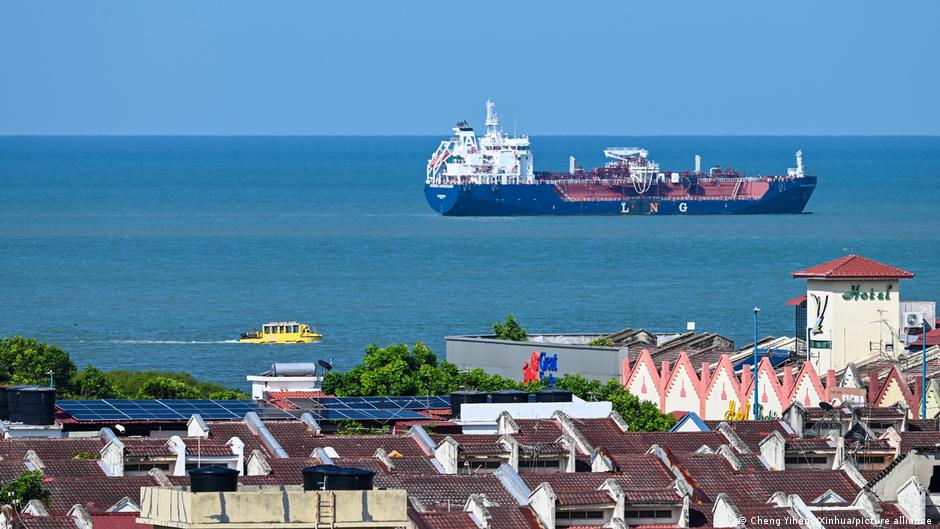
Concerns are growing over the use of maritime corridors as geopolitical pressure tools, with Indonesia's finance minister suggesting tolls on the Malacca Strait, which connects the Indian Ocean to the Pacific Ocean. These statements come at a critical time as the world faces increasing security challenges in vital maritime routes.
Although the minister later clarified that he was not entirely serious about his proposal, the idea raises significant concerns about the potential exploitation of maritime corridors for political purposes. The Malacca Strait is considered one of the most important shipping routes in the world, accounting for approximately 22% of international maritime trade.
Event Details
In light of the escalating crises surrounding the Strait of Hormuz, experts have begun to shift their focus to other maritime corridors such as the Malacca Strait and the Taiwan Strait. A report from Reuters indicated that the closure of the Strait of Hormuz has prompted policymakers in Asia to consider the security of these other maritime routes.
Concerns about piracy and regional conflicts are also among the issues that raise alarms. In November of last year, the Center for Strategic and International Studies warned that non-state actors have become capable of significantly impacting global trade flows, citing attacks carried out by Houthi militias in the Red Sea.
Background & Context
Historically, maritime corridors such as the Strait of Hormuz and the Malacca Strait have formed vital strategic points for global trade. These corridors are not merely waterways; they are centers of geopolitical power. As tensions in the region increase, it has become clear that these corridors could be used as tools for political pressure.
The Strait of Hormuz, through which large quantities of global oil and gas exports pass, is currently in a precarious position. Some experts suggest that the Taiwan Strait may become more important than the Strait of Hormuz in the event of a conflict between China and Taiwan, as a significant portion of Asian trade passes through it.
Impact & Consequences
There are growing fears that the use of maritime corridors as geopolitical pressure tools could lead to severe consequences for the global economy. The Center for Strategic and International Studies has warned that reliance on a few vital maritime corridors could have global repercussions in the event of any disruption.
Experts have also pointed out that international laws are clear about the freedom of passage in internationally significant maritime corridors. However, the political reality may complicate the enforcement of these laws, as seen in the South China Sea where China ignored an international arbitration court ruling.
Regional Significance
The Arab region, particularly the Gulf states, is among the most affected by tensions in maritime corridors. The economies of these countries heavily rely on oil and gas exports, which pass through the Strait of Hormuz. Any threat to these corridors could directly impact oil prices and the global economy.
Ultimately, Arab states must be prepared to face the challenges arising from the use of maritime corridors as geopolitical pressure tools and work to enhance their maritime security.