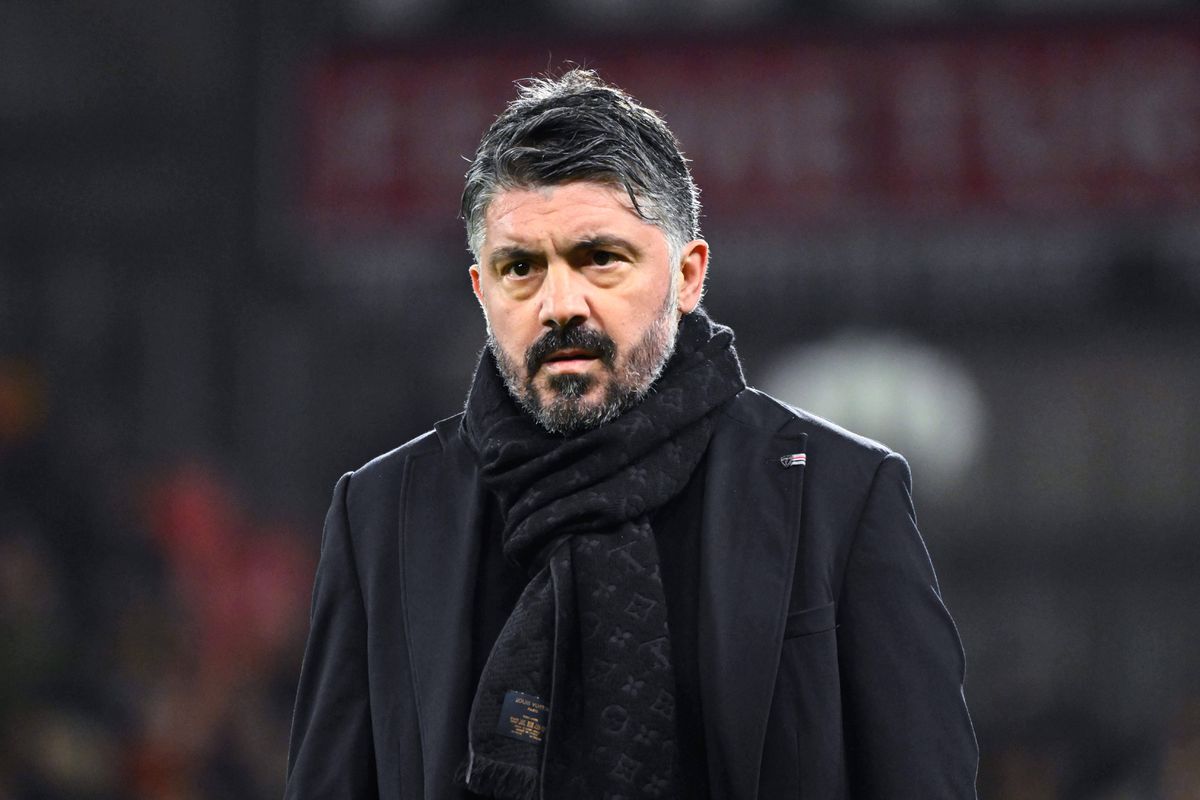
The Italian Football Federation (FIGC) announced the dismissal of coach Gennaro Gattuso on Friday, following the national team's failure to qualify for the World Cup for the third consecutive time. This decision came after Italy lost to Bosnia in the playoff match on penalties, exacerbating the crises in Italian football.
The dismissal of Gattuso came just one day after the resignation of the president of the Italian Federation, Gabriele Gravina, and the resignation of former team captain Gianluigi Buffon from his position as team director. Gattuso expressed his deep sorrow after failing to achieve the set goals, noting that the Azzurri jersey is the most precious in football and that it is essential to facilitate future technical evaluations.
Details of the Event
Gattuso was appointed as the coach of the Italian national team last June on a one-year contract, succeeding coach Luciano Spalletti, who was dismissed after a heavy defeat against Norway. Despite a strong start under his leadership, where the team achieved five consecutive victories in group matches, the significant goal difference with Norway forced the team to play another playoff match.
Although they won against Northern Ireland in the semifinals, the team could not maintain their lead in the final match against Bosnia, where their performance faltered in the penalty shootout after being ahead 1-0. This result was a shock to Italian football fans, who are accustomed to seeing their team shine in global tournaments.
Background & Context
Historically, the Italian national team is considered one of the most successful teams in football history, having won four World Cup titles. However, recent years have seen a noticeable decline in the team's performance, failing to qualify for the World Cup in 2018, with the same scenario repeating in 2022. This decline raises questions about the future of Italian football and how to regain its status among the elite.
It is worth noting that Italy had lost in the playoff stages in the last World Cup, which increased pressure on coaches and the Italian Federation. With growing criticism, it has become clear that there is an urgent need to reassess the strategies used in talent development and player training.
Impact & Consequences
The dismissal of Gattuso may mark the beginning of a new phase in Italian football, where the Italian Federation must take serious steps to rebuild the team and improve performance. These changes are likely to affect young players, who need a stable and supportive environment to achieve success.
Moreover, these events could impact the reputation of Italian football on the international stage, as fans look forward to seeing their team return to competing for titles. It is crucial that the new coach has a clear vision and an effective strategy for rebuilding the team.
Regional Significance
Football is an important part of the culture in many Arab countries, where fans passionately follow European and global tournaments. Italy's failure to qualify for the World Cup may pique the interest of Arab audiences, especially amid the increasing competition among global teams.
Additionally, the Italian experiences could serve as a lesson for Arab countries seeking to develop their football, as they can learn from the mistakes and challenges faced by Italy in recent years.
In conclusion, Italy's failure to qualify for the World Cup represents a turning point in the history of Italian football and reflects the urgent need to reassess game development strategies. It will be interesting to follow the next steps that the Italian Federation will take and how they will impact the future of football in the country.