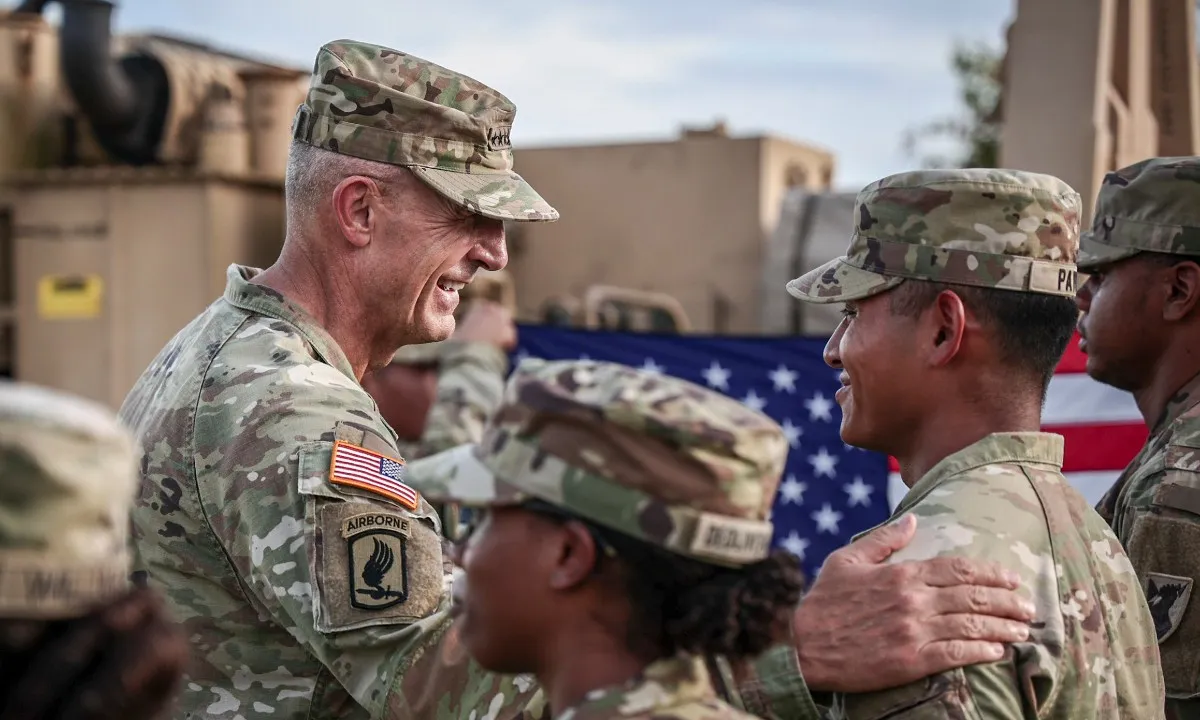
U.S. Defense Secretary Pete Hegseth announced the dismissal of Chief of Staff General Randy George, a move that comes at a highly sensitive time as tensions between the United States and Iran escalate. This dismissal comes amid reports discussing the possibility of a ground operation by the U.S. military within Iranian territory, complicating the military and political landscape in the region.
This step is part of a broader strategy adopted by the U.S. administration to counter increasing threats from Iran, which include its support for armed groups in the region and the development of its nuclear program. This decision has raised questions about the future of U.S. military operations in the Middle East, especially under current circumstances.
Details of the Dismissal
Military sources reported that the dismissal came after a comprehensive assessment of military performance in the region, where General George held his position during a significant escalation in Iranian activities. A new commander has been appointed to his position, reflecting the U.S. administration's desire to change military leadership amid changing conditions.
Reports indicate that plans are underway to execute military operations that may include ground interventions, which could lead to further escalation in the ongoing conflict. These plans come at a sensitive time, as the U.S. military seeks to bolster its presence in the region to counter increasing Iranian threats.
Background & Context
Historically, U.S.-Iranian relations have seen increasing tensions since the Islamic Revolution in 1979. Since then, the United States has taken several steps to counter what it perceives as threats from Tehran, including imposing economic and military sanctions. In recent years, these tensions have heightened with the U.S. withdrawal from the Iranian nuclear deal in 2018, leading to an escalation in the standoff between the two countries.
Iran is considered a key player in the Middle East, supporting numerous armed groups in Iraq, Syria, and Lebanon, complicating the security situation in the region. These dynamics make it challenging for the United States to achieve its strategic goals without incurring significant losses.
Impact & Consequences
The dismissal of General George raises numerous questions regarding U.S. military strategy in the region. Will this move lead to an escalation of military operations against Iran? Or will it reflect the U.S. administration's desire to reassess its military strategy?
The potential repercussions of this dismissal may include increased military tensions, and it could provoke reactions from Iran and its supported groups. Additionally, this step may affect U.S. relations with its allies in the region, who are closely monitoring the developments.
Regional Significance
The recent developments in U.S.-Iranian relations have significant implications for the Arab region. The tensions between the United States and Iran could lead to escalated conflicts in countries like Iraq and Syria, where U.S. forces are present and support the Iraqi government in facing Iranian threats.
These events may also impact regional security, prompting Arab countries to take clear stances regarding the potential escalation. Under these circumstances, Arab nations must be prepared to deal with any repercussions that may arise from U.S. military operations in the region.
In conclusion, the developments in U.S.-Iranian relations remain a focal point of significant interest, as fears of military escalation grow that could affect stability in the region. The international community must closely monitor these events, as any escalation could lead to unpredictable outcomes.