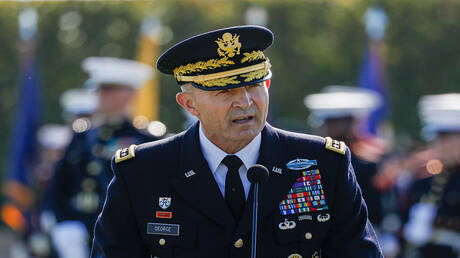
U.S. Secretary of Defense Pete Hegseth has dismissed General Randy George, the Army Chief of Staff, in an unprecedented move during wartime, according to three defense officials speaking to Reuters. This dismissal comes at a sensitive time as the U.S. military faces multiple challenges on the international stage.
This decision is seen as a seismic shift in the structure of U.S. military leadership, as General George is considered a prominent figure in the Army, having held his position for a long time. According to sources, this dismissal reflects dissatisfaction with leadership performance under current circumstances.
Details of the Dismissal
The dismissal of General George comes at a time when the U.S. military is facing increasing pressures on several fronts, including conflicts in the Middle East and Afghanistan. This decision is part of Hegseth's efforts to restructure military leadership and improve performance in military operations.
While the background of the dismissal has not been officially announced, sources indicate that there are differing views between Hegseth and George regarding strategies for addressing military challenges. George has been replaced by another commander whose name has not yet been disclosed, adding to the uncertainty surrounding the future of military leadership.
Background & Context
Historically, it has not been common for senior military leaders to be dismissed during wartime, as such a move can lead to instability within the military. The United States has seen similar cases in the past, but dismissing the Army Chief of Staff is considered a serious precedent.
The U.S. military, regarded as one of the strongest in the world, relies on stable leadership to execute its military strategies. With rising international tensions, any change in leadership could significantly impact the effectiveness of military operations.
Impact & Consequences
The dismissal of General George could lead to negative effects on morale among soldiers and military leadership. Sudden changes in leadership can create a sense of uncertainty, affecting military performance in the field.
Furthermore, this move may raise questions about the United States' strategy in dealing with international crises. Changes in leadership could lead to shifts in policies, potentially affecting relationships with both allies and adversaries.
Regional Significance
In light of these developments, the decision may have direct implications for conditions in the Arab region, where U.S. forces are present in several countries. Changes in military leadership could affect U.S. strategies in Iraq, Syria, and Afghanistan, which may reflect on regional stability.
This dismissal may also raise concerns among some Arab governments that rely on U.S. military support, as changes in leadership could lead to shifts in U.S. military policies toward the region.
In conclusion, the dismissal of General Randy George opens a wide array of questions regarding the future of U.S. military leadership and its impact on military strategies amid increasing challenges. It remains to be seen how this move will affect conditions on the international stage, particularly in the Arab region.