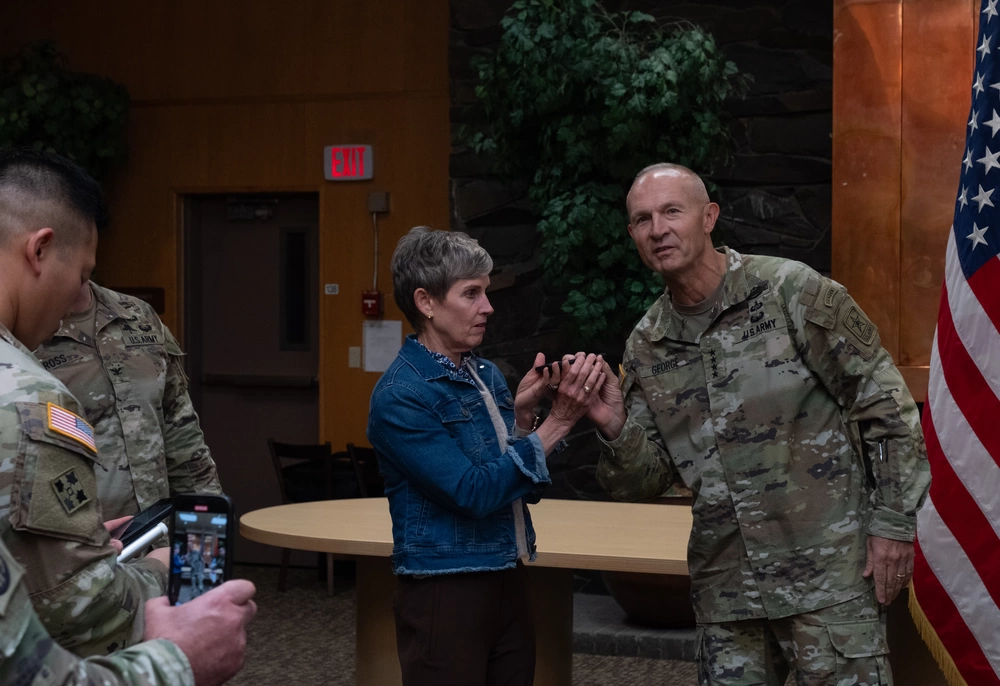
The dismissal of General Randy George from his position as Chief of Staff of the U.S. Army has sparked widespread debate, coinciding with questions about the nature of this role within the American military structure. This decision comes at a sensitive time, complicating the military and political landscape in the United States.
General Randy George, who has held his position for some time, played a prominent role in various military operations and strategic planning. However, his dismissal raises questions about the true reasons behind this decision, and whether it is related to current political trends or military strategies being pursued.
Details of the Dismissal
The U.S. Department of Defense (Pentagon) announced the dismissal of General George, indicating that the decision came after a comprehensive evaluation of leadership performance. Nevertheless, the specific reasons behind this decision were not clarified, leading to speculation about its motivations. The position of Chief of Staff of the U.S. Army is considered one of the most important military roles, responsible for planning and overseeing military operations, making any change in this position a matter of significant interest.
This dismissal comes at a time when the U.S. Army is facing multiple challenges, including geopolitical tensions in various parts of the world, which increases the importance of stable military leadership.
Background & Context
Historically, the United States has witnessed numerous dismissals and changes in high military positions, often linked to political or military crises. For instance, many military leaders have been dismissed in previous periods due to their misalignment with government policies or their failure to achieve military objectives.
In recent years, it has become clear that there is an increasing overlap between politics and military leadership, as military leaders strive to adapt to rapid political changes. This makes General George's dismissal a topic of much debate regarding the military's independence from political influences.
Impact & Consequences
The dismissal of General George could affect morale within the U.S. Army, as many officers and soldiers may feel instability in leadership. Additionally, this decision may impact the relationships between the military and the political administration, which could reflect on future military operations.
Furthermore, this change may lead to a reassessment of U.S. military strategies, especially in light of increasing challenges from countries like China and Russia. Therefore, any change in leadership could have far-reaching implications for U.S. defense policy.
Regional Significance
The United States is a key player in many issues related to the Middle East, where its military and political decisions directly affect the situation in the region. Thus, any change in U.S. military leadership may reflect on American military strategies in the Middle East, potentially impacting security and stability in countries like Iraq and Syria.
Moreover, the dismissal of General George may raise questions about the United States' commitment to its military pledges in the region, possibly leading to a reassessment of certain military and political alliances.
In conclusion, the dismissal of General Randy George remains a contentious topic, raising many questions about the nature of U.S. military leadership and its impact on foreign policy. As events continue to unfold, it will be important to monitor developments in this context to understand the true dimensions of this decision.