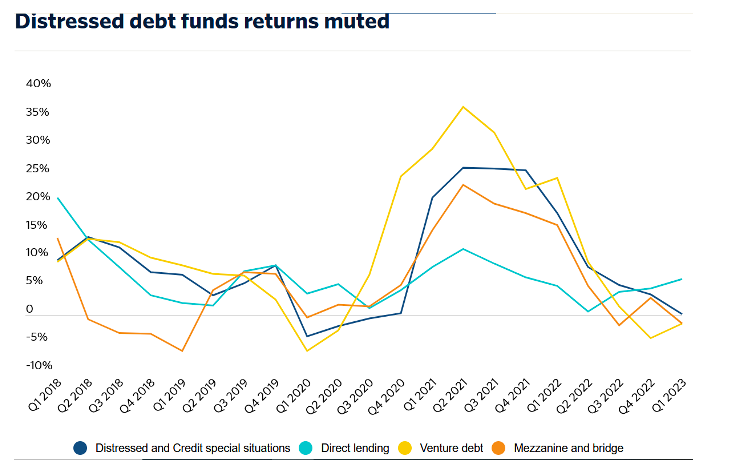
Reports indicate that distressed debt funds are anticipating significant gains due to the sharp decline in the private credit market. This comes at a time when the global economy is experiencing fluctuations affecting companies' borrowing capabilities. As economic pressures increase, the number of companies facing financial difficulties is rising, creating new opportunities for investment funds specializing in purchasing distressed debt.
These funds, also known as "vulture funds," are among the most active investors in financial markets. They capitalize on the opportunities presented by economic crises, purchasing debts at low prices, which allows them to achieve high returns when conditions improve.
Event Details
Forecasts suggest that the decline in private credit may lead to an increase in the number of companies facing financial difficulties, opening the door for distressed debt funds to invest in these companies. In recent years, we have witnessed a rise in the number of companies experiencing financial pressures, making them attractive targets for these funds.
Some reports predict that the value of investments in this sector could reach record levels, as these funds seek to exploit the gaps left by traditional financial institutions. With increasing economic uncertainty, these funds may find new investment opportunities in companies that were previously considered uninvestable.
Background & Context
Historically, distressed debt funds have played an important role in financial markets, especially during economic crises. In times when companies are struggling, these funds are able to purchase assets at low prices, enabling them to achieve high returns when conditions improve. For example, during the global financial crisis in 2008, these funds managed to achieve significant gains by investing in distressed companies.
In recent years, we have seen an increase in the number of distressed debt funds, as investors seek high returns in an unstable economic environment. With increasing financial pressures on companies, these trends are expected to continue in the near future.
Impact & Consequences
The increased activity of distressed debt funds can have significant effects on the economy. On one hand, these funds may help rescue struggling companies, preserving jobs and boosting economic growth. On the other hand, such activities may lead to increased financial risks, as companies could face greater pressures from investors seeking quick returns.
Furthermore, the rising activity of these funds may lead to heightened tensions between investors and companies, as funds may seek to impose strict conditions on distressed companies. This could exacerbate the financial situations of some companies, making recovery more difficult.
Regional Significance
In the Arab region, the increased activity of distressed debt funds may have noticeable effects. With rising economic pressures in many Arab countries, these funds may find opportunities to invest in distressed companies in the region. This could lead to increased foreign investments in Arab markets, boosting economic growth.
However, governments and companies in the region must be cautious of the risks associated with these activities. It is important to enhance transparency and good governance to ensure that both companies and investors benefit from these opportunities.
In conclusion, the activity of distressed debt funds amid the decline in private credit presents a significant opportunity for investors, but it also carries substantial risks. Investors and companies must be aware of these dynamics to ensure success in this volatile market.