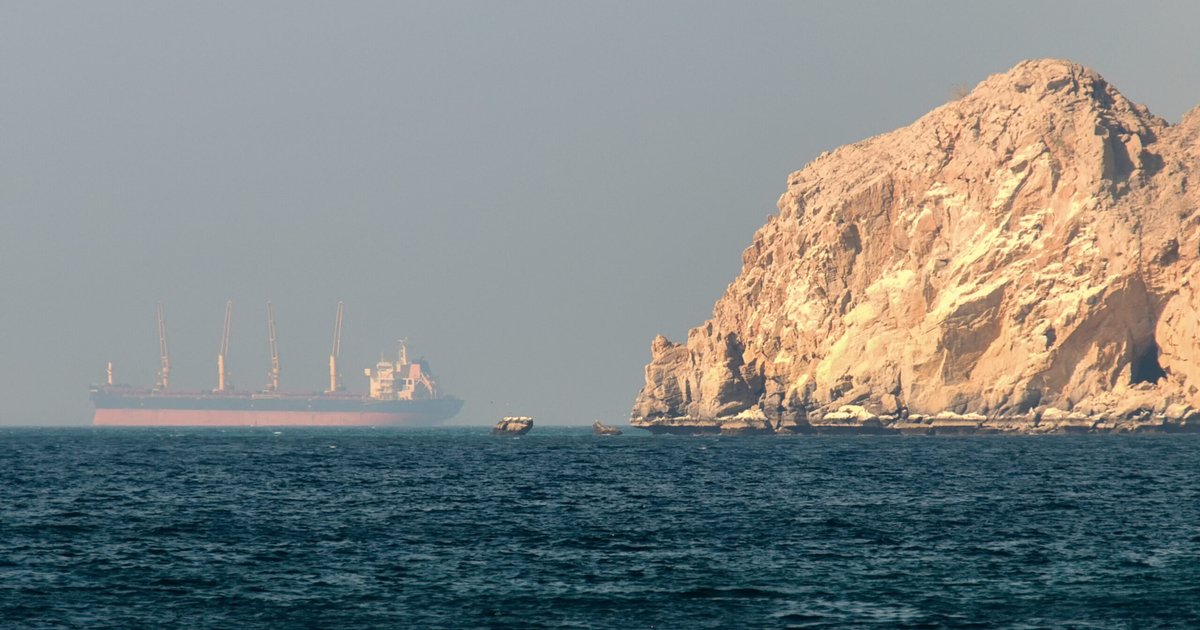
The potential issue of fees for ships transiting through the Strait of Hormuz has taken center stage following a temporary ceasefire agreement regarding Iran. There is a clear divergence between the positions of Oman and Iran concerning the management of this vital maritime corridor.
Oman's Minister of Transport, Saeed Al-Maawali, stated today that Oman is committed to all international agreements related to maritime transport, emphasizing that freedom of navigation is a fundamental principle that cannot be compromised. He pointed out that many countries, including Iran and the United States, have not signed all agreements related to international maritime transport, creating what he described as a "legal vacuum."
Details of the Issue
In contrast, Iran is advocating for its proposal to impose fees on ships passing through the strait, indicating that the fee amounts may vary based on the type of vessel and its cargo. Tehran argues that this measure aims to regulate transit traffic rather than restrict it.
Kazem Gharib Abadi, Iran's Deputy Foreign Minister, mentioned that his country is working in coordination with Oman to establish a protocol that regulates ship transit, which includes obtaining prior permits and licenses, in a move aimed at "facilitating passage" according to the Iranian narrative.
Background & Context
In a related context, U.S. President Donald Trump stated in an interview with ABC News that there could be a joint project between the United States and Iran to impose fees on ships crossing the Strait of Hormuz, adding that "this could be a way to secure the strait."
Despite this, several countries have expressed their firm rejection of any unilateral steps to impose transit fees, with the UAE asserting that "no country can hold the Strait of Hormuz hostage," emphasizing the need to maintain freedom of navigation without restrictions. Qatar also affirmed the right of all countries in the region to use the strait freely, calling for any discussions regarding future financial mechanisms to be postponed until full stability in the maritime corridor is restored.
Impact & Consequences
The Secretary-General of the International Maritime Organization, Arsenio Dominguez, welcomed the ceasefire in the region, stressing the importance of working with the relevant parties to ensure safe passage for ships, with a focus on the safety of sailors and the stability of navigation.
It is worth noting that international maritime law stipulates that general transit fees cannot be imposed in international straits, which reinforces objections to the Iranian proposal. The freedom of navigation in Hormuz remains a sensitive issue in regional and international balances, as the strait is a vital artery for global energy, with approximately 20% of the world's oil supplies passing through it.
Regional Significance
The issue of transit fees in Hormuz is a matter of significant debate among the countries bordering the strait and the international community, as any proposals related to imposing fees or restricting navigation could impact the stability of the region. It requires international coordination to ensure freedom of navigation and protect the economic interests of Arab countries.
In conclusion, the situation in the Strait of Hormuz remains under scrutiny, with growing concerns about the impact of any changes in transit policies on regional security and the global economy.