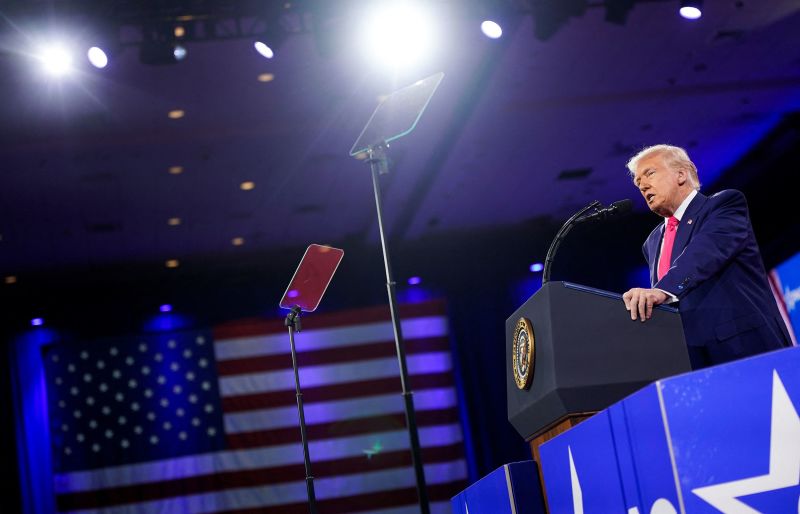
American political circles are witnessing a notable division among conservatives regarding the ongoing war in Iran, with many participants at the Conservative Political Action Conference (CPAC) expressing concerns about the conflict's ramifications. While President Donald Trump retains broad support from the Republican Party, calls for finding an exit from this conflict, which has entered its fourth week, are increasing.
At the CPAC conference held in Texas, some participants voiced their concerns about the reasons for the war, how to end it, and whether the efforts being made are worth the costs. Samantha Cassell, one of the attendees, stated, "I wish there were more transparency about why we are doing what we are doing, so we can send our loved ones abroad feeling assured." She noted that the rising cost of living and increasing prices of oil and gas negatively affect their daily lives.
Event Details
CPAC is traditionally a platform for supporting Trump, having shifted from a gathering leaning towards liberalism to one dominated by supporters of "Make America Great Again." Although the conference is usually held near Washington, it has moved this year to a massive hotel complex near Dallas. Despite the usual atmosphere, the topic of the war in Iran was prominently featured in discussions.
Toby Blair, a student at the University of Southern Florida, expressed disbelief that the war serves America's interests, pointing out that "the United States is not responsible for eliminating bad people," and instead should focus on domestic issues.
Background & Context
Historically, the United States has intervened in Middle Eastern affairs, leading to divisions within American society regarding the efficacy of these interventions. The current war in Iran occurs within the context of long-standing conflicts, with increasing pressure on the U.S. administration to take decisive action against the Iranian regime. However, these interventions often lead to unforeseen consequences, complicating the situation further.
Polls indicate that a significant portion of Americans opposes the war, with a recent survey showing that 79% of Republicans support Trump's handling of the war, but only 49% express strong support. The generational gap is also evident, with 84% of Republicans supporting the war, while the figure drops to 49% among young people aged 18 to 29.
Impact & Consequences
Concerns are growing that the continuation of the war could negatively impact the American economy, as some conference participants warned that escalating the conflict could lead to rising fuel and food prices. Matt Gaetz, a former congressman, noted that sending more troops to the Middle East could make the United States "poorer and less safe."
At the same time, there is increasing concern about how the conflict will evolve, as Eric Prince, founder of Blackwater, warned that the situation could be more complicated than the U.S. administration anticipates. He emphasized the need for genuine public readiness to support any military intervention.
Regional Significance
The war in Iran directly affects stability in the Middle East, stirring tensions between Iran and its allies on one side, and the United States and its allies on the other. These dynamics could escalate conflicts in countries like Iraq and Syria, further complicating security and economic conditions in the region.
In conclusion, it appears that pressure is mounting on Trump to seek an exit from the Iranian conflict, as the division within the Republican Party may impact his political strategies moving forward. With the midterm elections approaching, it will be crucial to monitor how these situations evolve and their impact on public support for Trump.