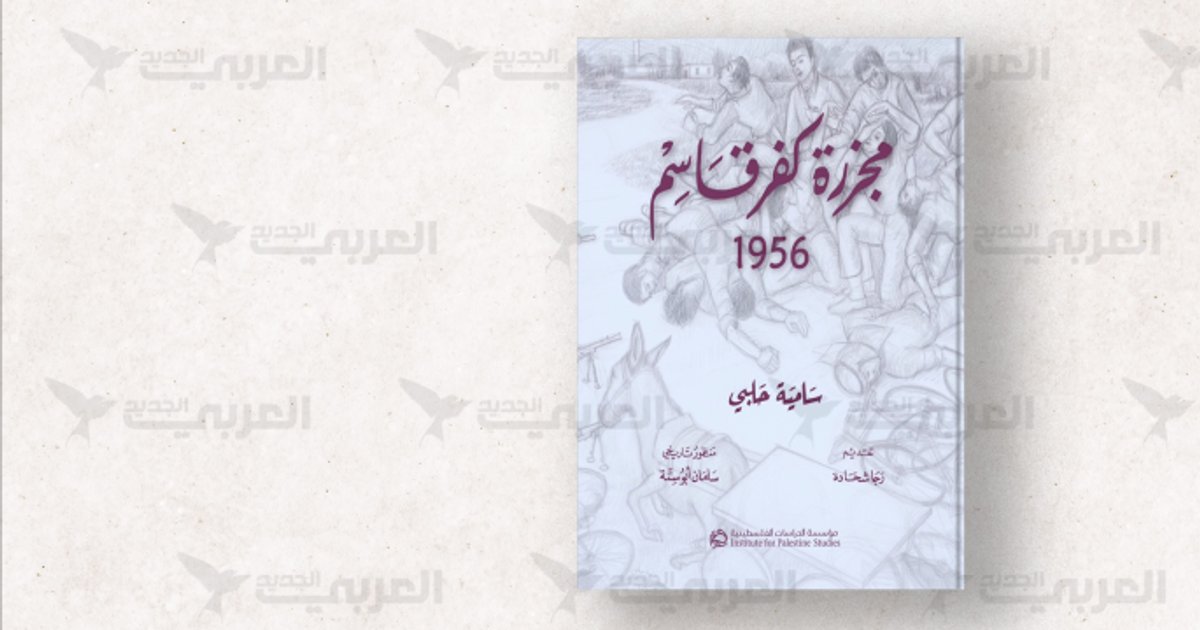
In her new book, Palestinian artist Samia Halabi presents a visual documentation of the Kafr Qasim massacre, which took place in 1956. She highlights the human and political dimensions of this crime, viewing it as part of the ongoing Nakba that the Palestinian people endure. Halabi points out that the systematic killing faced by Palestinians is part of a continuous Israeli strategy.
The pages of the book include a collection of artworks that reflect the pain and suffering experienced by Palestinians as a result of this massacre. Halabi employs an artistic style that combines painting and photography, creating a poignant visual experience that conveys feelings of loss and injustice.
Details of the Event
The Kafr Qasim massacre is one of the bloodiest events in the history of the Palestinian-Israeli conflict, where Israeli forces killed 49 Palestinians in a single day. This event was not merely an isolated incident but part of a systematic policy aimed at terrorizing Palestinians and silencing their voices. Through her book, Halabi seeks to revive the memory of these victims and remind the world of the crimes committed against them.
Halabi's works in the book depict scenes from the daily lives of Palestinians before and after the massacre, contributing to a comprehensive image of the psychological and social impacts left by this crime. The artworks also reflect the challenges faced by Palestinians in their efforts to maintain their identity and culture under occupation.
Background & Context
The history of the Kafr Qasim massacre dates back to a sensitive period in Palestinian history, where events accelerated following the Nakba in 1948. During that time, the Israeli government sought to consolidate its power through the excessive use of force against Palestinians. This historical context illustrates how the massacre was part of a policy of oppression that continued for decades.
The massacre is considered a symbol of Palestinian suffering, representing the embodiment of the injustice faced by the Palestinian people. By documenting these events, Halabi hopes to highlight the importance of collective memory in the Palestinian struggle.
Impact & Consequences
The impact of the Kafr Qasim massacre is still felt today, as new generations of Palestinians remember this crime as part of their history. Halabi's book contributes to raising awareness about these events and encourages discussion about Palestinian rights in the context of ongoing occupation.
Art as a means of expressing pain and suffering has become a powerful tool in the Palestinian struggle. Through her works, Halabi aims to motivate the international community to reconsider its stance on the Palestinian issue and the necessity of recognizing the legitimate rights of the Palestinian people.
Regional Significance
The Kafr Qasim massacre is part of a long history of conflict in the region, reflecting the ongoing tensions between Palestinians and Israelis. This event underscores the urgent need for justice and peace in the region, which requires a concerted international effort.
Arab artists and intellectuals are called upon to adopt the issues of the Palestinian people, as their support can contribute to raising awareness and enhancing Arab solidarity. Through works like those presented by Halabi, the Palestinian narrative can continue to spread, increasing the chances of achieving justice.