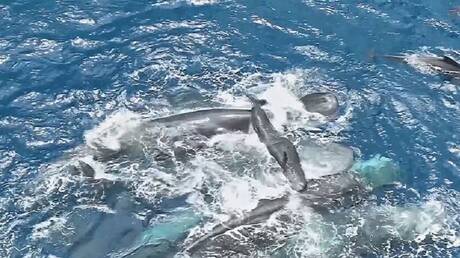
Scientists participating in the CETI project (Cetacean Translation Initiative) successfully documented the moment a sperm whale calf was born, capturing this unique phenomenon off the coast of Dominica. This event represents a significant scientific achievement, shedding light on the social behaviors of whales and their cooperation in raising their young.
The moment of whale births is a rare occurrence that is difficult to document, making this discovery scientifically valuable. The footage showed how a group of whales cooperated in caring for the calf, reflecting the strong social bonds that connect these marine creatures.
Details of the Event
The documentation process utilized advanced underwater imaging techniques, allowing researchers to capture the moment the calf entered the world. The footage revealed how the mother surrounded her calf and assisted it in swimming, while other whales monitored the situation and provided support.
This cooperation among whales in caring for their young is not a new phenomenon, but documenting it in this manner adds a new dimension to our understanding of whale behaviors. Scientists noted that this phenomenon reflects the importance of familial and social bonds in the whale world.
Background & Context
The sperm whale is one of the largest whale species, known for its ability to dive deep into the oceans in search of food. This species lives in family groups, where mothers collaborate with each other in raising their young. The CETI project is a pioneering initiative in studying whale language, as scientists aim to understand how these marine creatures communicate.
Sperm whales are found in all the world's oceans, but recent research has focused on the shores of Dominica, where the marine environment provides ideal conditions for studying whale behaviors. This discovery is part of broader efforts to preserve the marine environment and protect endangered species.
Impact & Consequences
These discoveries can contribute to enhancing efforts to protect whales and their habitats. With the increasing threats faced by marine creatures, such as overfishing and ocean pollution, it becomes essential to better understand their behaviors. This information can help develop effective strategies for the conservation of endangered species.
Moreover, documenting cooperative behaviors among whales can open new avenues for research in marine biology, enhancing our understanding of social relationships among marine creatures. This type of research can lead to improved global environmental policies.
Regional Significance
While this discovery may seem distant from the Arab region, there is significant importance in understanding whale behaviors and their impact on the marine environment. The territorial waters of Arab countries are home to many marine species, including whales.
This research can contribute to raising environmental awareness in the region, prompting Arab countries to take effective steps to protect the marine environment. It can also pave the way for regional and international cooperation in scientific research and marine species conservation.
This discovery represents an important step toward a deeper understanding of the world of whales and their behaviors. The cooperation among whales in raising their young reflects the strong social bonds that connect these creatures, adding a new dimension to our understanding of marine life.