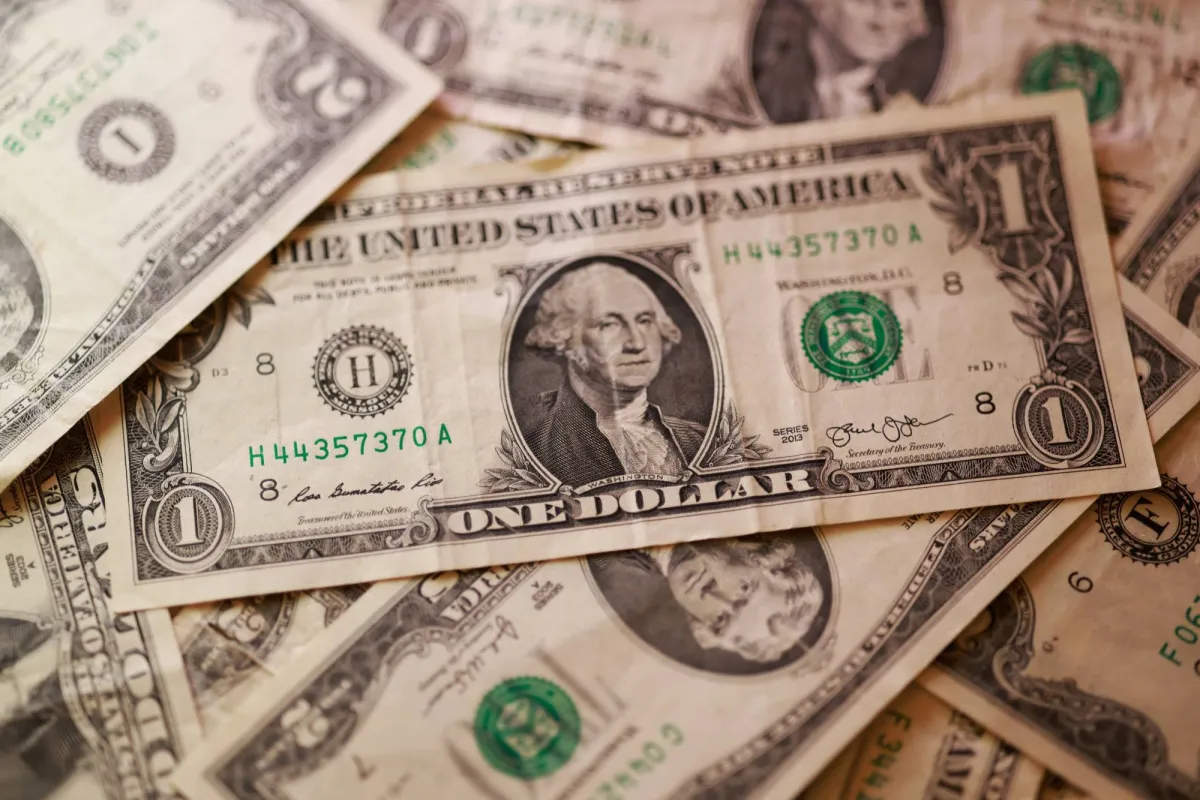
The US dollar regained momentum against major currencies during trading on Thursday, following a speech by President Donald Trump that shattered investors' hopes for an imminent ceasefire in the Middle East conflict. This shift came after two days of decline, as the uncertainty left in the wake of the speech redirected capital flows towards the greenback, regarded as the preferred safe haven in times of geopolitical crises.
The dollar index, which measures the performance of the US currency against a basket of six major currencies, rose to a level of 99.925 points immediately after the speech. As analysts and experts began to absorb the reality that the conflict could escalate, Trump confirmed the continuation of military strikes against Iranian targets over the next three weeks, placing the global economy at risk of a noticeable slowdown and exacerbating energy supply risks.
Market Reactions to the Dollar's Rise
In the currency market, the rise of the dollar negatively impacted other major currencies; the euro fell to levels of 1.1554 dollars, while the British pound dropped to 1.3254 dollars, losing gains made in recent sessions. Risk-linked currencies, such as the Australian and New Zealand dollars, were the most affected, recording declines of 0.6 percent, while the Japanese yen remained under pressure, although it stayed away from the 160 level against the dollar, a threshold monitored by Japanese authorities for potential intervention.
As the impact of the speech waned, market attention shifted towards the upcoming US non-farm payroll report scheduled for release on Friday, with investors awaiting March data that could reshape monetary policy expectations. Experts believe that any sharp deterioration in the labor market could revive hopes for interest rate cuts by the Federal Reserve this year, a prospect that has recently faded due to inflationary pressures stemming from surging oil prices linked to the war.
Background & Context
Mainland Chinese stocks and the Hong Kong stock exchange experienced significant declines during trading on Thursday, as pessimism prevailed among investors following the televised speech by the US president. The absence of a "clear timeline" for ending military operations in Iran weakened market sentiment, especially after Trump confirmed that strikes would continue for weeks to come, dispelling hopes for a quick end to the conflict that has overshadowed global supply chains and vital energy routes.
By mid-session, the Shanghai Composite Index recorded a decline of 0.53 percent, while the CSI 300 index of leading stocks lost 0.74 percent of its value. In Hong Kong, the decline was sharper, with the Hang Seng Index dropping by 1.1 percent, while the technology sector led the losses with a steep drop of 2.2 percent, amid concerns over escalating geopolitical tensions and their impact on financial market stability in the region.
Impact & Consequences
Oil prices surged by more than 5 dollars, raising fears of sustained supply disruptions. This increase directly impacted the aviation sector in China, where major airlines, including China Airlines, announced additional fuel surcharges starting from April 5, to cope with the sharp rise in jet fuel prices resulting from the ongoing war, placing additional pressures on the recovery of the travel sector and China's economic growth.
Global markets were once again hit by waves of turmoil during trading on Thursday, as stock indices fell and oil prices rose, coinciding with the dollar regaining its gains as a preferred safe haven option. This dramatic shift followed a televised speech by the US president, who dashed investors' hopes for a quick resolution to the conflict in the Middle East, confirming the continuation of military operations against Iran for weeks to come.
Regional Significance
Concerns are growing that these developments could exacerbate economic conditions in the Arab region, where many countries rely on stable oil prices. The continuation of military tensions could negatively impact foreign investments and increase uncertainty in the markets.
In conclusion, it appears that global markets will remain under pressure from geopolitical tensions, making it essential to closely monitor developments, especially with the upcoming release of US employment data that could reshape monetary policy expectations.