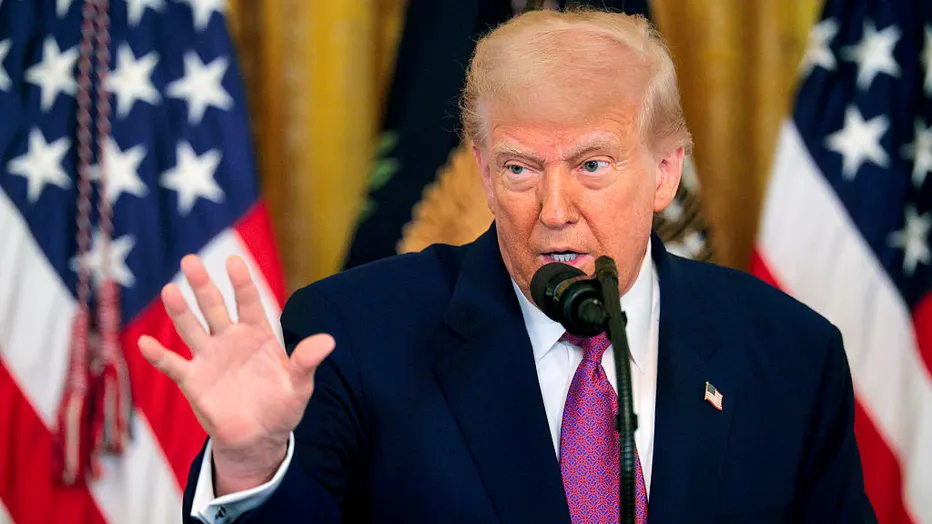
The US dollar stabilized today after remarks from President Donald Trump confirming that the war with Iran could end within weeks. Despite these statements, financial markets continue to experience tension and anxiety due to conflicting news regarding the developments of the conflict.
After the dollar recorded a notable rise recently as a safe haven, these gains began to fade with increasing hope for an end to the dispute. The Japanese yen also saw improvement after it had dropped to its lowest level of the year at 160.46 yen against the dollar, subsequently surpassing the significant psychological level of 160 yen, alleviating concerns about intervention by Japanese authorities in the markets.
Details of the Event
The dollar index, which measures the performance of the US currency against a basket of currencies, fell by 0.03% to 99.70, while the euro rose by 0.21% to 1.1576 dollars. The Japanese yen also recorded an increase of 0.11%, reaching 158.55 yen against the dollar.
Trump's remarks came after a report published by the Wall Street Journal, where he indicated his willingness to end the military campaign against Iran even if the Strait of Hormuz remains closed, which is considered a vital artery for oil shipping. Trump is expected to address the nation to provide an important update on the situation in Iran.
Background & Context
The roots of the conflict between the United States and Iran extend back several decades, with relations between the two countries experiencing increasing tensions since the Iranian Islamic Revolution in 1979. These tensions have particularly escalated since the US withdrawal from the Iranian nuclear deal in 2018, leading to the imposition of strict economic sanctions on Tehran.
In recent months, the intensity of military conflict has increased, impacting global oil markets and causing oil prices to rise. Nevertheless, the United States, as a net energy exporter, may be in a better position to handle any disruptions in oil supplies compared to other countries.
Impact & Consequences
Trump's statements are seen as a positive signal for the markets, as they may lead to a reduction in economic tensions. However, concerns remain that the situation could deteriorate again, especially with warnings from US Secretary of Defense Mark Esper that the coming days will be critical in the conflict.
If the situation continues to deteriorate, it could lead to renewed pressures on financial markets, which may negatively impact the US economy and influence interest rate expectations from the Federal Reserve.
Regional Significance
The US-Iran conflict directly affects security and stability in the Arab region, where Iran is a key player in many regional conflicts. Any escalation in the dispute could have serious repercussions for neighboring countries, particularly those that rely on stable oil prices.
Ultimately, the situation in the Middle East remains volatile, and Arab countries must closely monitor developments in US-Iran relations and their impact on their economic and security interests.