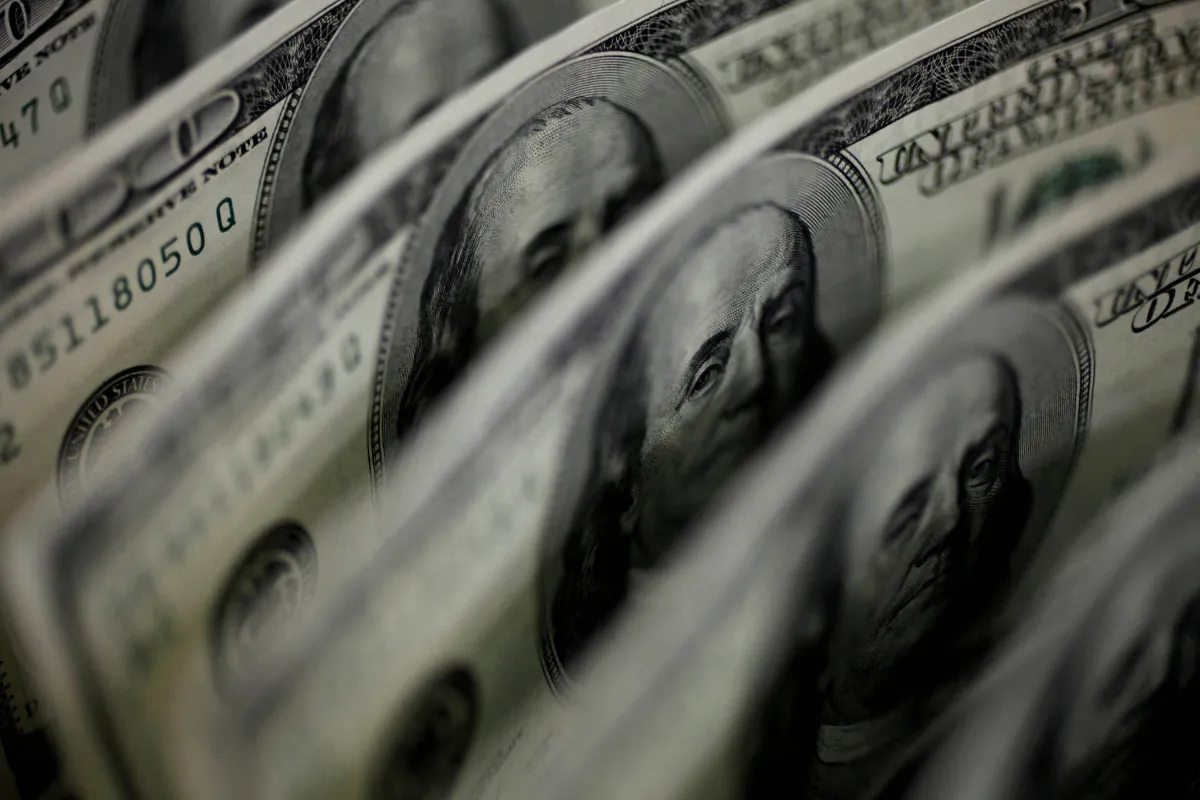
The dollar stabilized near its highest levels in several months on Friday, supported by increased demand for it as a safe haven amid rising tensions in the Middle East and dwindling hopes for a near-term resolution.
This came after a week filled with fluctuations; U.S. President Donald Trump decided to extend the deadline for targeting Iranian energy facilities until April, while Washington and Tehran presented starkly different narratives regarding diplomatic progress, according to Reuters.
Details of the Event
Market anxiety increased following a report from the Wall Street Journal, which stated that the U.S. Department of Defense (Pentagon) is considering sending up to 10,000 additional troops to the Middle East, reducing investors' hopes for an imminent end to the conflict. This situation led investors to flock to the dollar, enhancing its gains, coinciding with rising expectations for a U.S. interest rate hike by the end of the year, as energy prices continue to rise.
In contrast, the Japanese yen stabilized at 159.58 against the dollar, approaching the 160-yen level, while the euro fell by 0.1% to 1.1540 dollars, and the British pound remained steady at 1.3339 dollars.
Context and Background
Carol Kong, currency strategy expert at the Commonwealth Bank of Australia, stated, "The conflict does not seem likely to end soon, and the dollar will remain the strongest currency as long as these conditions persist." She added, "If the conflict continues, oil prices are likely to keep rising, which will further support the dollar at the expense of currencies from net energy-importing countries like the Japanese yen and the euro."
The deterioration of risk appetite led to a decline in the Australian dollar, which is sensitive to risk, reaching its lowest level in two months before later recovering and rising by 0.2% to 0.6903 dollars. The New Zealand dollar also fell close to its lowest levels since January, recording 0.5769 dollars.
Consequences and Impact
For the dollar index against a basket of currencies, it slightly declined to 99.83, but it is still on track to achieve monthly gains of about 2.2%, the largest since July of last year. Investors are currently pricing in a probability exceeding 40% for the U.S. Federal Reserve to raise interest rates by 25 basis points by September, according to the FedWatch tool, a notable shift from the easing expectations that were over 50 basis points before the outbreak of war.
Both the Bank of England and the European Central Bank are also expected to tighten their monetary policies, which has been reflected in falling bond prices and rising yields. Analysts at Capital Economics noted that prolonged disruptions in energy supplies could deal a severe blow to global economic activity, nearing recession definitions, and lead to a broader wave of monetary tightening.
Impact on the Arab Region
In this context, U.S. Treasury yields rose slightly on Friday after a sharp jump overnight; the yield on two-year bonds reached 3.9899%, while the yield on benchmark 10-year bonds rose by about one basis point to 4.4278%. Gold prices increased by about 2%, supported by a weaker dollar and increased investor buying interest, although it is heading for its fourth consecutive weekly loss amid rising inflation fears and heightened expectations of global monetary tightening due to rising energy prices.
The spot gold price rose by 2% to 4466.38 dollars per ounce by 06:37 GMT, despite a decline of about 0.5% since the beginning of the week. U.S. gold futures for April delivery rose by 1.9% to 4461 dollars, according to Reuters.
This rise came amid a decline in the dollar, making dollar-denominated gold more attractive to holders of other currencies. Despite today's gains, gold remains down by about 16% since the outbreak of the U.S.-Israeli war on Iran on February 28, affected by the dollar's rise, which recorded gains exceeding 2% during the same period.
In conclusion, Saudi Finance Minister Mohammed Al-Jadaan confirmed that the Saudi economy has demonstrated exceptional efficiency in crisis management and a remarkable ability to absorb shocks with high resilience, warning that current geopolitical tensions could lead to global economic repercussions that exceed the severity of the COVID pandemic if the war continues.