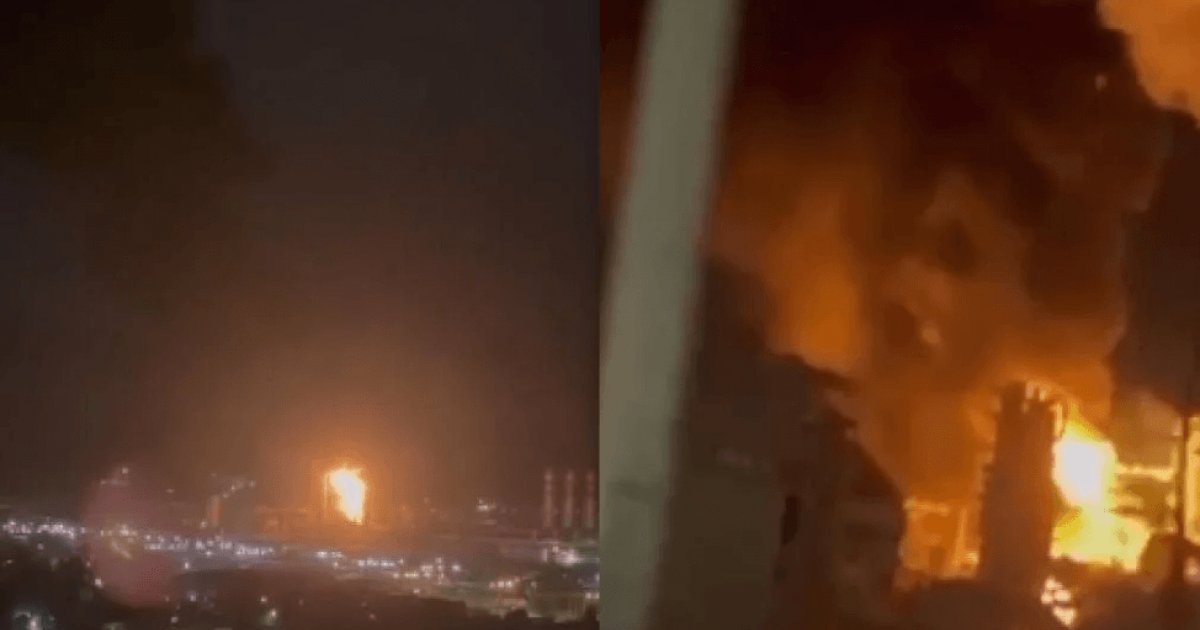
A Kuwaiti refinery was hit by a drone attack, igniting several units within the facility. This attack comes amid rising tensions in the region as hostilities between the United States and Iran continue to escalate. The refinery operator confirmed that the fire resulting from the attack has been controlled, but the damage was significant.
This attack occurs at a sensitive time, as President Donald Trump has threatened to destroy Iranian infrastructure, further intensifying tensions in the Gulf region. Despite these threats, there have been no signs of an agreement to end the ongoing conflict, raising concerns about a potential military escalation.
Details of the Incident
The attack on the Kuwaiti refinery is part of a series of assaults targeting energy sites in the Gulf. Reports indicate that the attack was carried out using drones, a method increasingly employed in modern conflicts. The attack resulted in fires breaking out in several units, necessitating the intervention of firefighting teams to control the blaze.
Kuwait is one of the major oil-producing countries in the region, and any attack on its facilities could significantly impact global oil markets. The Kuwaiti government has expressed concern over the rising frequency of such attacks, emphasizing the need to enhance security at vital installations.
Background & Context
The Gulf region has been experiencing heightened tensions since the United States withdrew from the Iranian nuclear agreement in 2018. Attacks on oil facilities in the region have increased, with Iran and its allies targeting several sites in Saudi Arabia and the UAE. These events indicate a potential escalation in the conflict between Iran and the United States, raising fears about the impact on regional stability.
Historically, Kuwait has always been at the heart of regional conflicts, having been significantly affected by the Iraqi invasion in 1990. Today, Kuwait faces new challenges amid escalating tensions between major powers in the region, necessitating stringent security measures to protect its vital facilities.
Impact & Consequences
The attack on the Kuwaiti refinery could have far-reaching implications for global oil markets. Any disruption in Kuwaiti production could lead to price increases, affecting the global economy. Additionally, escalating tensions may prompt major powers to reassess their strategies in the region, potentially leading to new military interventions.
Moreover, repeated attacks on oil facilities may result in increased investments in cybersecurity and defensive technologies in the region. Countries that rely on oil as a primary source of revenue will seek to bolster their defensive capabilities to protect their interests.
Regional Significance
The recent events in the Gulf are particularly significant for neighboring Arab countries. The tensions between Iran and the United States could impact the stability of nations like Iraq, Syria, and Lebanon, where Iran plays a substantial role in internal affairs. Any escalation could lead to an influx of refugees and increased sectarian tensions in the region.
At the same time, Arab countries must collaborate to enhance their security and economic interests. The ongoing threats from Iran and its allies require a unified response from Arab nations to maintain stability in the region.