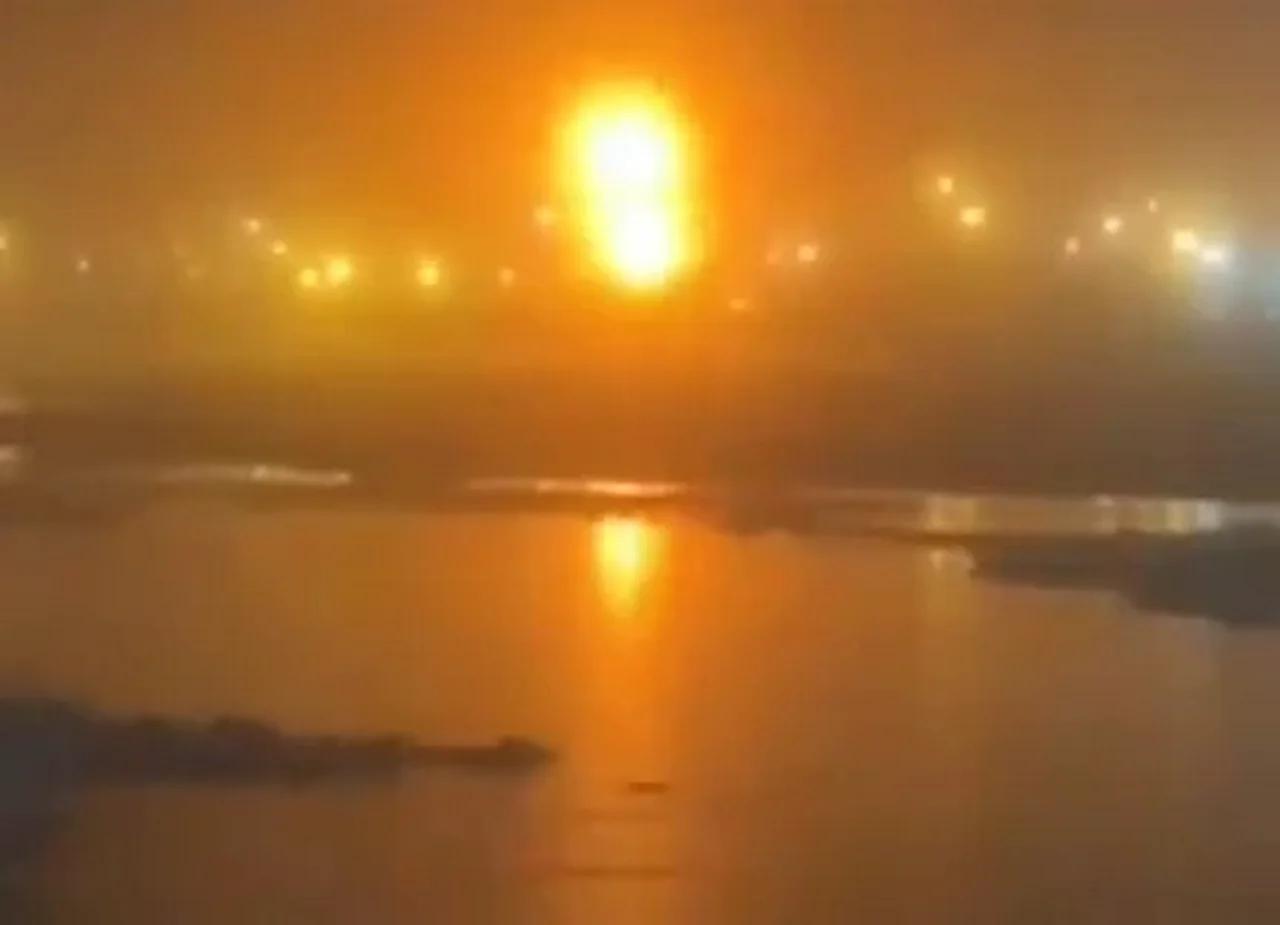
The Russian port of Ust-Luga, considered one of the key ports for Russian hydrocarbon exports, was targeted in a drone attack that left three people injured, including two children. The attack took place late last night, with debris from the drones landing on several residential buildings and a school in the vicinity, causing panic among residents.
This attack comes amid escalating tensions between Russia and Ukraine, as Ukraine seeks to target critical Russian infrastructure as part of its efforts to respond to the ongoing Russian invasion. The Ust-Luga port is a strategic facility that plays a significant role in exporting Russian oil and gas to global markets, making this attack even more significant.
Details of the Incident
According to reports, several drones were intercepted before reaching their targets; however, the debris from the interceptions caused the aforementioned damages. Local authorities confirmed that emergency teams are assessing the damage and providing assistance to the injured. An investigation has also been launched into the incident to determine the circumstances surrounding the attack.
The attack reflects the increasing use of drones in modern conflicts, where this technology poses a significant threat to critical infrastructure. Recent events in Ukraine have demonstrated how drones can alter the course of battles and affect national strategies.
Background & Context
Since the onset of the conflict in Ukraine in 2014, the region has witnessed a rise in attacks and military operations. With tensions escalating in recent years, attacks on ports and vital facilities have become part of the military strategy for both sides. The Ust-Luga port is one of the main ports that Russia relies on for exporting its natural resources, making it an attractive target for Ukraine.
Historically, Russia has depended on its ports in the Baltic Sea for oil and gas exports, and these ports have seen numerous attacks in recent years. Attacks on ports also reflect the broader conflict between Russia and Western nations, as these countries seek to reduce their dependence on Russian energy.
Impact & Consequences
The attack on Ust-Luga could have significant repercussions for the Russian economy, especially amid the sanctions imposed on the country. A decline in oil and gas exports could impact government revenues and increase economic pressures on Russia. Additionally, ongoing attacks may lead to heightened tensions in the region, potentially prompting military responses from the Russian side.
Furthermore, these events could lead to increased international support for Ukraine, as Western nations seek to bolster their stance against Russia. Attacks on ports may serve as a call for new alliances in the region, as countries strive to protect their economic and security interests.
Regional Significance
Considering the potential impact on the Arab region, the escalating tensions between Russia and Ukraine could affect global energy markets. Arab countries, particularly those reliant on oil exports, may face price fluctuations as a result of these events. Increased tensions could also lead to changes in global energy strategies, affecting economic relations between Arab nations and Western countries.
In conclusion, the attack on Ust-Luga illustrates how modern military conflicts transcend traditional boundaries, impacting the global economy and regional security. It is crucial to monitor the developments of this conflict and its implications for the region and the world.