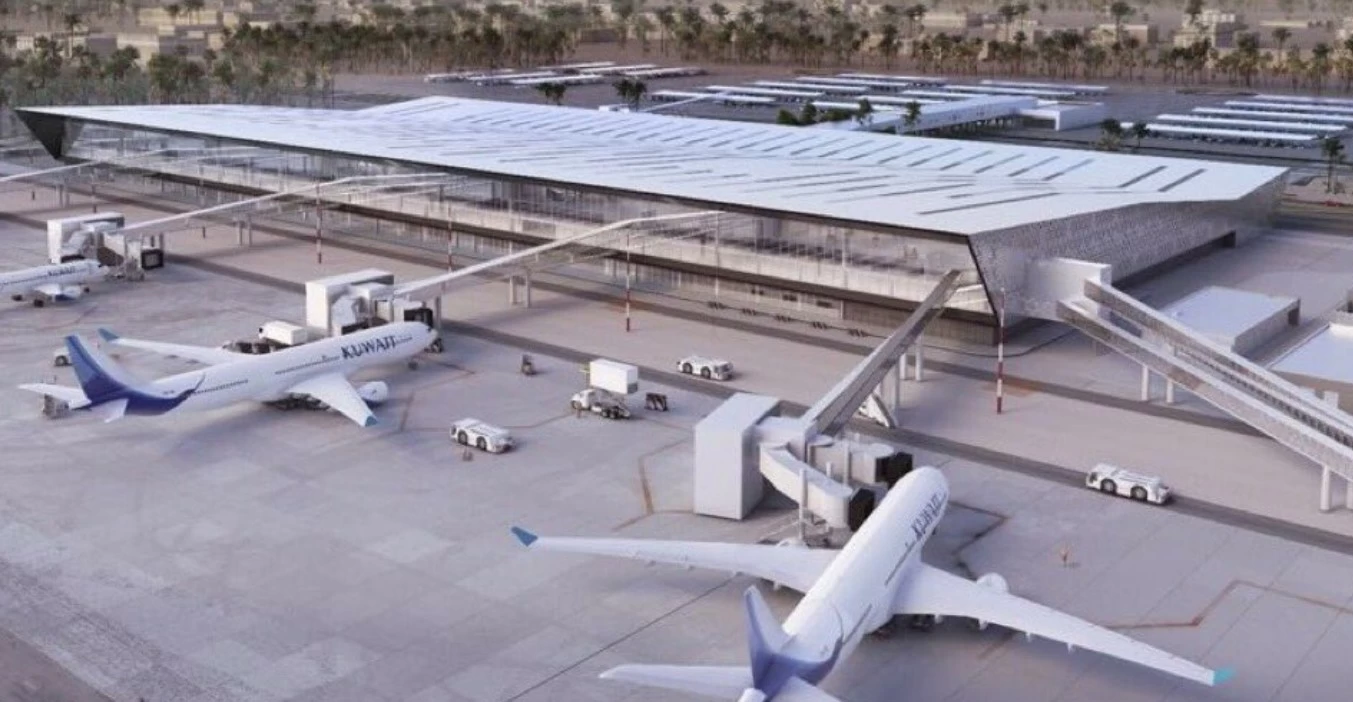
Kuwait International Airport was attacked by drones early Wednesday morning, targeting the fuel tanks of the Kuwait Aviation Fueling Company (KAFCO). The official spokesperson for the Kuwaiti Civil Aviation Authority, Abdullah Al-Rajhi, confirmed that the attacks originated from Iran and the armed factions it supports, leading to a significant fire at the site.
Al-Rajhi explained that the attack caused considerable damage to the fuel tanks, noting that emergency teams and relevant authorities immediately began addressing the incident. According to initial reports, the damages were material only, with no human injuries recorded.
Details of the Incident
The attack on Kuwait International Airport comes at a sensitive time, as the airport is considered one of the vital hubs in the region. The drone attacks represent a serious escalation in regional tensions and have raised widespread concern among security circles. The fire that broke out as a result of the attack was quickly controlled by firefighting teams, preventing the situation from worsening.
The Civil Aviation Authority emphasized the importance of enhancing security measures at the airport in light of the increasing threats. Some areas of the airport were closed as a precautionary measure, while air traffic continued normally for the most part.
Background & Context
These attacks occur amid rising tensions between Kuwait and Iran, with the region witnessing numerous similar incidents in recent years. Relations between Kuwait and Iran have been increasingly strained due to Iran's support for armed factions in the area, heightening fears of potential military escalation.
Moreover, attacks on vital facilities such as airports reflect new strategies in the regional conflict, where drones are used as an effective means to achieve military objectives without the need for direct intervention. This type of attack could have serious repercussions for regional security.
Impact & Consequences
The attack on Kuwait International Airport could significantly impact air travel and tourism in the country, as the airport is a major gateway for many international flights. Additionally, the damage to the fuel tanks may affect aircraft refueling operations, potentially leading to flight delays.
From a security perspective, this attack may lead to enhanced security measures at airports and other vital facilities, necessitating additional investments in security infrastructure. It may also require greater cooperation among Gulf states to address shared threats.
Regional Significance
This attack demonstrates how regional tensions can affect security and stability in Gulf countries. Kuwait, considered one of the most stable countries in the region, may face new challenges in light of these attacks.
Furthermore, this incident could lead to a reevaluation of security policies in neighboring countries, where regional cooperation is deemed essential to counter increasing threats. Emergency meetings among defense ministers of Gulf states may be convened to discuss ways to enhance regional security.
In conclusion, the attack on Kuwait International Airport serves as evidence of escalating tensions in the region, necessitating greater vigilance from Arab countries to confront increasing security challenges.