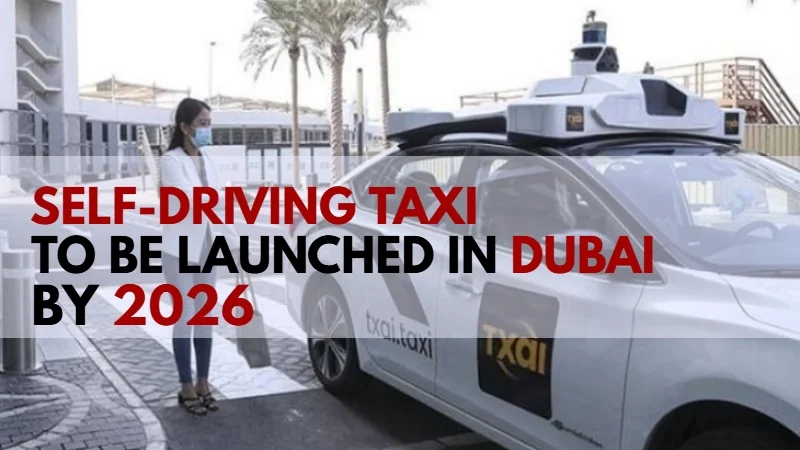
The Roads and Transport Authority in Dubai has officially launched self-driving taxi services, which have begun offering rides to users. This new service aligns with Dubai's vision to become a smart city and enhances the use of technology in all aspects of daily life.
These vehicles are equipped with advanced technologies that enable them to navigate safely and efficiently, featuring the latest navigation and sensing systems. Users can request a self-driving taxi through a dedicated application, making it easier for them to move around the city without the need for a driver.
Event Details
This service is part of Dubai's innovation strategy, which aims to convert 25% of all transportation trips in the city to self-driving trips by 2030. These vehicles have been tested in various areas of Dubai, proving their efficiency in handling different traffic conditions.
This initiative follows the success of several previous trials in smart transportation, where self-driving cars were used during major events such as Expo 2020. The authority is also working on developing infrastructure to support this technology, including charging stations for electric vehicles.
Background & Context
For years, Dubai has sought to be a leader in innovation and technology, investing heavily in the development of smart transportation. In 2016, Sheikh Mohammed bin Rashid Al Maktoum, Vice President and Prime Minister of the UAE and Ruler of Dubai, launched the Dubai Artificial Intelligence Strategy, aimed at improving the quality of life in the city.
These initiatives align with the global trend towards the use of self-driving cars, as many major cities around the world are adopting this technology. This step is expected to contribute to reducing traffic congestion and lowering carbon emissions.
Impact & Consequences
This new service represents an important step towards achieving sustainable development goals, as it is expected to enhance the quality of life in Dubai. Additionally, the use of self-driving cars may reduce traffic accidents, thereby improving public safety.
Furthermore, this initiative could open up new job opportunities in technology and programming fields, as these vehicles require specialized teams for maintenance and development. The success of this service may also encourage other countries in the region to adopt the same technology.
Regional Significance
Dubai serves as a model for innovation in the Arab world, and this step could inspire other countries to adopt modern technology in transportation. These initiatives could enhance tourism and increase investments in the technology sector.
Given the challenges faced by many Arab countries in the transportation sector, this experience could be an opportunity to stimulate innovation and develop modern infrastructure that improves the quality of life for citizens.