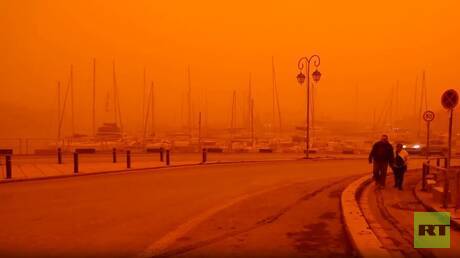
A powerful dust storm has affected the Greek island of Crete, transforming its landscape to an orange hue. This unusual phenomenon has captured the attention of social media users.
Images and videos circulating online show how the orange sands have covered beaches and buildings, giving the island an unfamiliar appearance. While this natural phenomenon is not new, it highlights the ongoing climate changes and their impact on the environment.
Details of the Event
The dust storm that struck Crete was the result of complex weather conditions, as winds carried sands from desert regions to the island. This storm led to reduced visibility in some areas, affecting traffic and the daily activities of residents.
Crete is considered one of the popular tourist destinations in Greece; however, this phenomenon may impact tourism on the island, as some visitors may avoid traveling under such adverse weather conditions.
Background & Context
Dust storms are part of the climate changes being experienced worldwide, with their frequency increasing in recent years. In the Mediterranean region, these phenomena affect the local climate, leading to changes in weather patterns.
Historically, Crete has witnessed numerous natural phenomena, including earthquakes and floods. However, dust storms present a new challenge that requires an effective response from local authorities.
Impact & Consequences
Dust storms can have negative effects on public health, as they exacerbate respiratory issues and affect individuals with lung diseases. Additionally, the sands can impact water and soil quality, negatively affecting agriculture.
Moreover, the impact of these phenomena extends to the local economy, where tourism and commerce may suffer due to deteriorating weather conditions. It is crucial for local authorities to take measures to mitigate these impacts.
Regional Significance
Dust storms are a common phenomenon in many Arab countries, where vast areas of the Middle East and North Africa are affected by climate changes. These phenomena impact the daily lives of residents and increase the challenges faced by governments in health and environmental sectors.
These challenges require a coordinated response among Arab countries to address the effects of climate change, including developing strategies to adapt to these phenomena and mitigate their negative impacts.
In conclusion, the dust storm that affected Crete underscores the importance of awareness regarding climate changes and their impact on the environment. It is essential for countries to collaborate in facing these challenges to ensure a better future for the region.