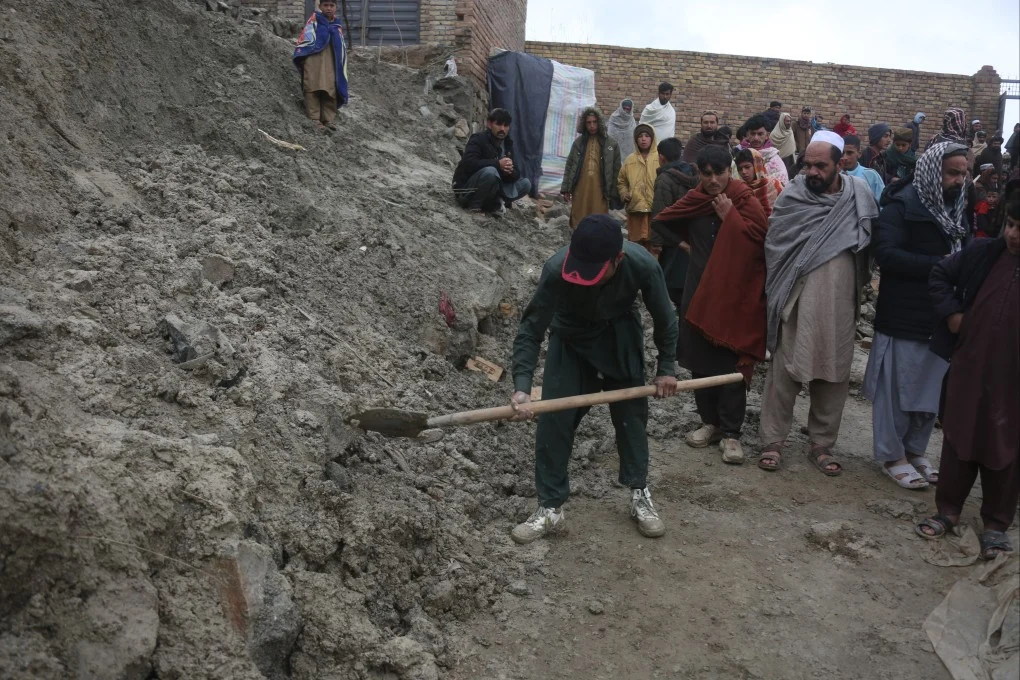
A powerful earthquake measuring 5.8 struck Afghanistan on Friday evening, resulting in the deaths of 12 individuals, including eight members of a family who had recently returned from Iran. The quake occurred at 8:42 PM local time, with its epicenter located in the northeastern Badakhshan region, at a depth of 186 kilometers.
According to official sources, the eight victims were part of a refugee family that had returned to Afghanistan after a period of living in Iran. A neighbor who participated in the rescue efforts reported that the family had recently come back to the country, which intensified the tragedy of the incident.
Details of the Event
The earthquake that struck Afghanistan is one of the powerful quakes the country has experienced in recent years, as this natural phenomenon has recurred in various regions, raising concerns about the necessary preparations to face natural disasters. Reports of damage to buildings and infrastructure in the affected areas have been reported, further exacerbating the suffering of residents already facing difficult economic conditions.
It is noteworthy that the earthquake occurred late at night, making rescue efforts more challenging. Initial reports indicated that rescue teams were working to assess the damage and provide assistance to those affected, while families who lost loved ones were living in a state of deep mourning.
Background & Context
Historically, Afghanistan has experienced several devastating earthquakes, as the country is located in a seismically active region due to its geographical position. In recent years, there has been an increase in the number of earthquakes, raising questions about the government's capacity to deal with these natural disasters. Additionally, the political and economic situation in the country complicates relief efforts.
Refugee families are among the most affected by these disasters, as many return to Afghanistan after periods of displacement, making them more vulnerable to risks. Returning home does not always mean safety; it can mean facing new challenges, as was the case with this family that lost their lives in the earthquake.
Impact & Consequences
The consequences of this earthquake may be far-reaching, as the loss of life and destruction of property will impact local communities. This is likely to increase pressure on the government to provide humanitarian assistance, especially given the difficult economic conditions the country is facing.
The earthquake may also raise concerns within the international community regarding the situation in Afghanistan, as responding to natural disasters requires international coordination and cooperation among humanitarian organizations. Providing assistance to those affected will be a significant challenge under the current circumstances.
Regional Significance
For the Arab region, this event highlights the importance of preparedness for natural disasters. Many Arab countries face similar challenges, whether from earthquakes or floods, necessitating the enhancement of disaster response capabilities. Cooperation among Arab nations in humanitarian relief can have a positive impact on affected communities.
In conclusion, this earthquake underscores a new humanitarian tragedy in Afghanistan and emphasizes the urgent need for support and assistance for those affected, as well as the importance of preparedness for natural disasters worldwide.