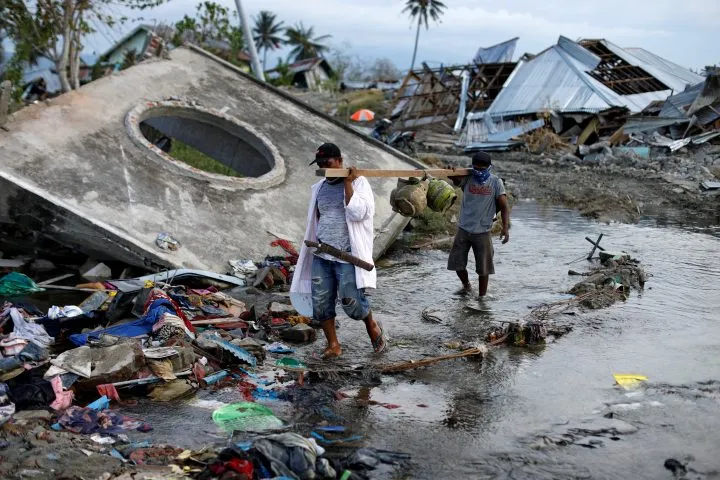
In early April 2026, the northern regions of Sulawesi and North Maluku in Indonesia were struck by a devastating earthquake measuring 7.6 on the Richter scale. This earthquake was not just a fleeting event; it served as a reminder that natural disasters do not end with the cessation of tremors or the receding of floods, but rather initiate a new phase of recovery and rehabilitation.
After the emergency phase concluded, Indonesia faced greater challenges related to rebuilding and rehabilitating communities. The recovery process is not limited to reconstructing infrastructure; it also encompasses restoring social and economic functions and essential services sustainably. In this context, data plays a vital role in guiding recovery efforts.
Details of the Event
As a country situated in a disaster-prone area, Indonesia faces significant geographical challenges. Earthquakes, floods, and landslides pose risks that must be managed systematically. In this framework, rapid emergency response is essential, but the success of disaster management in the medium and long term relies on the country's ability to manage the recovery phase in a planned and coordinated manner, relying on reliable information.
Indonesia's experience in dealing with disasters in Sumatra in late 2025 and early 2026 provided important lessons about the role of data in supporting post-disaster recovery. The rehabilitation process spans multiple sectors, from housing and infrastructure to social protection, health, education, and livelihood restoration. With this diversity, the need for consistent and integrated data increases to ensure the effectiveness of each intervention.
Background & Context
Historically, Indonesia has witnessed numerous natural disasters that have impacted millions of lives. In recent years, the frequency of these disasters has increased, prompting the government to take serious steps to improve its response. In this context, the Indonesian government issued Presidential Decree No. 1 of 2026 to establish a task force to expedite rehabilitation and reconstruction after disasters in the provinces of Aceh, North Sumatra, and West Sumatra. This policy reflects the government's commitment to accelerating recovery through more effective coordination among various sectors.
The Indonesian Minister of Defense, Prabowo Subianto, emphasized the importance of measuring recovery progress, noting that the recovery rate in Aceh is approaching 100%. This reflects the government's commitment to hastening recovery efforts and underscores the importance of having a reliable data system that supports the provision of accurate information.
Impact & Consequences
Integrated data is a vital tool not only for reporting but also as a foundation for decision-making. By utilizing unified data, coordination between sectors can be more effective, facilitating policy design based on real conditions. Additionally, transparency in information supported by data enhances public trust in the recovery process.
In this context, Indonesia's Central Statistics Agency has developed a unified disaster dashboard for Sumatra, which aggregates disaster impact and recovery data from various sectors onto a single platform. This initiative facilitates monitoring affected areas and provides a comprehensive picture of recovery progress.
Regional Significance
Arab countries share many challenges related to natural disasters, whether they be earthquakes or floods. The lessons learned from Indonesia's disaster management experience could be beneficial for Arab nations in enhancing their disaster response. By strengthening data systems and coordination among sectors, Arab countries can be better prepared to face disasters.
In conclusion, the importance of data in the recovery phase after disasters cannot be overlooked. The more accurate and integrated the data, the more effective the response, contributing to building more resilient communities capable of facing future challenges.