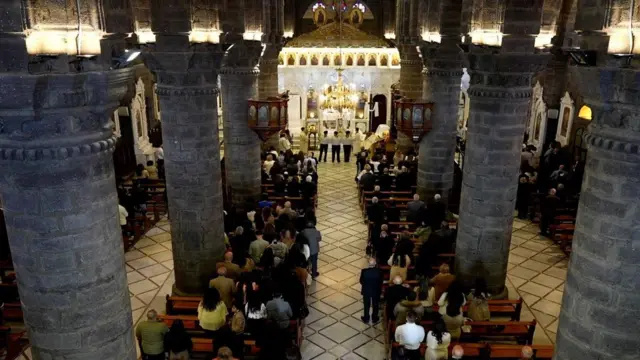
This year's Easter celebrations among Christians in Syria, who follow the Western calendar, were notably devoid of joy, as activities were restricted to holding prayers inside churches following violent incidents in the predominantly Christian city of Al-Suqaylabiyah in Hama province.
The events come at a sensitive time, as Al-Suqaylabiyah was preparing to celebrate Easter, one of the most important Christian holidays. However, the festive atmosphere was shattered by fears of renewed violence, prompting many families to stay home.
Details of the Incident
Reports indicate that the city experienced violent clashes in the days leading up to Easter, causing panic among residents. Some churches closed their doors to worshippers, while others opted to hold prayers in enclosed spaces away from the streets.
It is noteworthy that Al-Suqaylabiyah, located in the Hama region, is an important center for the Christian community in Syria and has suffered from the ongoing conflict in the country. As the holiday approached, hopes were high that this occasion would help strengthen social ties among residents, but recent events have thwarted that.
Background & Context
Historically, Al-Suqaylabiyah has been known for its cultural and religious diversity, with Muslims and Christians living side by side. Since the outbreak of the Syrian conflict in 2011, the city has faced significant challenges, including displacement and migration, which have impacted the social fabric.
In recent years, the city has seen some stability, but sporadic violence continues to threaten security and peace in the region. Easter, which symbolizes resurrection and hope, was supposed to be an opportunity to renew bonds between communities, yet the current security situation has prevented that.
Impact & Consequences
Violence has a profound effect on the daily lives of residents, as fears of future incidents grow. The absence of celebrations reflects a sense of frustration and despair among Christians in Syria, who strive to maintain their traditions under difficult circumstances.
Easter is a symbol of hope and renewal, but recent events may exacerbate divisions between communities. It is crucial for local and international efforts to converge to achieve peace and stability in the region, allowing residents to celebrate their holidays freely and safely.
Regional Significance
The events in Al-Suqaylabiyah mirror the challenges facing Christian communities in the Middle East. With increasing violence and persecution, Christians in many Arab countries face difficulties in practicing their religious rituals.
The absence of celebrations in Al-Suqaylabiyah may have broader implications for interfaith relations in the region, as there is a pressing need to enhance dialogue and mutual understanding. It is essential for governments and civil societies to collaborate to ensure the protection of religious minorities' rights and promote tolerance.
In conclusion, there remains hope that these trying times will come to an end, and that the residents of Al-Suqaylabiyah will be able to restore the atmosphere of joy and celebration during Easter in the coming years.