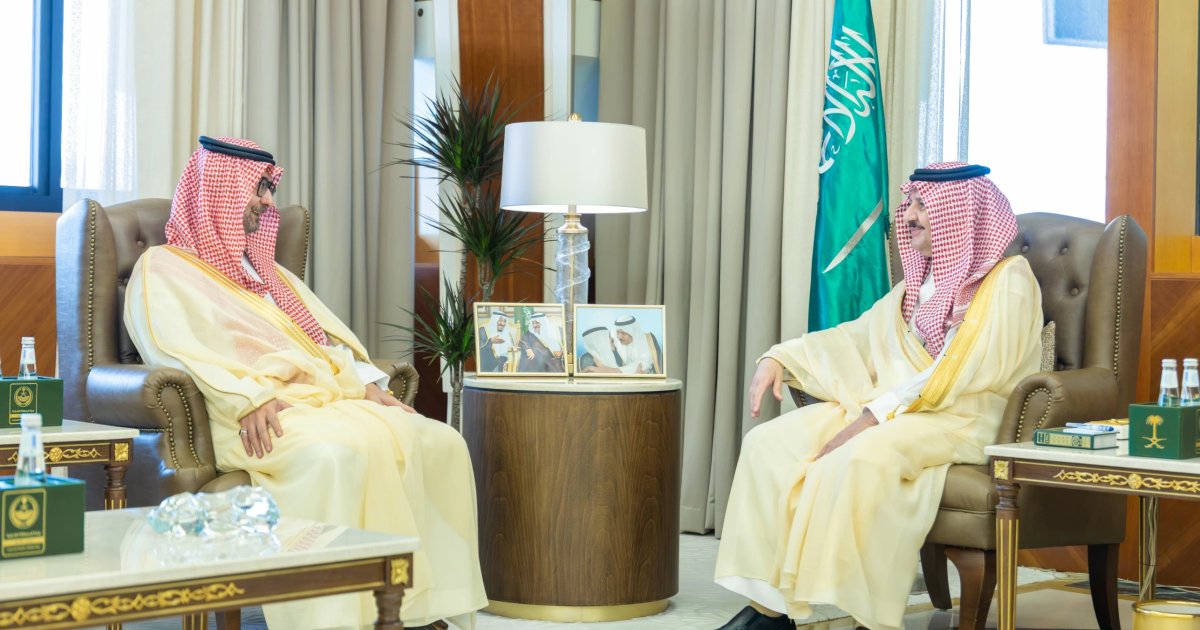
The Governor of the Eastern Province, Prince Saud bin Naif bin Abdulaziz, welcomed Prince Saud bin Fahd bin Abdullah bin Saud Al-Kabeer, Vice Chairman of the Executive Committee of the Princess Seeta bint Abdulaziz Award for Excellence in Social Work, at his office in the Emirate's Diwan today, Sunday. The meeting was attended by Prince Salman bin Mohammed bin Salman Al Saud and Prince Abdullah bin Faisal bin Khalid Al Saud, members of the Board of Trustees.
During the meeting, the Governor emphasized that competition in the fields of goodness and social work reflects the noble values of society and the commitment of its members to contribute to the service of the nation. He praised the distinguished efforts of the Princess Seeta bint Abdulaziz Award, which has significantly highlighted quality initiatives, stimulated positive competition, and enhanced the culture of giving and humanitarian work, thereby positively impacting community development and sustainability.
Event Details
Dr. Fahd bin Hamad Al-Maghlouth, the Secretary-General of the foundation, presented an overview to the Governor about the award's initiatives and programs that support and develop social work across various regions of the Kingdom. The third edition of the 'Daraaya' forum, which is set to be held in the Eastern Province under the patronage of the Governor, was also discussed. This forum aims to enhance positive competition among entities and individuals.
At the conclusion of the meeting, Prince Saud bin Fahd, a member of the Board of Trustees, appreciated the Governor's support for the award and its programs, reflecting the leadership's commitment to supporting social work and fostering a spirit of cooperation among community members.
Background & Context
The Princess Seeta bint Abdulaziz Award for Excellence in Social Work was established to promote social work in the Kingdom and honor individuals and entities contributing to community development. The award aims to stimulate quality initiatives that enhance the quality of life and promote human values.
It is considered one of the most prominent awards in the Kingdom focusing on social work and has achieved remarkable successes in recent years by honoring numerous individuals and organizations that have made outstanding contributions in this field.
Impact & Consequences
The Princess Seeta bint Abdulaziz Award plays a vital role in promoting a culture of social work within Saudi society, positively impacting sustainable development. By encouraging individuals and entities to present innovative initiatives, the award fosters a spirit of positive competition that benefits the community as a whole.
The Governor's support for the award reflects the government's commitment to enhancing social work, contributing to creating an environment that encourages giving and active participation from all community members.
Regional Significance
The experience of the Princess Seeta bint Abdulaziz Award serves as a model for other Arab countries, where it can contribute to enhancing and developing social work across various communities. By exchanging experiences and best practices, Arab nations can benefit from this experience to promote cooperation and participation among community members.
In conclusion, the Princess Seeta bint Abdulaziz Award represents a significant step towards enhancing social work in the Kingdom, contributing to building a more cohesive and cooperative society.