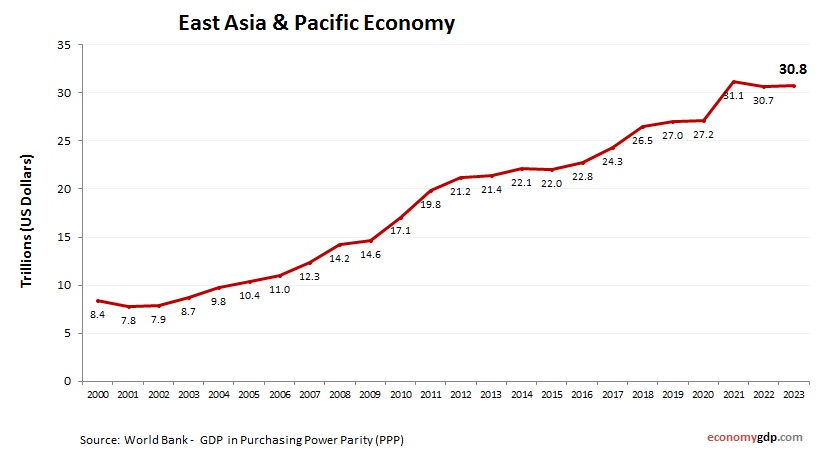
The World Bank has announced that the East Asia and Pacific region will face an economic slowdown in the coming years, with growth expected to decrease from 5.0% in 2025 to 4.2% in 2026. This forecast comes amid escalating geopolitical tensions that have led to a surge in global energy prices.
During an online press conference held from Jakarta, Aaditya Mattoo, the World Bank's chief economist for the region, confirmed that conflicts in the Middle East were the primary factor behind the significant increase in energy prices, adversely affecting the economy in the region.
Details of the Economic Forecast
The report released by the World Bank indicates that rising energy prices could exacerbate trade issues and increase uncertainty in international policies, adding new challenges for many countries. According to projections, a fuel price increase of up to 50% could reduce household income by 3-4%, making energy-importing nations particularly vulnerable.
Mattoo also added that well-targeted support for households and businesses could protect existing jobs, while resuming stalled structural reforms could enhance growth in the future.
Background & Context
Since February 28, global energy prices have experienced significant fluctuations due to conflicts in the Middle East. The natural gas index has risen by as much as 90%, while crude oil prices have increased by over 30%. The region is also a major supplier of fertilizers, aluminum, and petrochemicals, with Qatar and Saudi Arabia contributing over 10% of global nitrogen fertilizer exports.
The impacts of rising energy prices vary across countries in the region, with Pacific island nations such as Fiji, Tonga, and Vanuatu being among the most vulnerable, alongside large energy-importing nations like Thailand and Mongolia, which are facing pressures on their balance of payments.
Impact & Consequences
Countries' abilities to cope with these challenges vary, as some nations like Cambodia, Vietnam, and Indonesia have greater resilience due to their strategic reserves and local refineries' capacity to meet their needs. Conversely, other countries are experiencing significant economic pressures due to rising energy prices.
These circumstances require a swift and effective response from governments in the region to ensure economic stability and protect the most vulnerable groups. Nations must seek innovative solutions to foster economic growth amid these challenges.
Regional Significance
Understanding these forecasts is crucial for grasping the economic challenges facing the East Asia and Pacific region, which may impact global economic stability. The interconnectedness of economies means that local issues can have far-reaching effects, making it essential for regional cooperation and strategic planning.
In conclusion, the anticipated slowdown in economic growth due to rising energy prices highlights the need for proactive measures to safeguard livelihoods and ensure sustainable development in the region.