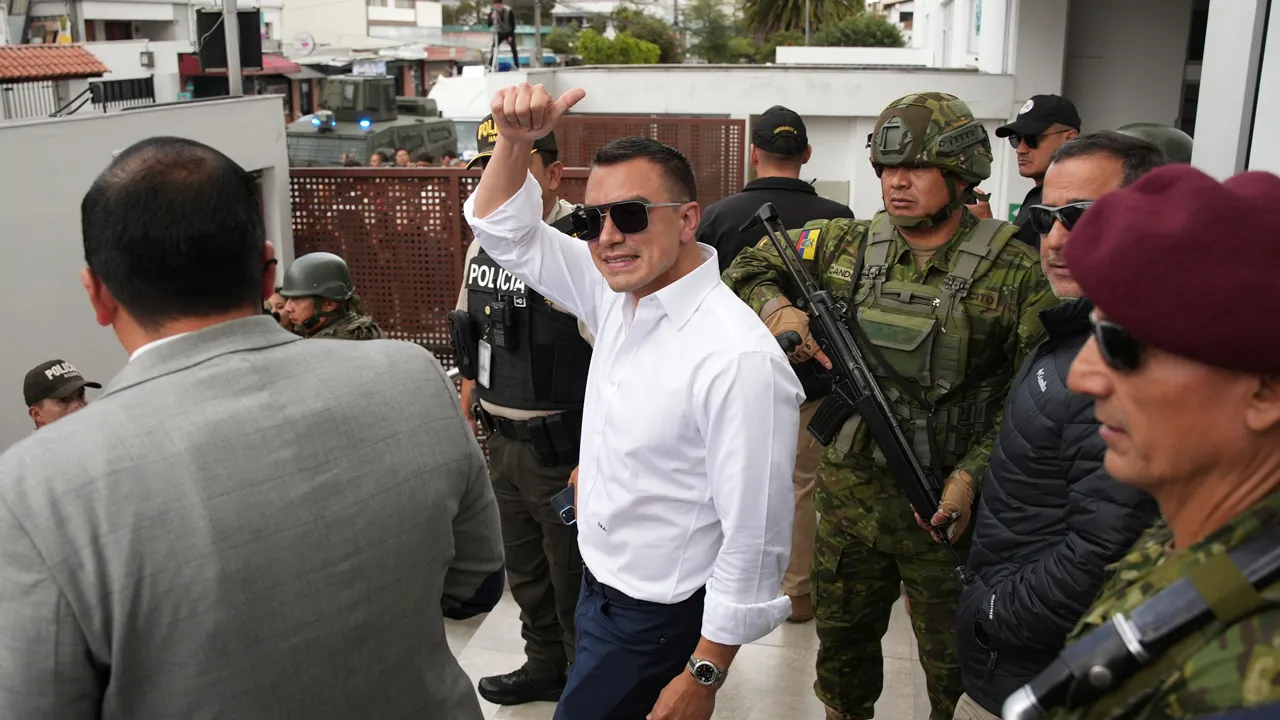
In a controversial move, Ecuador's President Daniel Noboa announced his openness to the possibility of US troops being sent to his country to help tackle increasing security challenges. Noboa emphasized that these forces must operate under the command of local armed forces, reflecting his commitment to national sovereignty.
During an interview with Bloomberg, Noboa noted that the United States has already begun providing support, and he is open to further cooperation with the administration of President Donald Trump. These statements come at a time when Ecuador is grappling with a surge in violence linked to drug gangs, exacerbating the security situation in the country.
Details of the Situation
Ecuador is facing a severe security crisis, with incidents of violence significantly increasing in recent years. Many observers attribute this rise to the activities of drug gangs seeking to control smuggling routes. In this context, Noboa believes that collaboration with the United States could be an effective solution to confront these challenges.
Noboa clarified that any US intervention must be supported by the Ecuadorian government, and American forces should coordinate with local troops. This stance reflects Noboa's desire to maintain national sovereignty while seeking external support.
Background & Context
Historically, Ecuador has struggled with issues related to organized crime, but the situation has worsened considerably in recent years. In 2021, the country experienced a 300% increase in homicide rates compared to previous years. These figures highlight the severity of the security situation, prompting the government to seek unconventional solutions.
The United States is a key partner for Ecuador in the fight against drugs, having provided financial and technical support over the years. However, concerns about potential US military intervention remain in the minds of many, sparking discussions about national sovereignty.
Impact & Consequences
If Noboa's plan to send US troops is implemented, it could have significant implications for the security situation in Ecuador. On one hand, this cooperation may lead to a reduction in violence and improved security conditions; on the other hand, it could provoke negative reactions from certain segments within Ecuadorian society.
This collaboration may also pave the way for increased US military interventions in the region, raising fears that Ecuador could become a battleground for new conflicts. Such a scenario could affect relations between Ecuador and neighboring countries, especially those with a history of tensions with the United States.
Regional Significance
The issues of drugs and organized crime are of concern to many countries, including those in the Arab world. As security challenges rise in some Arab nations, Ecuador's experience in cooperating with the United States may serve as a model to emulate or caution against. Furthermore, enhancing international cooperation in combating organized crime could have positive effects on regional security.
In conclusion, the question remains open regarding how this move will affect Ecuador's future and whether it will succeed in achieving the desired security without compromising national sovereignty.