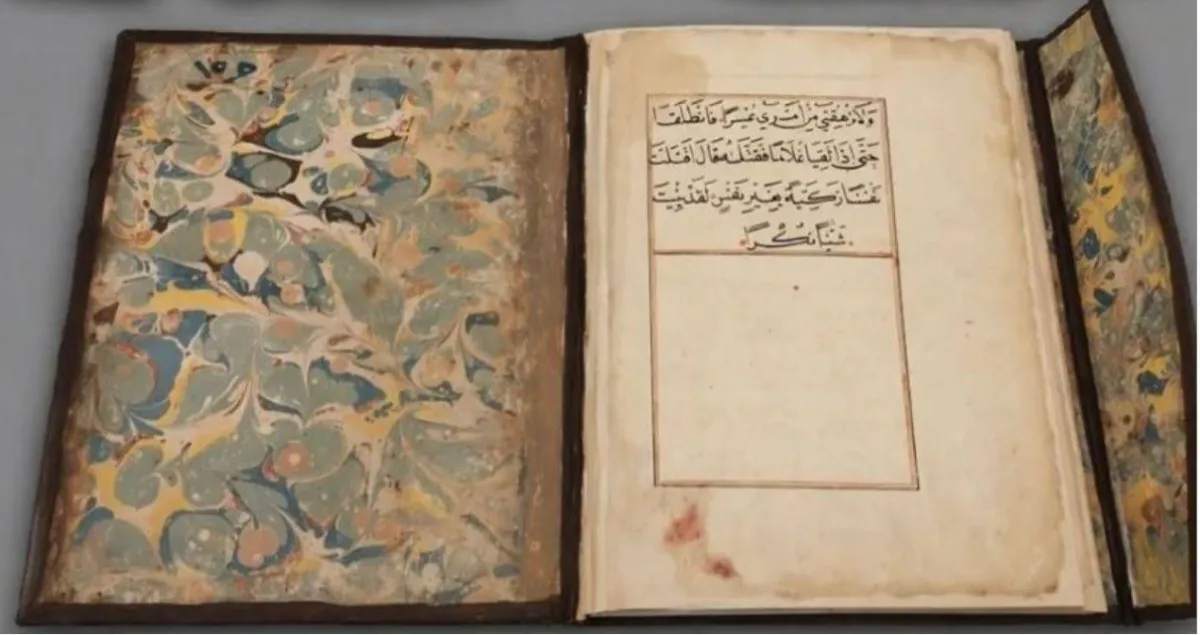
In celebration of 'Arabic Manuscript Day,' which falls on April 4 each year, the National Museum of Egyptian Civilization showcased one of its rare Qurans, presenting a newly restored version after a comprehensive restoration process. This initiative reflects the aesthetics of ancient printing and the value of rare Arabic manuscripts that carry a rich heritage.
Many institutions across the Arab world celebrate this day, symbolizing the importance of Arabic manuscripts and the literary, religious, historical, and scientific works they contain, thereby enhancing Arab cultural identity. This day serves as an occasion to highlight efforts made to preserve and safeguard Arab heritage.
Event Details
The National Museum of Egyptian Civilization houses a collection of rare Arabic manuscripts, including a unique Quran discovered in the Mosque of Sidi Ali Al-Maliji. This Quran was written on high-quality paper and underwent a meticulous restoration process that included cleaning, strengthening, and completing some missing parts. Its components were assembled using traditional sewing techniques, according to a statement from the museum.
The specialized restoration process was led by Rehab Galal, who emphasized the importance of preserving these cultural treasures. This Quran stands as a living example of ancient Islamic arts, reflecting the evolution of writing and its aesthetics throughout the ages.
Background & Context
'Arabic Manuscript Day' is an annual event launched by the Arab Institute for Manuscripts, part of the Arab Organization for Education, Culture and Science, since 2013. This day has been celebrated under various themes each year, such as 'Journey to the Past' and 'Secrets from the Past and Ideas for the Future,' while the current edition is titled 'The Arabic Manuscript... A Journey of Transformation and Renewal.'
The celebration aims to raise awareness of the significance of Arabic manuscripts and invites cultural institutions in the Arab world and beyond to participate in exchanging experiences and showcasing initiatives related to heritage preservation. This day is seen as an opportunity to highlight the efforts made in preserving manuscripts that are an essential part of Arab cultural identity.
Impact & Consequences
These celebrations contribute to enhancing public awareness of the importance of cultural heritage, encouraging further efforts to protect rare manuscripts. They also open avenues for researchers and artists to exchange knowledge and experiences, thereby enhancing the value of manuscripts as part of Arab history.
Arabic manuscripts are an integral part of cultural heritage, carrying stories and ideas that date back centuries. Therefore, preserving them contributes to strengthening the cultural identity of future generations.
Regional Significance
These events demonstrate how culture and heritage can unite peoples, enhancing cultural ties between Arab countries. The attention given to manuscripts reflects the commitment of Arab nations to preserving their cultural heritage and strengthens their position in the global cultural arena.
In conclusion, this event serves as a call for everyone to participate in preserving Arab cultural heritage and raising awareness of the importance of manuscripts as part of Arab identity.