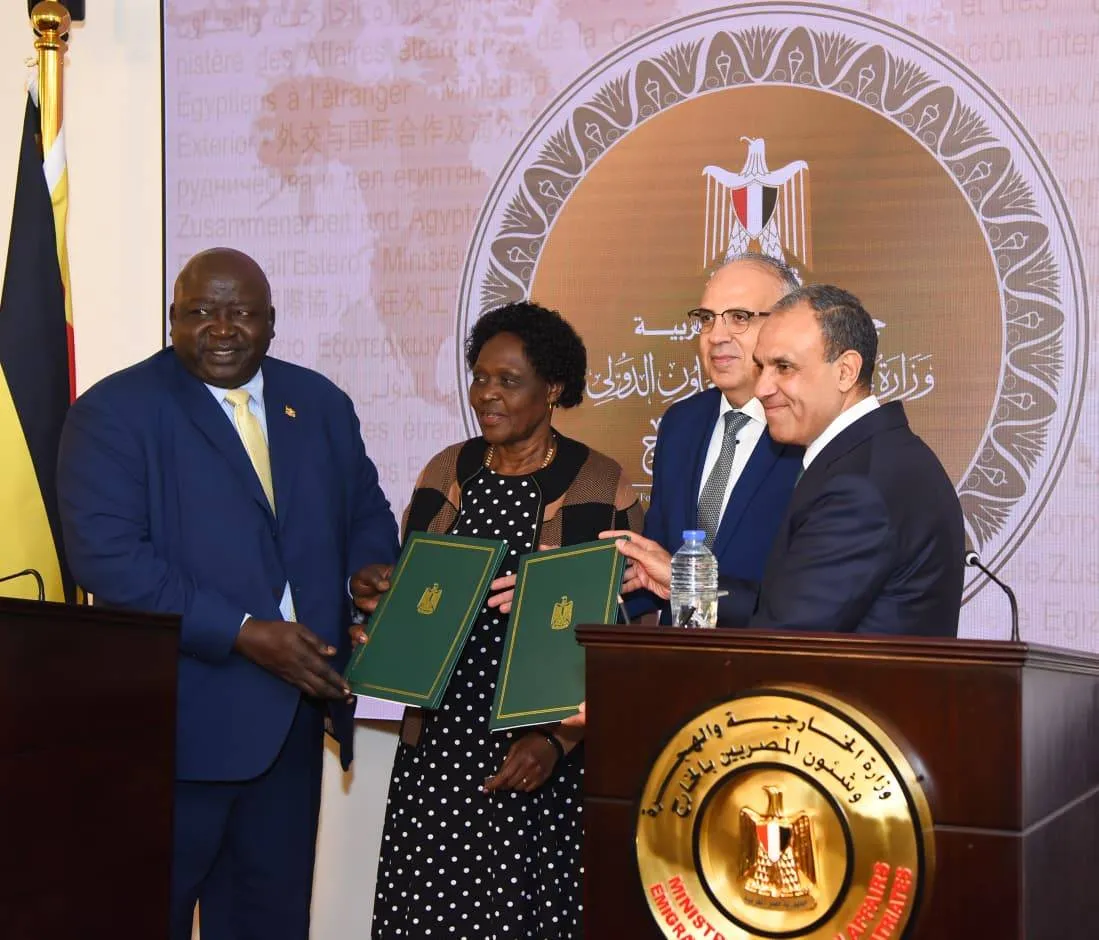
Egypt is working to strengthen its relationships with Southern Nile Basin countries through joint development projects. The Egyptian Foreign Minister, Badr Abdel Atti, emphasized the importance of cooperation and integration in the Nile River to achieve mutual benefits and shared interests.
Abdel Atti pointed out the necessity of adhering to the spirit of consensus and brotherhood among the Southern Nile Basin countries to restore inclusivity in the Nile Basin Initiative, rejecting unilateral actions in the Eastern Nile Basin.
Details of the Meeting
The Egyptian minister's statements came during a meeting with Ugandan State Minister for Foreign Affairs, Henry Okello, in Cairo, where they discussed ways to enhance bilateral relations between the two countries. Abdel Atti affirmed the depth of the historical and strategic ties between Egypt and Uganda, praising the significant development in their bilateral relations recently, especially following the important visit by Ugandan President Yoweri Museveni to Cairo last August.
He also indicated the commitment to build on the outcomes of that visit to elevate political and economic relations between the two countries to broader horizons. In this context, Egyptian President Abdel Fattah El-Sisi expressed his rejection of what he described as unilateral actions in the Nile Basin, stressing that Egypt will not ignore its water rights.
Background & Context
These moves come amid the ongoing dispute between Egypt and Ethiopia over the Grand Ethiopian Renaissance Dam, which Addis Ababa officially launched last September. Egypt and Sudan are demanding a legally binding agreement that regulates the dam's operations without harming their water interests. The Egyptian-Ugandan relations have seen notable development, with the signing of five memoranda of understanding and cooperation in various fields, including water resources and food security.
The Egyptian Foreign Minister also emphasized the importance of enhancing trade and economic cooperation between the two countries, particularly in infrastructure, energy, and water resource management, while supporting Egyptian companies operating in the Ugandan market and increasing access opportunities for Egyptian products.
Impact & Consequences
Egypt is working to enhance its cooperation with Southern Nile Basin countries amid the challenges it faces due to the Grand Ethiopian Renaissance Dam. This cooperation is considered a strategic step aimed at achieving water security for Egypt and ensuring its rights to Nile waters. Additionally, strengthening relations with Uganda and other countries in the region may contribute to bolstering Egypt's position in negotiations related to the dam.
This cooperation could open new horizons for investment and trade between Egypt and the Nile Basin countries, thereby enhancing economic stability in the region. Moreover, joint coordination among the concerned countries may contribute to achieving sustainable development in the Nile Basin.
Regional Significance
These Egyptian moves reflect the importance of regional cooperation in addressing water and environmental challenges. Cooperation among Nile Basin countries can contribute to achieving stability in the region and enhance opportunities for sustainable development. Furthermore, this cooperation could serve as a model for other regions facing disputes over water resources.
In conclusion, enhancing cooperation between Egypt and Southern Nile Basin countries represents an important step towards achieving water security and sustainable development in the region, reflecting Egypt's commitment to working together to achieve mutual interests.