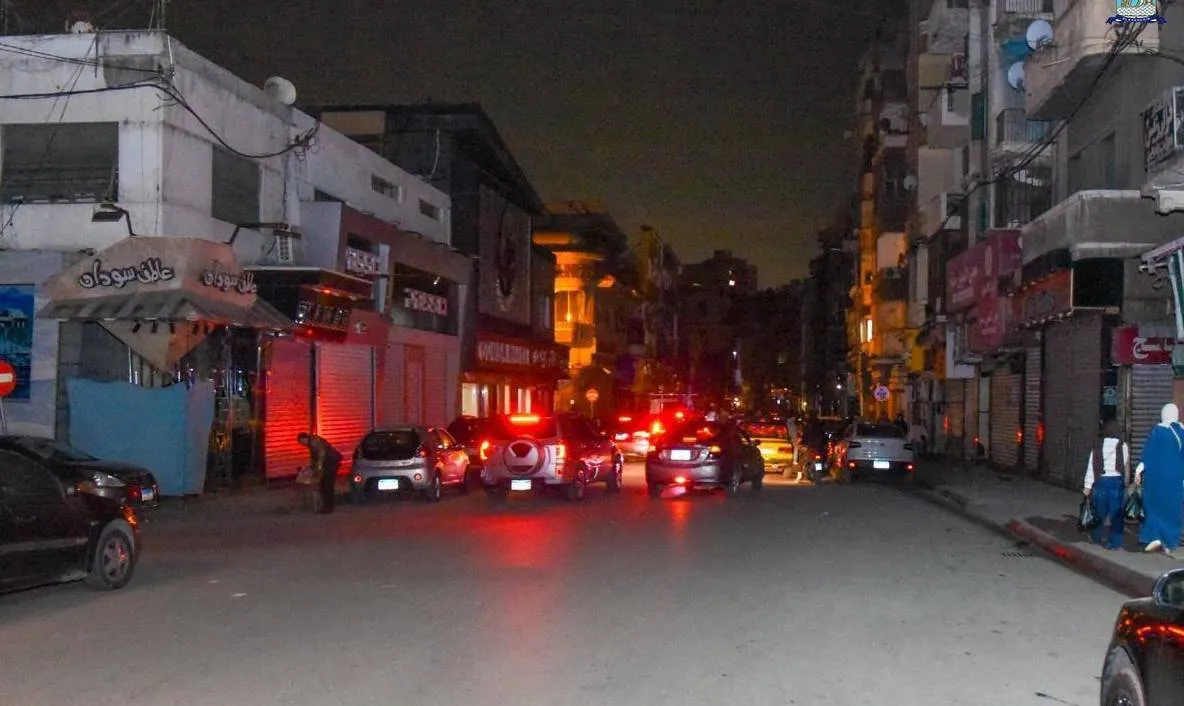
The Egyptian government has started implementing a decision to close shops and cafes at 9 PM daily, which has sparked widespread discontent among citizens. This decision is part of the government's efforts to rationalize energy consumption in light of the difficult economic conditions the country is facing, as well as the impact of the Iranian war on energy prices.
On Saturday evening, Mahmoud Ramadan, a seventy-year-old man, and his wife went to a store to buy gold jewelry in the Omrania area south of Cairo. While they were choosing the desired piece, the store owner asked the employee to turn off the lights outside and stand at the door to alert them if an inspector from the district arrived, following the implementation of the decision.
Details of the Decision
The Egyptian government has decided to close commercial shops, malls, and cafes at 9 PM daily, except for Thursdays and Fridays when they are allowed to operate until 10 PM. Despite the exemption for grocery stores, pharmacies, and tourist restaurants, public discontent with the decision was evident, as some considered it an obstacle to their daily lives.
During a field tour conducted by Al-Sharq Al-Awsat in the Haram area of Giza Governorate, a variation in the implementation of the decision was observed, as some shop and cafe owners resorted to circumventing the decision by turning off the lights while continuing to operate using phone flashlights. One vendor attributed this to the significant financial losses they might incur due to the closure.
Context and Background
These measures come at a time when Egypt is suffering from rising inflation rates, with the monthly inflation rate recorded at 2.7% in February, affected by the repercussions of the Iranian war. The decision has raised fears of increased crime rates in the streets, as activists circulated images of downtown Cairo in complete darkness, reminiscent of the atmosphere during the COVID-19 pandemic in 2020.
In this context, Ahmed El Ansary, the governor of Giza, emphasized the necessity for all shops to adhere to the specified timings, stressing the intensification of field campaigns to control violations. Penalties for violating the decision range from fines between 20,000 and 50,000 Egyptian pounds, to imprisonment in case of repeated offenses.
Consequences and Impact
Anthropology researcher Walid Mahmoud believes that the government decision opens the door to understanding the complexities of daily life in the city. He pointed out that commercial activity has not ceased but has only changed its form, reflecting the informal economy's ability to adapt to regulatory decisions. He also noted that daily wage workers are the most affected, as they lose the most profitable working hours.
In the Maadi Gardens area, Rehab Abdel Moneim expressed her dissatisfaction with the decision, indicating that the street has become frightening after its implementation. Meanwhile, in Alexandria, similar scenes were repeated, as shops closed their doors, but buying and selling continued in side markets.
Impact on the Arab Region
These events highlight the challenges facing Egypt amid economic and political crises. The public reactions to the government decision reflect the extent to which economic policies impact citizens' daily lives. They also underscore the importance of balancing security and energy conservation with meeting citizens' needs.
In conclusion, the question remains about how the government will handle the current crises and whether it will take additional measures to rationalize energy consumption amid the ongoing Iranian war and its effects on the Egyptian economy.