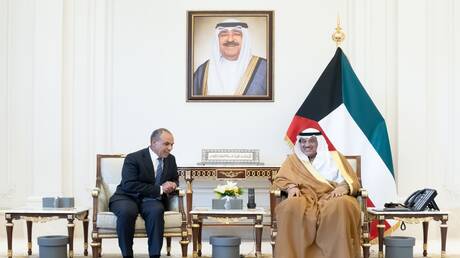
Egyptian Foreign Minister Badr Abdel Atti met on Wednesday in the Kuwaiti capital with Kuwaiti Crown Prince Sheikh Sabah Khaled Al-Hamad Al-Sabah. During the meeting, Abdel Atti delivered a written message from Egyptian President Abdel Fattah El-Sisi to the Emir of Kuwait, Sheikh Nawaf Al-Ahmad Al-Jaber Al-Sabah, reflecting Egypt's desire to enhance relations with Gulf countries.
This visit comes at a sensitive time, as the Iran War has concluded, opening the door for new diplomatic initiatives in the region. The historical ties between Egypt and Kuwait are deep-rooted, characterized by cultural and economic connections, making this meeting an opportunity to renew these bonds and enhance cooperation across various fields.
Details of the Meeting
During the meeting, several regional and international issues were discussed, with both sides expressing the importance of joint coordination to address the challenges facing the region. They emphasized the need to strengthen cooperation in the fields of economy and security, which would serve the interests of both peoples.
The Egyptian Foreign Minister highlighted Kuwait's role as a key supporter of Egypt in various international forums, noting that relations between the two countries have seen significant development in recent years. They also discussed ways to enhance Kuwaiti investments in Egypt, which are crucial for supporting the Egyptian economy.
Background & Context
Historically, Egyptian-Kuwaiti relations have been strong, especially following the Iraqi invasion of Kuwait in 1990, when Egypt stood by Kuwait during that crisis. Since then, relations have continued to grow, with numerous bilateral agreements enhancing cooperation in multiple areas.
In recent years, the region has witnessed drastic changes, including political and security tensions. With the end of the Iran War, Egypt appears poised to renew its diplomatic efforts in the Gulf, reflecting its desire to play a larger role in stabilizing the region.
Impact & Consequences
This visit is a significant step in Egypt's foreign policy, as Cairo seeks to enhance its influence in the Gulf. These moves are expected to improve relations with other Gulf countries, potentially leading to increased cooperation in security and economic sectors.
Furthermore, strengthening ties with Kuwait could open new avenues for Kuwaiti investments in Egypt, contributing to the support of the Egyptian economy, which is striving to recover from the impacts of global economic crises.
Regional Significance
This visit comes at a critical time for the Arab region, where many countries are facing political and economic crises. Strengthening relations between Egypt and Kuwait could serve as a model for other Arab nations, especially in light of the urgent need for cooperation to tackle shared challenges.
In conclusion, this step reflects Egypt's desire to enhance its regional role and open new channels for cooperation with Gulf countries, which may contribute to achieving greater stability in the region.