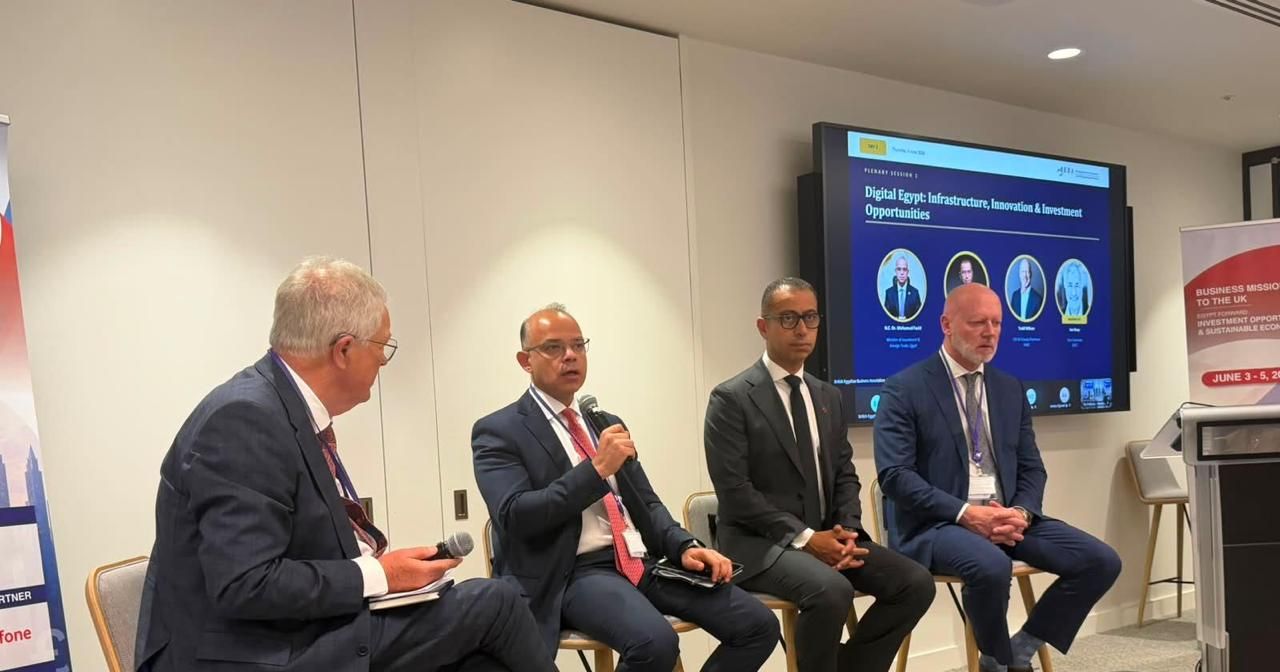
Dr. Mohamed Farid Saleh, Egypt's Minister of Investment and Foreign Trade, revealed that digital transformation represents the central pillar in the state's strategy to reshape the economic landscape and enhance the local market's competitiveness on the global stage. This announcement came during his participation in the main session of ministerial activities organized by the Egyptian British Business Association (BEBA) in London, where he outlined an ambitious roadmap to modernize the country's investment infrastructure.
The visit forms part of an intensive economic diplomacy campaign aimed at marketing Egyptian investment opportunities to major financial and technology institutions. The delegation specifically targeted sectors including financial technology, digital infrastructure, and data centers, positioning Egypt as an emerging hub for tech investment in the Middle East and North Africa region.
London Event Details and Key Participants
The session, titled "Digital Egypt: Infrastructure, Innovation, and Investment Opportunities," was chaired by Ian Gray, Vice Chairman of the Egyptian British Business Council, and attended by prominent private sector leaders. Participants included Mohamed Abdullah, CEO of Vodafone Egypt and Regional President of International Markets at the Vodacom Group, alongside Todd Wilcox, CEO and Vice Chairman of HSBC Egypt.
During the discussions, Minister Saleh presented the government's comprehensive roadmap for digitizing all investment procedures, emphasizing that the success of any economic reform program now depends on absorbing modern technology and employing it to simplify government operations. He noted that the ministry is currently implementing an extensive project to re-engineer the entire investor lifecycle, from company establishment and licensing through operational phases and geographic expansion.
Strategic Background and Digital Context
Egypt has been undergoing a structural transformation in its investment and foreign trade ecosystem for several years, as the government seeks to transition from a traditional paper-based economy to an integrated digital economy. This strategic shift reflects the state's vision to leverage Egypt's distinguished geographic location as a logistical gateway between East and West, combined with advanced telecommunications infrastructure and young human talent in programming and technological development.
The Egyptian digital strategy rests on three fundamental pillars: developing digital infrastructure, improving government data governance, and adopting artificial intelligence solutions in logistics and commercial operations. Additionally, the plans include establishing regulatory Sandboxes that enable startups and entrepreneurs to test innovative financial and commercial solutions within a flexible regulatory framework.
Economic Impact and Business Consequences
These digital reforms aim to narrow the time gap between investment concepts and actual implementation, thereby enhancing Egypt's attractiveness as a secure destination for foreign capital. Electronic linkage between various government agencies eliminates duplicate procedures and streamlines supply chains, positively impacting the cost of doing business in the country.
The minister confirmed that the government is adopting a partnership model with the private sector, where the state focuses on providing the regulatory framework and basic infrastructure, while the private sector drives innovation and technological development. This approach represents a qualitative shift in economic policy, transforming the government's role from direct execution to facilitation and regulation.
Regional Significance for Arab Markets
Egypt's experience in digital transformation serves as a model for Arab nations seeking to diversify their economies and reduce dependence on natural resources. Success in building an integrated digital ecosystem opens horizons for regional integration in e-commerce, digital payments, and trade liberalization across the Middle East.
Furthermore, attracting British investments in technology and financial services consolidates Egypt's position as a regional center for business and innovation in North Africa and the Middle East. This strategic direction presents opportunities for Arab companies to benefit from Egyptian expertise in digitizing government services and applying these solutions in their local markets, fostering broader economic cooperation across the region.