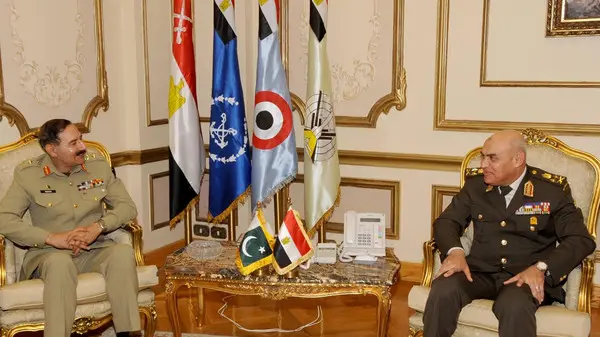
Efforts by Egypt, Turkey, and Pakistan are converging in a bid to reduce the escalating military tensions in the region, which have intensified over the past month following the attacks launched by the United States and Israel on Iran. These initiatives come at a time when the three countries are striving to halt the war through negotiations and avoid the region slipping into chaos and violence that could affect other nations.
The Egyptian Foreign Minister, Badr Abdel Atty, has been in contact with his Pakistani and Turkish counterparts, discussing the rapid developments in the region. A statement from the Egyptian Foreign Ministry indicated that Abdel Atty spoke by phone with Mohammad Ishaq, the Foreign Minister of Pakistan, and Hakan Fidan, the Foreign Minister of Turkey, to exchange views on the implications of military escalation and the efforts being made to reduce tensions.
Details of the Diplomatic Efforts
In the context of these communications, the intensive efforts by the three countries to initiate a direct negotiation process between the United States and Iran were discussed. Abdel Atty emphasized the importance of promoting the option of diplomacy and dialogue instead of military escalation, which could exacerbate the situation in the region.
The Egyptian Foreign Minister expressed hope that these joint efforts would lead to a reduction in tensions and the initiation of a gradual path toward de-escalation, potentially culminating in the end of the ongoing war. He noted that Egypt is working with significant regional players like Turkey and Pakistan to achieve this goal.
Background & Context
These efforts coincide with rising tensions in the region since February 28, when Israel and the United States launched a war on Iran, resulting in the deaths of hundreds, including Iranian leader Ali Khamenei and security officials. Iran responded by launching missiles and drones toward Israel and Arab countries, targeting what it describes as American sites and interests.
In this context, Pakistan has conveyed a U.S. proposal for a ceasefire to Tehran, which includes 15 points, reflecting its growing role as a mediator among the concerned parties. However, the details of these points remain unclear, and their acceptance by Tehran is uncertain.
Impact & Consequences
Analysts expect these developments to have profound effects on regional security, as any new escalations could impact the stability of neighboring countries. Additionally, the continuation of the war may heighten sectarian and ethnic tensions in the region, potentially leading to an outbreak of violence and terrorism.
Moreover, military escalation could negatively affect the regional economy, as many countries are suffering from severe economic crises, and any new escalation could exacerbate these crises.
Regional Significance
The Arab region is at the heart of these developments, being directly affected by regional conflicts. Continued escalation could threaten the stability of many Arab countries and increase the suffering of populations already enduring humanitarian crises.
In conclusion, the efforts of Egypt, Turkey, and Pakistan to reduce military escalation remain a hope for achieving peace and stability in the region, but significant challenges persist, requiring effective international and regional cooperation.