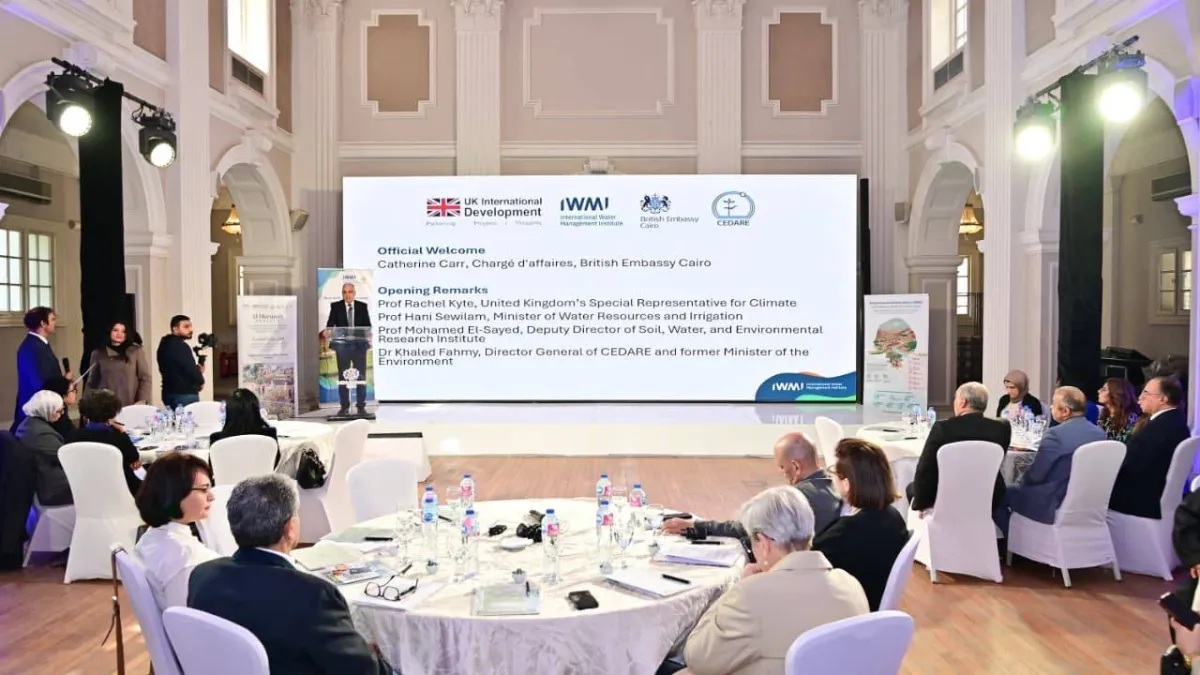
Egypt's Minister of Water Resources and Irrigation, Hani Sewilam, has warned that the per capita water share in Egypt is approaching absolute scarcity levels, as the country is almost entirely dependent on the Nile River, which accounts for about 98% of its renewable water resources.
During his participation in the "Water Resilience" project event at the British Embassy in Cairo, Sewilam emphasized that over 75% of water resources are directed towards the agricultural sector, which provides livelihoods for more than half of the country's population. He noted that this initiative reflects the importance of partnerships and innovation in addressing the increasing challenges related to water scarcity and climate change.
Event Details
Sewilam explained that the "Water Resilience" project aligns with the Ministry of Irrigation's strategy, "Water System Generation 2.0," which focuses on improving water use efficiency and integrating climate change adaptation measures. He also stressed the close link between water and food security, pointing out that the per capita water share in Egypt currently stands at about 500 cubic meters per year, which is half of the global water scarcity threshold.
Professor of Geology and Water Resources at Cairo University, Abbas Sharaki, commented on the term "absolute scarcity," explaining that it refers to severe water poverty, where the per capita share is less than 500 cubic meters annually. He indicated that this situation may worsen in the coming years with the increasing population.
Background & Context
Egypt is considered one of the driest countries in the world, relying almost entirely on the Nile River. Climate change and population growth have impacted the country's water resources, prompting the Egyptian government to seek enhanced cooperation with Nile Basin countries in accordance with international law. Egypt and Sudan oppose the Ethiopian "Grand Renaissance Dam" project, demanding a legal agreement to regulate the dam's operations.
Last January, former U.S. President Donald Trump expressed Washington's readiness to resume negotiations on the "Grand Renaissance Dam," which was welcomed by Cairo and Khartoum. These developments come at a time when Egypt is striving to secure its water and food needs.
Impact & Consequences
The statements from the Egyptian Minister of Irrigation highlight the significant challenges facing the country in water management. This situation underscores the urgent need to adopt effective strategies to improve water use efficiency, especially amid the increasing pressures resulting from climate change.
Moreover, growing awareness of the importance of water may motivate citizens to rationalize water consumption, which could help alleviate the crisis. However, the biggest challenge remains how to balance the increasing water needs with population growth.
Regional Significance
The issue of water is a vital concern in the Arab region, where many countries suffer from water shortages. The situation in Egypt reflects the common challenges faced by countries in the region in managing their water resources. Cooperation among Nile Basin countries could lead to improved water management, contributing to achieving water and food security.
In conclusion, the biggest challenge remains how to achieve sustainability of water resources under changing conditions, requiring joint efforts and effective international cooperation.