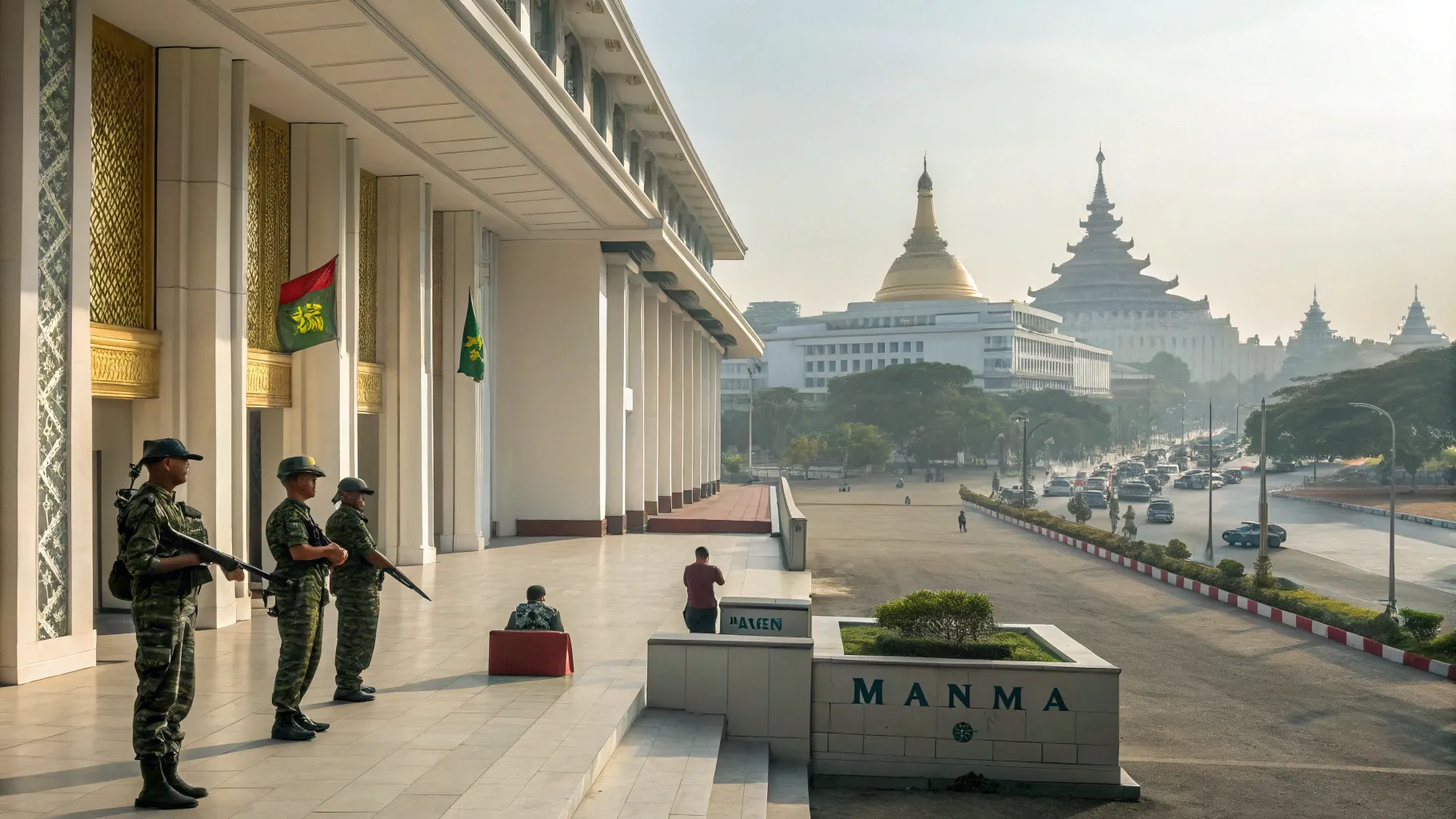
Myanmar's parliament has elected General Min Aung Hlaing as president, reflecting the ongoing military control over governance in the country. This election comes at a time when Myanmar is suffering from deep political and economic crises following the military coup that occurred in February 2021.
General Min Aung Hlaing, who previously served as the army chief, assumed the presidency after his party, the Union Solidarity and Development Party, won elections held under strict military supervision. He was elected during a parliamentary session that saw the absence of many lawmakers who had been arrested or fled the country due to military repression.
Details of the Election
The elections held in Myanmar have been widely controversial, with many international and local organizations deeming them neither free nor fair. The election of General Hlaing has faced severe criticism from the international community, which views this election as merely a step to secure military control over the country.
This move comes as Myanmar witnesses a surge in popular protests against military rule, with demonstrators demanding a return to democracy and the release of political prisoners. Authorities have used excessive force to suppress these protests, resulting in hundreds of deaths and thousands of arrests.
Background & Context
Historically, Myanmar has experienced long periods of military rule, with the army seizing power since 1962. Despite some political reforms in recent years, the military coup in 2021 has plunged the country back into a cycle of violence and repression.
The military in Myanmar considers itself the protector of the country from chaos, justifying its actions by claiming to seek national security. However, the international community views these actions as blatant violations of human rights.
Impact & Consequences
The election of General Hlaing as president may exacerbate the situation in Myanmar, as popular protests against military rule are expected to continue. Additionally, this election may increase the country's isolation on the international stage, as many nations impose sanctions on the military regime.
Furthermore, the continuation of military rule could negatively impact the local economy, which is already suffering from the repercussions of the coup. Foreign investments have declined, and poverty and unemployment rates in the country have risen.
Regional Significance
For the Arab region, events in Myanmar reflect larger challenges faced by many countries worldwide, where scenes of repression and violations are recurring. The ongoing political crises in countries like Myanmar may affect regional stability and increase the flow of refugees to neighboring countries.
In conclusion, the future of Myanmar remains uncertain, as the people face significant challenges in their pursuit of democracy and freedom. The recent elections reflect the continuation of military control, prompting the international community to take effective steps to support human rights in the country.