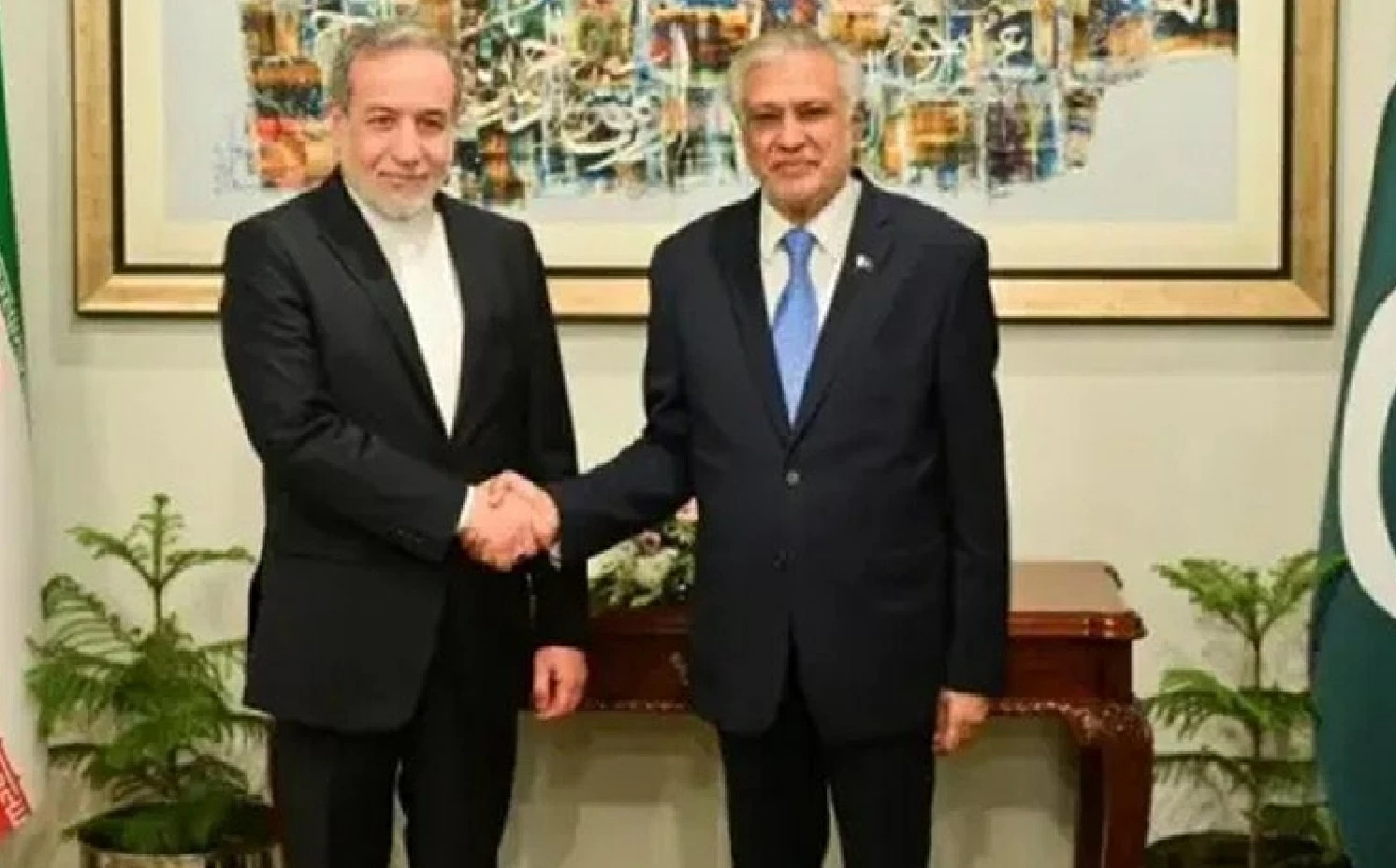
Pakistani Foreign Minister Ishaq Dar and Iranian counterpart Abbas Araghchi emphasized the importance of dialogue and diplomacy as a key means to resolve regional crises. This statement came during a phone call between the two ministers, where they exchanged views on ongoing developments in the region.
The Pakistani Ministry of Foreign Affairs stated that Dar reiterated Pakistan's support for all efforts aimed at de-escalation, stressing the necessity of addressing issues through constructive dialogue. This statement comes at a time when the region is witnessing increasing tensions, necessitating intensive diplomatic efforts.
Details of the Event
In this context, Pakistan denied reports regarding the stagnation of mediation efforts between the United States and Iran, affirming that peace initiatives are on the right track. In a tweet on the platform X, Iranian Foreign Minister Abbas Araghchi clarified that Tehran has never rejected the idea of visiting Islamabad, indicating that Iran seeks a decisive and lasting end to the ongoing conflict.
On the other hand, the American website Axios reported that mediation efforts led by Pakistan, Turkey, and Egypt to reach a ceasefire agreement between the United States and Iran are ongoing, as mediators strive to push both sides towards a direct meeting. However, no significant breakthroughs have been achieved thus far.
Background & Context
These developments come at a sensitive time, as relations between the United States and Iran are increasingly strained, particularly amid the political and economic crises facing Iran. The website noted that Iran has so far rejected any proposal for a temporary ceasefire, demanding a permanent end to the war with clear guarantees against new attacks from the United States.
The current negotiations involve participation from U.S. Vice President J.D. Vance and Iranian Parliament Speaker Mohammad Baqer Qalibaf, under the mediation of Pakistani Army Chief Asim Munir, in addition to White House envoy Steve Witkoff and the foreign ministers of Iran, Pakistan, Turkey, and Egypt.
Impact & Consequences
Analyses indicate that the chances of reaching an agreement between Washington and Tehran appear very slim, as the Israeli broadcasting authority reported that negotiations with Iran have reached an impasse. Should this situation persist, the United States may move towards military escalation unless positive developments occur at the last minute.
This potential escalation could significantly impact regional stability, prompting concerned nations to take urgent steps to avoid any escalation that could lead to widespread conflict.
Regional Significance
These developments are of great importance to the Arab region, as any escalation between the United States and Iran could affect security and stability in the Gulf states. Furthermore, ongoing tensions may complicate situations in Iraq, Syria, and Lebanon, where influential Iranian forces are present.
In conclusion, dialogue and diplomacy remain the most effective means to resolve regional crises, and the success of these efforts depends on the commitment of all parties involved to work towards achieving peace and stability.