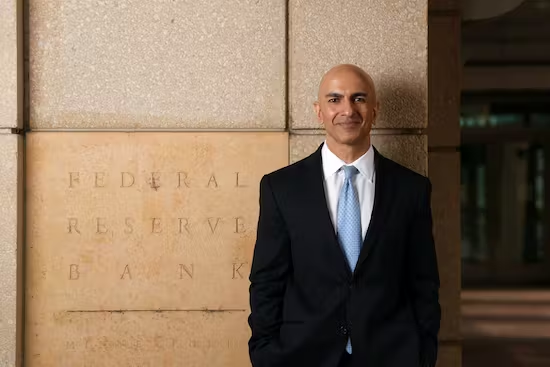
Neel Kashkari, the President of the Federal Reserve Bank of Minneapolis, emphasized the necessity for the U.S. central bank to focus on mitigating the increasing inflation risks. Kashkari noted that financial markets are currently pricing in the likelihood of borrowing cost increases in October, reflecting growing concerns about inflation.
In an interview with Reuters, Kashkari explained that the global inflation shock caused by the Middle East conflict could persist for an extended period, which is beginning to cast a shadow over the bond market. He affirmed that the world has been experiencing a continuous inflation wave for the past five years, necessitating urgent action from the central bank.
Details of the Statement
Kashkari's remarks come at a sensitive time, as fears grow regarding the effects of the Middle East conflict on the global economy. He pointed out that the inflation risks associated with the conflict loom larger than the risks of a labor market downturn, which remains in good shape.
Kashkari also confirmed that inflation is a real problem, and the central bank must be prepared to confront these challenges. These statements serve as a call to focus on monetary policies that would rein in inflation.
Background & Context
Historically, the United States has experienced periods of high inflation, often linked to economic crises or international conflicts. In recent years, inflation has risen significantly, prompting the Fed to take steps to raise interest rates as a means to curb inflation.
The ongoing Middle East conflict is considered one of the main factors affecting the global economy, leading to rising energy and commodity prices, which increases inflationary pressures. These factors have directly influenced the central bank's monetary policy decisions.
Impact & Consequences
Kashkari's statements underscore the importance of making well-considered economic decisions under current circumstances. If inflation risks continue to escalate, the Fed may be compelled to take more stringent actions, which could impact economic growth.
Moreover, rising interest rates could have negative effects on the labor market, although Kashkari noted that the labor market is still in good condition. Nevertheless, high inflation could erode consumers' purchasing power, affecting the economy as a whole.
Regional Significance
The inflation risks faced by the U.S. economy have a direct impact on the Arab region. The rise in oil and commodity prices due to conflicts in the Middle East could lead to increased inflationary pressures in Arab countries.
Additionally, the monetary policies pursued by the Fed may affect investment flows to the region, necessitating Arab governments to take appropriate measures to address these challenges.
In conclusion, inflation risks remain a pressing issue that requires special attention from policymakers, both in the United States and in the Arab region, to ensure sustainable economic stability.