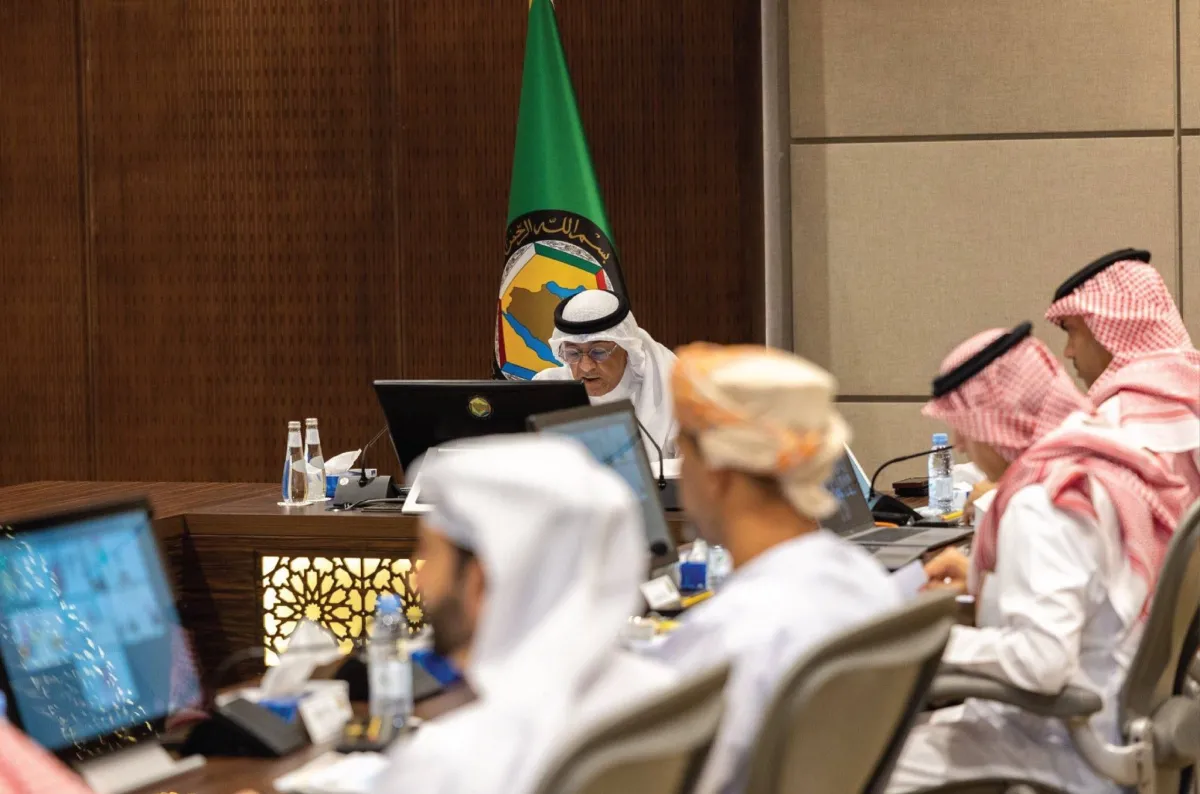
The Secretary-General of the Gulf Cooperation Council, Jassim Al-Budaiwi, emphasized during the 125th meeting of the Financial and Economic Cooperation Committee that the critical phase the region is experiencing requires a transition from traditional coordination to a higher level of "practical integration". He stressed the importance of an effective response to economic challenges, especially in light of the blatant Iranian aggressions targeting member states, which necessitate proactive measures to enhance financial and economic stability.
The meeting was held virtually under the chairmanship of Bahrain, with the participation of finance and economy ministers from the member states. Al-Budaiwi conveyed the directives of the leaders of the member states from their recent consultative meeting in Jeddah. They emphasized the need to accelerate the implementation of major Gulf projects to ensure national and economic security, including speeding up the Gulf railway project and enhancing electrical and water connectivity.
Details of the Meeting
During the meeting, the ministers discussed ways to safeguard the economic gains achieved, adopting the action plan for the Joint Gulf Market Committee for the years (2026 - 2028). This plan aims to open new horizons for trade and investment exchanges among member states, reflecting a shared vision to enhance economic cooperation.
The meeting also reviewed the progress made in the requirements for the customs union and adopted the guideline for international participations. The ministers stressed the importance of unifying the Gulf economic stance in global forums to address accelerating crises and their repercussions on the economies of member states that are open to the world.
Background & Context
These steps come at a sensitive time for the region, where geopolitical tensions have increased, necessitating enhanced joint coordination among Gulf states. The repeated Iranian aggressions against some Gulf countries raise concerns and drive the need for proactive measures to protect economic interests.
Historically, the Gulf Cooperation Council states have witnessed multiple attempts to enhance economic integration; however, political and security challenges have hindered these efforts. Today, there seems to be a strong political will to achieve this integration, especially under the current circumstances.
Impact & Consequences
The current conditions require a swift and effective response from the member states to bolster their economic stability. The implementation of major projects such as the Gulf railway and electrical and water connectivity can contribute to enhancing economic cooperation and strengthen the countries' ability to face challenges.
Moreover, enhancing economic integration can improve the living standards of citizens in the member states by creating new job opportunities and boosting economic growth.
Regional Significance
The success of the Gulf states in achieving economic integration could serve as a model for other Arab countries, many of which face similar economic challenges. Cooperation among Gulf states can enhance stability in the region and lead to improved economic relations among Arab countries.
In conclusion, there appears to be a genuine opportunity to enhance cooperation and integration among the Gulf Cooperation Council states, contributing to strengthening security and economic stability in the region.